
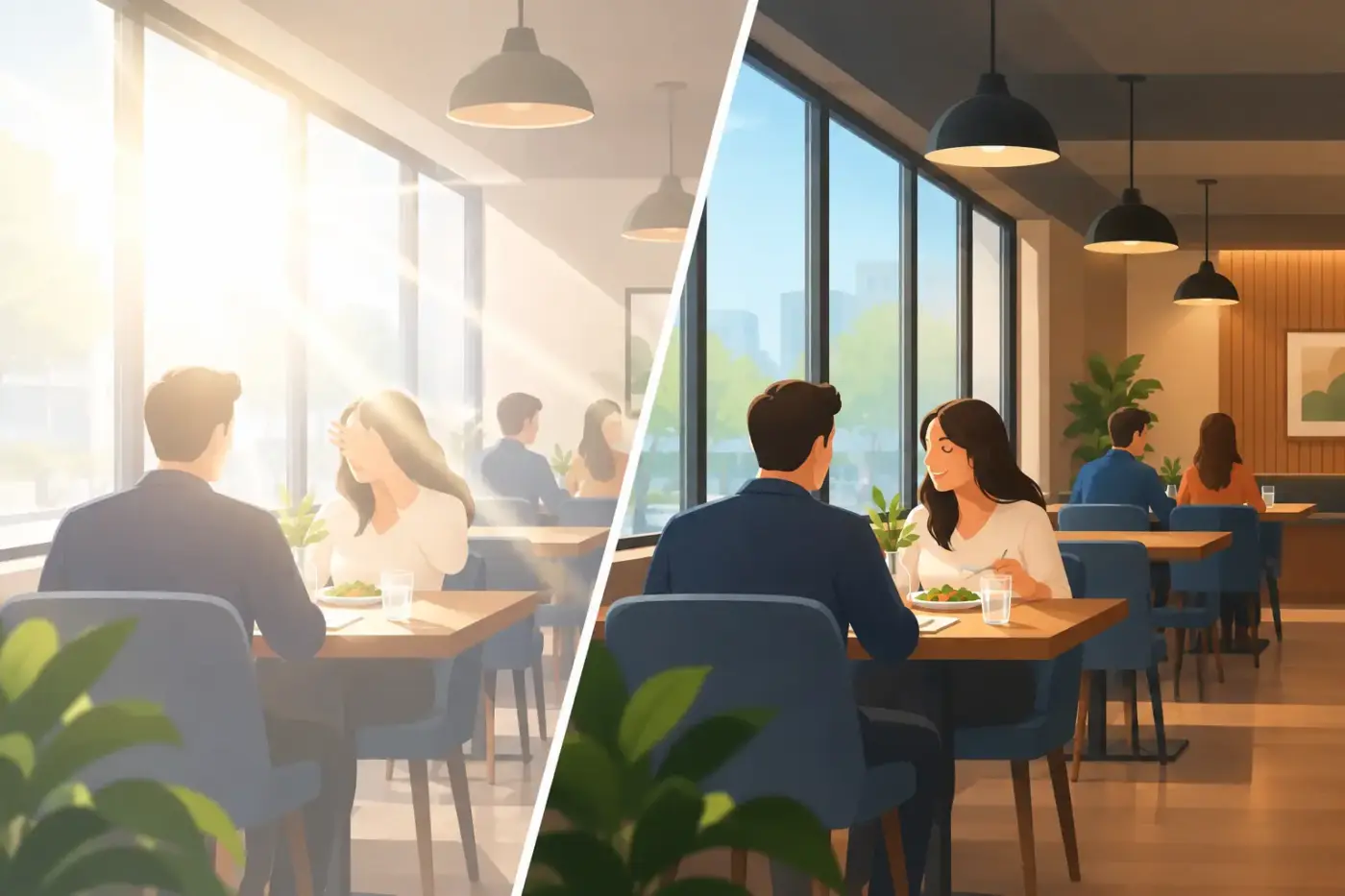
A restaurant glare project is not simply about making windows darker. It is about helping guests see one another across the table, read the menu without shielding their eyes, and enjoy a mountain view without sitting in harsh afternoon sun. For restaurant owners, glare control also protects finishes, supports staff comfort, and helps every part of the dining room feel intentionally designed.
Large windows are a major asset in Colorado restaurants. They bring in natural light, showcase surrounding scenery, and create the open, welcoming atmosphere many guests expect. Yet the same glass that makes a room memorable can create uncomfortable hot spots, reflections on screens, fading upholstery, and empty tables along the sunny side of the room. The right window treatments solve those concerns without closing off the view that made the space special.
Start a Restaurant Glare Project With the Room, Not the Product
The best solution begins with how the restaurant actually operates. A sunny breakfast cafe has different needs than a fine-dining room that opens for dinner. A west-facing wall may be perfectly pleasant at noon and nearly unusable from 4:00 to 6:00 p.m. In mountain communities, high elevation and reflective snow can intensify sunlight even when temperatures outside feel cool.
Before selecting shades or blinds, look at the times guests complain about brightness, where servers struggle to see point-of-sale screens, and which tables people avoid. Consider the direction of each window, the height and width of the glass, nearby patios, television placement, and whether the space needs privacy after dark. A treatment that performs well in one area may be the wrong choice only a few feet away.
This is why custom measurement matters. Restaurant windows often include oversized glass, angled openings, doors, transoms, or clerestory windows that do not accept a one-size-fits-all treatment. Professional sizing and installation help ensure the treatment covers the problem area cleanly, operates reliably, and complements the architecture rather than looking like an afterthought.
Choose the Right Level of Openness
Glare reduction does not always mean blackout coverage. The most successful restaurant glare projects usually match the fabric openness and control style to each zone of the dining room.
Solar shades for daylight and views
Solar shades are often a strong fit for restaurant windows because they filter direct sun while preserving a connection to the outdoors. Their performance depends on the openness factor of the fabric. A lower openness level provides greater glare and heat control but softens the view more noticeably. A more open fabric keeps the scenery clearer, though it lets in more light.
For a dining room with a prized valley, ski slope, or downtown view, that trade-off deserves careful attention. A moderately open solar shade may give guests a comfortable table while still allowing them to appreciate the setting. Color also matters. Darker fabrics generally provide a clearer outward view during the day, while lighter fabrics can brighten the room and better coordinate with a light interior palette.
Solar shades are not a complete privacy solution after sunset. When the restaurant is brighter inside than outside, silhouettes may be visible from outdoors. In spaces where nighttime privacy matters, pairing solar shades with drapery panels or another secondary treatment can offer more flexibility.
Roller shades for adaptable light control
Roller shades provide a clean, tailored appearance and are available in fabrics ranging from light-filtering to room-darkening. They work especially well where a restaurant needs a simple, uniform look across multiple windows or wants to lower individual shades as sunlight moves through the room.
A room-darkening roller shade can be useful near presentation screens, private-event areas, or windows exposed to late-day sun. Still, using opaque shades throughout a view-driven restaurant can make the room feel closed in during daytime service. Many projects use more than one fabric type, reserving heavier coverage for targeted problem windows rather than treating every opening the same way.
Drapery for softness and layered control
Custom drapery adds visual warmth, improves acoustics, and gives a dining room a more finished feel. It is particularly effective in restaurants with hard surfaces such as stone, glass, wood, and metal, where sound can bounce around during a busy service.
Drapery alone is typically best for side glare or evening privacy, since panels may not cover a broad expanse of glass unless they are drawn closed. Layered with solar or roller shades, however, drapery gives the room both everyday glare control and the ability to create a more intimate setting for evening dining or private events. The fabric, lining, hardware, and fullness should all be specified for commercial use and regular operation.
Vertical blinds and panel systems for doors and wide glass
Sliding doors, patio access, and wide storefront-style windows require treatments that move with the way staff and guests use the space. Vertical blinds and panel-track systems can cover broad openings while allowing access to exterior areas. Their ability to stack to one side can be helpful near entrances or service routes.
The right choice depends on the restaurant’s look and level of use. Vertical blinds can offer practical directional control, while panel systems create a more contemporary, architectural effect. Both need durable components and thoughtful installation so they continue operating well in a high-traffic setting.
Motorization Helps Staff Respond to Changing Sun
Sunlight does not stay put, and busy staff should not have to manage a row of manual shades during a lunch rush. Motorized window treatments allow shades to adjust by zone, on a schedule, or with a simple wall control. This is especially helpful for tall windows, large dining rooms, and hard-to-reach glass.
Automation can lower shades before direct sun reaches the tables, then raise them once the glare has passed. It can also create consistency from one shift to the next. For restaurants with several exposures, separate zones prevent one bright wall from dictating the light level for the entire space.
Motorization does require an upfront investment and a plan for power, controls, and staff use. It is most valuable when the restaurant has frequent glare changes, numerous windows, or a team that cannot reasonably adjust treatments by hand. For a smaller space with one problem window, a well-chosen manual shade may be the more sensible solution.
Protect Interiors Without Sacrificing Their Character
Direct sun can gradually fade upholstery, artwork, flooring, wood finishes, and merchandise displays. UV exposure is only part of the issue. Visible light and solar heat also contribute to wear over time. Window treatments help limit that exposure while maintaining a comfortable atmosphere for guests.
This is particularly relevant for restaurants that have invested in custom banquettes, leather seating, textured wallcoverings, or locally made art. A glare-control plan should support those design decisions, not cover them up. Fabric color, hardware finish, hem bars, and mounting details can reinforce the restaurant’s style, whether the setting is relaxed and rustic, clean and modern, or more formal.
There is also an energy consideration. Treatments that reduce solar gain can ease the burden on cooling equipment during sunny periods. In winter, insulating cellular shades may help with heat loss at certain windows, though they are not always the best choice where uninterrupted daytime views are central to the guest experience. The right recommendation balances seasonal comfort with the restaurant’s operating hours and visual priorities.
Plan for Cleaning, Durability, and Daily Use
A beautiful treatment is only useful if it holds up in a commercial environment. Restaurants should select materials that are appropriate for regular cleaning and consider where treatments sit relative to food preparation, open doors, grease, moisture, and guest traffic. A shade near a host stand may need a different fabric and operating method than one above a quiet corner booth.
Hardware quality matters as much as fabric selection. Large or frequently adjusted treatments need dependable brackets, smooth operation, and installation that accounts for the weight and size of the covering. For treatments near exits, doors, or public pathways, clearances and local safety requirements should be part of the planning conversation.
A consultation in the actual restaurant makes these details easier to address. It allows the installer to see sun patterns, take precise measurements, assess mounting surfaces, and compare samples against the existing finishes and lighting. Rather than guessing from a catalog, owners can evaluate how opacity, texture, and color will look where guests actually dine.
A well-planned glare solution should let guests notice the food, the company, and the view – not the sun in their eyes. If a few tables become uncomfortable at the same time each day, that is a useful starting point for a tailored conversation with a window-treatment professional such as Ben’s Blinds.
Comments are closed