
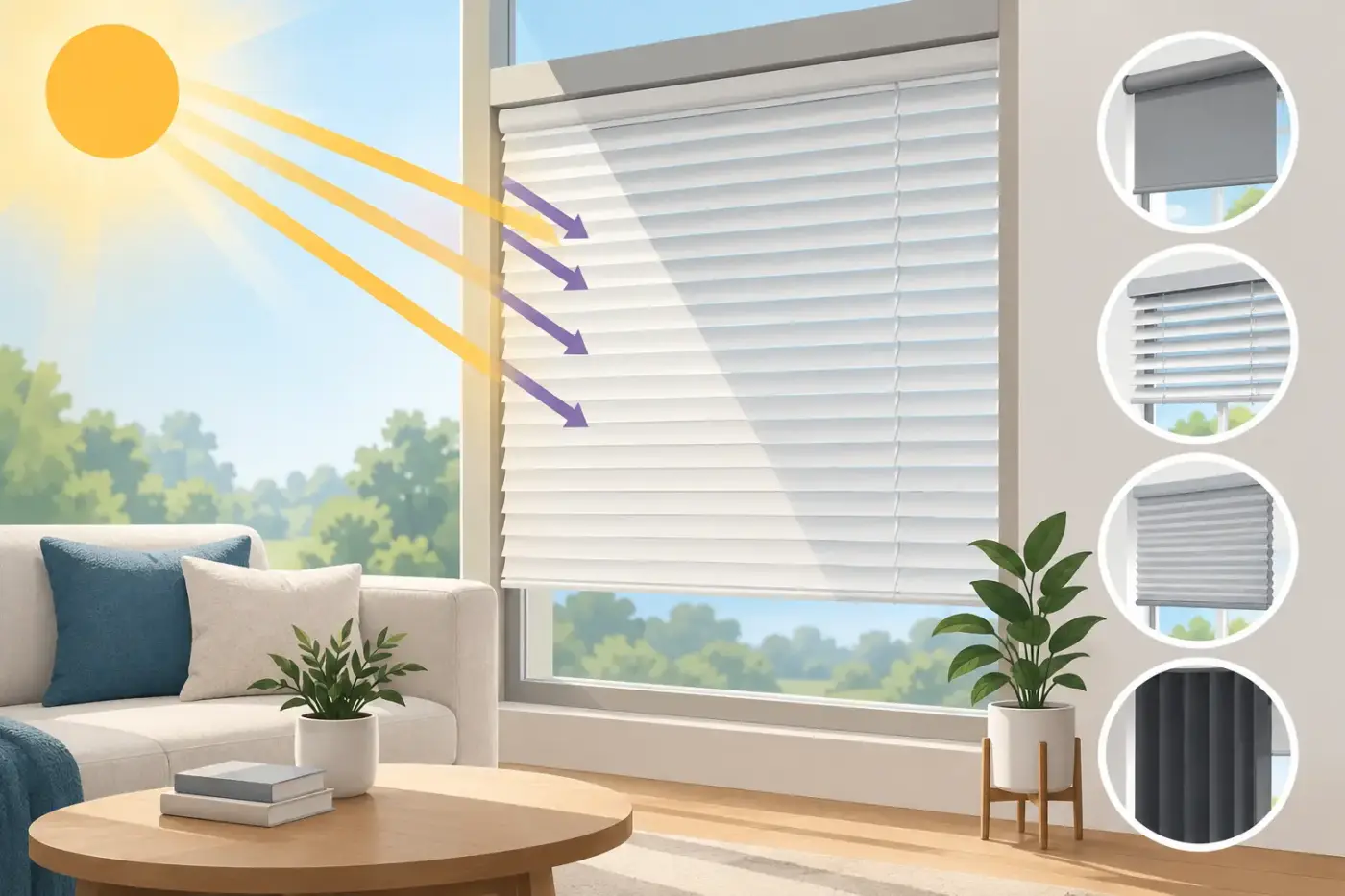
A west-facing living room can look beautiful in the afternoon, right up until the glare makes the sofa unusable and sunlight begins fading the floor beneath it. Homeowners often ask which blinds block UV because they want to protect furnishings without turning a favorite room into a dark, closed-off space. The answer depends on the treatment’s material, opacity, fit, and how much visible light you want to keep.
Nearly every window treatment reduces some ultraviolet exposure when it covers the glass. But treatments vary widely in how effectively they filter UV rays, manage heat, preserve a view, and close the small gaps where direct sunlight can enter. For Colorado homes with high elevation, abundant sunshine, and expansive windows, choosing the right level of protection can make a noticeable difference in comfort and long-term wear.
Which blinds block UV most effectively?
For the strongest everyday UV protection, opaque roller shades, blackout shades, plantation shutters, and fully lined drapery are excellent choices. These treatments create a substantial barrier across the window when closed, limiting direct sunlight and protecting interiors from harsh glare.
If keeping your view is a priority, solar shades are often the more balanced answer. Their technical fabrics are designed to filter sunlight while maintaining an outward view during the day. A lower openness factor, such as 1% or 3%, uses a tighter weave and provides greater UV protection than a more open 5% or 10% fabric. The trade-off is a slightly dimmer view and less daylight entering the room.
Cellular shades also perform well. Their layered fabric construction softens and diffuses sunlight, while the honeycomb-shaped cells add insulation. In rooms where heat gain, winter heat loss, and fading are all concerns, cellular shades offer a practical combination of benefits.
The best choice is not always the darkest one. A media room may need blackout coverage, while a mountain-view great room may feel better with solar shades that reduce glare but still allow the landscape to remain part of the space.
Understanding UV protection versus light control
UV protection and light blocking are related, but they are not the same thing. A room can still feel bright while a quality window treatment filters a meaningful amount of harmful ultraviolet light. Likewise, a treatment that blocks most visible light may not provide complete protection if sunlight passes around the edges or through an uncovered portion of the window.
Sunlight can affect hardwood floors, area rugs, artwork, upholstery, and wood finishes over time. Fading is also influenced by heat, visible light, the color and quality of the material, and the amount of daily sun exposure. No interior treatment can promise to stop every source of fading, but a well-selected, properly fitted covering can greatly reduce the strain on your finishes and furnishings.
For the most vulnerable rooms, consider the whole window rather than the fabric alone. A custom treatment that fits closely to the opening is more effective than an off-the-shelf blind with broad side gaps. Side channels, outside mounting, layered treatments, and motorized scheduling can further reduce direct exposure during the brightest parts of the day.
The best UV-blocking window treatment options
Solar shades for protected views
Solar shades are a favorite for living rooms, home offices, kitchens, and commercial spaces with broad sunny exposures. They reduce glare on screens, soften intense daylight, and filter UV rays without hiding the view completely.
Fabric openness is the key decision. A 1% openness solar shade offers strong privacy and sun control during daylight hours, though it has a more filtered view. A 5% fabric allows a clearer view and more daylight, but it provides less glare and UV control. Higher openness may be appropriate in a shaded room, while a sun-drenched south- or west-facing wall often benefits from a tighter weave.
At night, solar shades do not typically provide complete privacy when interior lights are on. Pairing them with drapery panels or a secondary shade can add privacy and a more finished design layer.
Cellular shades for UV protection and insulation
Cellular shades diffuse direct sun beautifully, making them especially useful in bedrooms, family rooms, and spaces where comfort matters as much as light control. Their insulating cells help reduce heat transfer at the window, an advantage during both cold Northwest Colorado winters and sunny summer afternoons.
Light-filtering cellular fabrics provide privacy and soften glare while maintaining a warm glow. Room-darkening and blackout options offer more complete coverage for bedrooms, nurseries, and media spaces. For a room with changing needs, top-down/bottom-up operation lets you admit daylight from above while keeping the lower part of the window covered for privacy and protection.
Plantation shutters for lasting coverage
Custom shutters provide a durable architectural solution with adjustable light control. When the louvers are tilted, they redirect and diffuse sunlight. When fully closed, they create much stronger protection from direct sun and glare.
Shutters are well suited to rooms where the treatment will be used daily and should feel integrated with the home’s millwork. They are also a strong option for uniquely shaped windows, although the design and mounting details matter. The small spaces between louvers mean shutters are not the same as a blackout shade, but their solid panels offer meaningful UV protection and excellent control over the angle of incoming light.
Roller shades and blackout shades for direct sun
Roller shades are clean, versatile, and available in fabrics ranging from sheer to blackout. An opaque or blackout roller shade is one of the most effective choices for blocking direct sunlight when lowered. It works particularly well in bedrooms, media rooms, guest rooms, and any space with intense afternoon exposure.
A blackout fabric blocks light through the shade itself, but a standard shade may still allow a halo of light at the sides. For the darkest result, specify a close-fitting installation and consider side channels or drapery panels. This detail is especially valuable when protecting a room from low-angle morning or evening sun.
Wood, faux wood, and aluminum blinds
Horizontal blinds can reduce UV exposure by tilting the slats away from the sun. They give you flexible control throughout the day, making them practical for bathrooms, offices, rental properties, and casual living spaces.
Their limitation is coverage. Even when closed, slats have small gaps, and light can enter around the edges. Wood and faux wood blinds bring warmth and a traditional look, while aluminum blinds are durable and easy to maintain. They are a sensible choice when adjustable light direction is more important than maximum UV blocking.
Consider a layered solution for high-exposure rooms
Some rooms ask for more than one treatment. Layering a solar shade with custom drapery, for example, gives you daytime view preservation plus additional protection, privacy, and softness when the drapery is closed. Cellular shades paired with side panels can also bring insulation and a more tailored look to a bedroom or great room.
Layering is useful on large windows, sliding glass doors, and rooms with multiple exposures. It allows each layer to do a different job: one can manage daytime glare, while the other provides privacy, room darkening, or a decorative finish. The result feels intentional rather than overly covered.
Fit, orientation, and operation matter as much as the product
The same shade can perform differently in two rooms. A north-facing guest room may need only light filtering, while a west-facing room with unprotected glass may need a tighter solar fabric, blackout lining, or a second layer. Window size, trim depth, ceiling height, furniture placement, and exterior overhangs all affect the recommendation.
Motorization can make UV protection easier to use consistently. A shade that lowers automatically before the strongest afternoon sun reaches the floor is more likely to protect the room than one that must be adjusted manually every day. Motorized treatments are also practical for tall, hard-to-reach windows and second-home properties.
The most effective window treatment is one that suits how you actually live in the room. During an in-home consultation, Ben’s Blinds can evaluate sun direction, glass size, privacy needs, interior finishes, and your preferred level of daylight, then help narrow the choices to treatments that look right and work hard for your home.
A beautiful room should not require you to choose between natural light and protecting the things you love. With the right fabric, fit, and level of coverage, you can keep the sunshine while making it far more comfortable to live with.
Comments are closed