
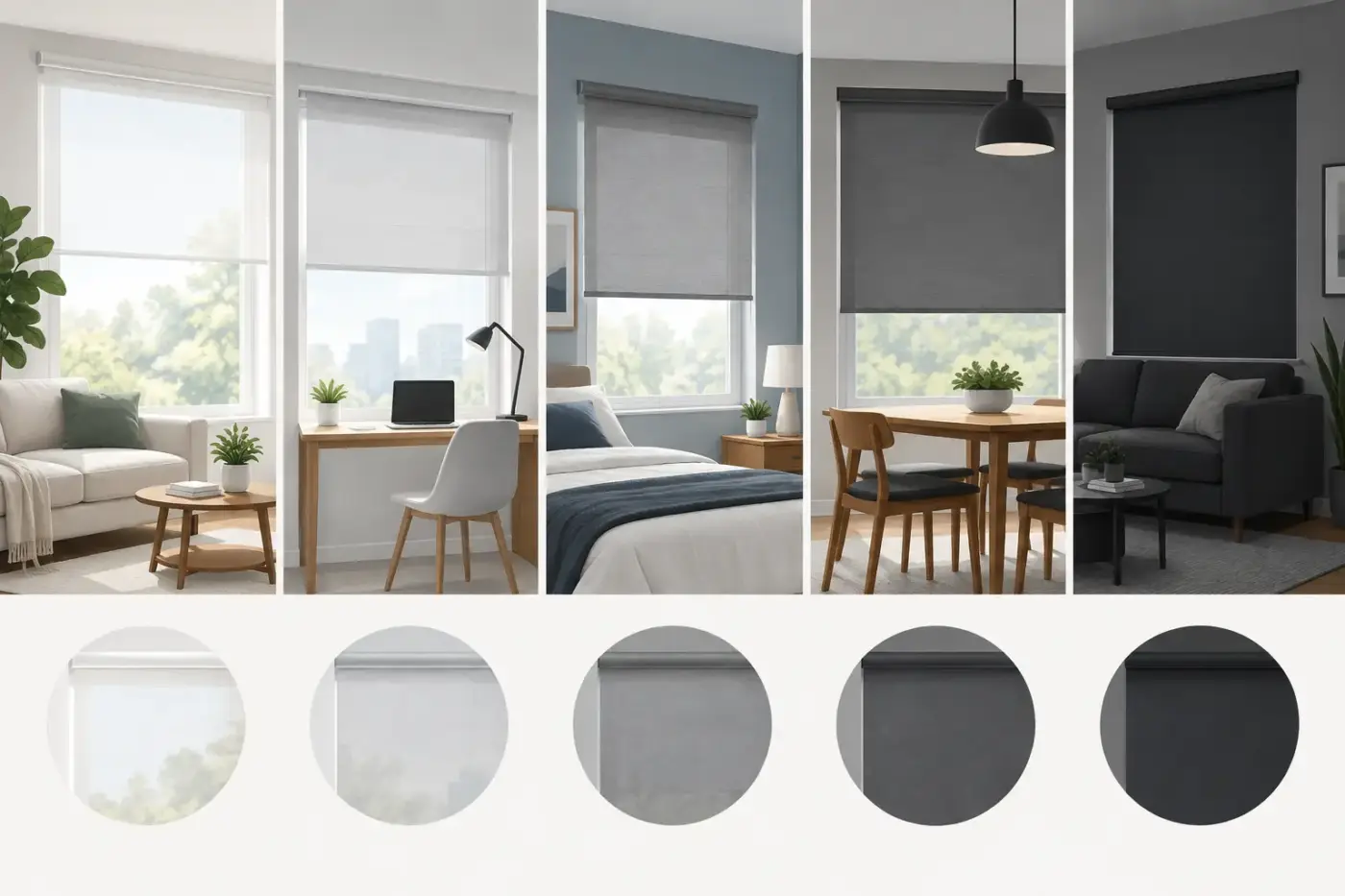
A shade can look perfect in a fabric sample and still feel wrong once afternoon sun fills the room. That is why choosing shade opacity levels is less about picking the prettiest color and more about understanding how a material will perform on your actual windows. In Northwest Colorado homes, where high-altitude sun can be intense and views are often worth preserving, the right opacity makes a noticeable difference in comfort, privacy, and the way a room feels.
Opacity describes how much light a shade allows through when it is closed. It also affects what you can see through the fabric, how visible your interior is from outside, and how effectively the shade softens glare and protects furnishings. The best choice is rarely one opacity used throughout the house. Each room has its own job to do.
What shade opacity really controls
It helps to separate a few terms that are often grouped together. Light filtering shades soften daylight but still allow a room to feel bright. Room-darkening shades block a significant amount of incoming light, though some light may remain around the edges of the treatment. Blackout shades use an opaque material designed to block light through the fabric itself.
Privacy and view are related, but they are not the same thing. A solar shade with a more open weave may preserve a beautiful daytime view while reducing harsh glare. At night, however, interior lights can make that same shade less private. A more tightly woven or more opaque material offers greater privacy but reduces visibility outward.
The shade style also matters. Cellular shades, Roman shades, roller shades, woven woods, and sheer shades each handle light differently, even when described with similar opacity language. A professional consultation is useful because fabrics need to be considered with the window orientation, room use, and mounting details, not in isolation.
A practical way to choose shade opacity levels
Start with the question: what is most frustrating about this window now? If the answer is blinding glare during breakfast, the solution may be different from a bedroom where early summer sunrise interrupts sleep. If a living room has a sweeping mountain view, preserving that view may matter more than creating complete privacy during the day.
For each window, weigh four priorities: daylight, privacy, glare control, and view. Usually, one or two will lead the decision.
Sheer and light-filtering shades for soft daylight
Sheer and light-filtering materials are a strong fit for living rooms, kitchens, dining areas, and other spaces where natural light is welcome. They diffuse direct sun, reduce the sharp contrast on floors and furniture, and give the room a softer, more finished appearance.
These shades work especially well on windows that do not face close neighbors or in rooms where daytime privacy is sufficient. They are also a thoughtful choice when you want to keep a space visually open. A light-filtering roller shade, sheer shade, or gently woven Roman shade can reduce the intensity of sun without making a favorite room feel closed off.
The trade-off is nighttime privacy. When lights are on indoors, silhouettes may be visible through lighter fabrics. In a street-facing living room or a home with nearby properties, consider pairing a sheer or light-filtering shade with side panels, drapery, or a secondary privacy shade.
Solar shades for views and glare reduction
Solar shades are designed for rooms with strong sun exposure and a view you do not want to lose. Their openness factor refers to the density of the weave. A lower openness factor, such as 1% or 3%, blocks more light and glare while offering a more limited view through the fabric. A higher openness factor, such as 5% or 10%, provides a clearer outward view and more daylight, but it allows more sun into the space.
For a home office, a 1% to 3% solar shade can make computer work more comfortable without making the room dark. In a great room with expansive windows, 3% to 5% is often a balanced starting point. It cuts the glare that makes a sofa or dining table uncomfortable in late afternoon while retaining a connection to the landscape.
Remember that solar shades perform best for daytime privacy. At night, they do not provide the privacy of an opaque shade. In bedrooms or ground-level rooms, a layered treatment can provide the best of both worlds: solar shades during the day and drapery or a room-darkening shade when privacy is needed.
Room-darkening shades for bedrooms and media rooms
Room-darkening shades are made for spaces that need a calmer, more protected atmosphere. They are a practical choice for bedrooms, nurseries, media rooms, and guest rooms used by people with different sleep schedules.
They reduce most incoming light and offer substantial privacy. For many bedrooms, that is enough. But if total darkness is the goal, the fabric alone is only part of the equation. Light can still appear at the sides, above the shade, or below the bottom rail, particularly with an inside mount.
A bedroom facing an early sunrise may benefit from a blackout roller shade with side channels, an outside-mounted treatment that covers more of the window opening, or layered drapery. These details are especially valuable in mountain homes, where long summer days can bring light into rooms very early.
Blackout shades when darkness is nonnegotiable
Blackout treatments are the right call when sleep quality, screen visibility, or shift-work schedules require near-total darkness. They are also helpful in home theaters and in bedrooms where exterior lighting or snow reflection creates unwanted brightness.
Blackout does not have to mean heavy or visually plain. Contemporary roller shades, cellular shades, Roman shades, and lined drapery can all provide blackout performance in a range of fabrics and finishes. The key is specifying the entire system correctly. A beautiful blackout fabric with large side gaps will not deliver the result most homeowners expect.
Consider the sun before choosing the fabric
Window direction changes the recommendation. East-facing bedrooms often need stronger light control because morning sun arrives directly and early. West-facing great rooms can experience intense heat and glare in the afternoon. South-facing windows receive prolonged sun exposure through much of the day, while north-facing windows typically need less glare control but may benefit from insulating cellular shades in colder months.
At Colorado elevations, sunlight can be particularly bright, and ultraviolet exposure can be hard on flooring, artwork, and upholstery. A medium or low-openness solar shade can help protect interiors while maintaining a light, livable feel. For rooms that are sunny and cold, cellular shades add another benefit by creating an insulating layer at the glass.
Color matters, too. Darker solar shade fabrics often provide a clearer view outward because they reduce reflected light on the interior side. Lighter fabrics can brighten the room and coordinate beautifully with soft interiors, but they may create more reflection and a less defined view. Neither is automatically better. The right answer depends on whether the view, the interior palette, or maximum glare reduction is the priority.
Layering solves competing needs
Some rooms ask for opposite things at different times of day. You may want bright, view-friendly daylight in the morning and complete privacy at night. Layering is often the most flexible solution.
A solar shade paired with drapery gives a main living area daytime glare control and a finished evening look. A light-filtering shade beneath side panels softens light while allowing the panels to add privacy when needed. In bedrooms, a room-darkening cellular shade paired with drapery can improve both darkness and insulation.
Layered treatments are not simply decorative. They let each component do a specific job, so you do not have to settle for an overly dark room just to get privacy after sunset.
Fit and operation affect the final result
Opacity is only one part of light control. An inside-mounted shade creates a clean, tailored appearance, but it naturally leaves small light gaps. An outside mount can cover more of the window frame and reduce those gaps. The hardware, valance, side channels, and shape of the window all influence the finished performance.
Operation matters in tall great rooms and hard-to-reach windows. Motorized shades make it easier to adjust opacity throughout the day, lowering solar shades when glare is strongest and raising them again when the light softens. For second homes, scheduled operation can also help manage sun exposure when the property is unoccupied.
Seeing materials in the actual room is the most reliable way to make a confident choice. Ben’s Blinds can bring options to your home, evaluate the light at your windows, and help match the right shade opacity to the way you live there. A well-chosen treatment should let you enjoy the daylight and views that drew you to the space, while giving you control when the sun becomes too much.
Comments are closed