
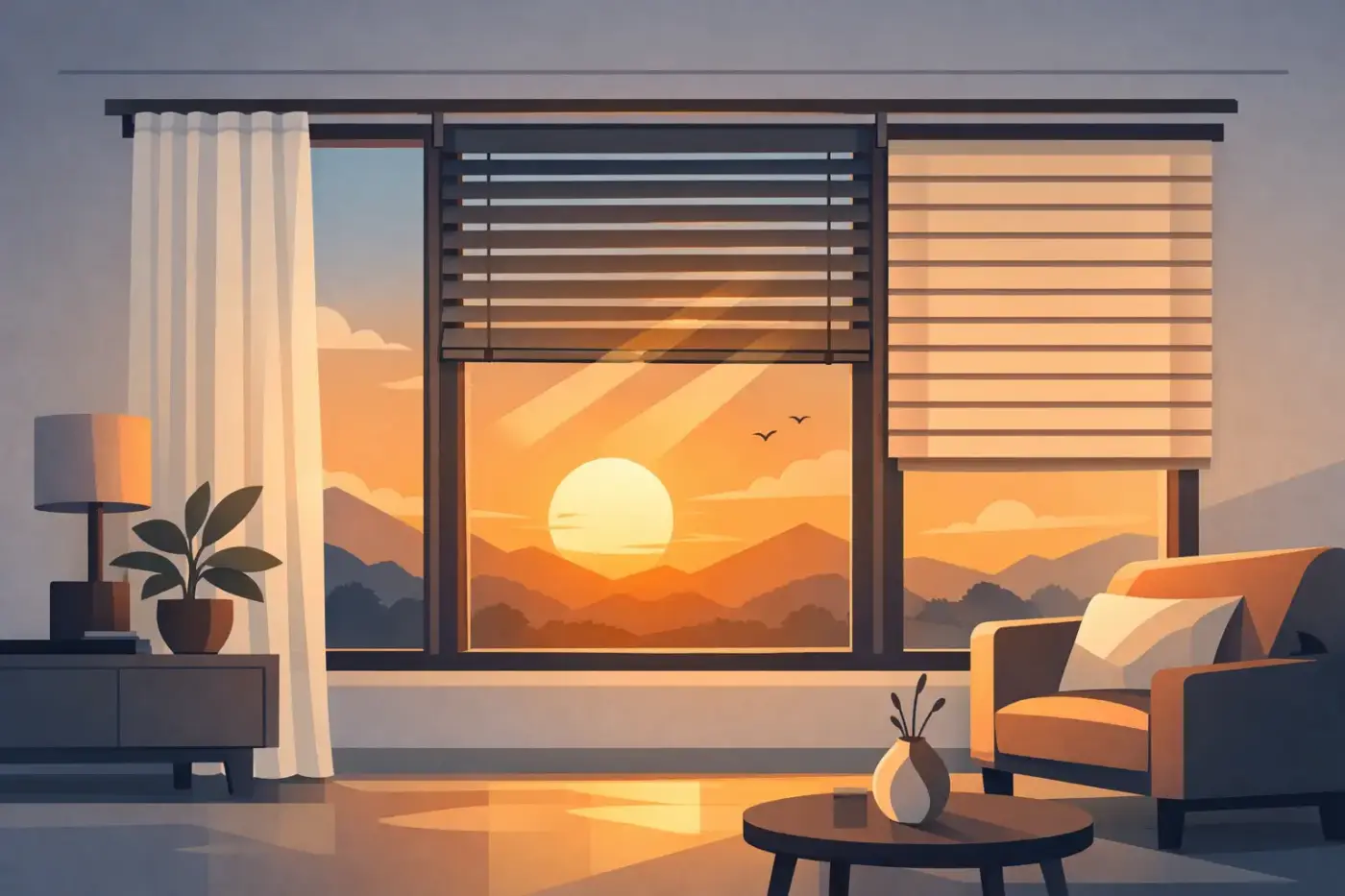
A west-facing window can be one of a home’s best features – until the late-afternoon sun turns a favorite room into a place no one wants to sit. In Northwest Colorado, high elevation and clear skies can intensify that exposure, creating sharp glare, fading fabrics, and unwanted heat just when the day is winding down. The best treatments for west windows do more than cover the glass. They manage powerful light while preserving the views, privacy, and character that made the window appealing in the first place.
The right choice depends on how you use the room, the size and shape of the window, whether the view is a priority, and how much control you want throughout the day. A treatment that works beautifully in a formal dining room may not be the best answer for a media room, a loft with oversized glass, or a bedroom that needs darkness at sunset.
Why West Windows Need Different Treatment
West-facing windows receive their strongest sun later in the day, when the sun is low in the sky and shines directly across a room. Unlike overhead daylight, this low-angle light can slip past roof overhangs and create glare on televisions, computer screens, countertops, and polished floors. It can also make a room feel noticeably warmer during summer afternoons.
Sun exposure is not only about comfort. UV rays and solar heat can gradually affect hardwood flooring, artwork, upholstery, rugs, and wood furniture. No interior treatment eliminates every effect of the sun, but well-chosen shades, blinds, shutters, and drapery can substantially reduce exposure while giving you control when conditions change.
For many mountain homes, the challenge is balancing performance with the view. A heavy, permanently closed treatment may stop glare, but it can also hide the landscape and make a room feel closed in. The most successful solutions allow for adjustment: open when the light is welcome, filter it when it becomes harsh, and close it when privacy or room darkening matters.
Best Treatments for West Windows by Priority
Solar shades for views and glare control
Solar shades are often an excellent fit for west windows with a view worth protecting. Their specialty fabric filters sunlight and reduces glare while maintaining a degree of outward visibility during the day. They are particularly useful in living rooms, home offices, kitchens, and great rooms where direct afternoon light interferes with screens or daily activities.
The openness factor of the fabric makes a real difference. A more open weave preserves a clearer view but allows more light through. A tighter weave provides stronger glare and UV control, although the view becomes more muted. Color matters as well: darker fabrics generally offer better outward visibility during daylight, while lighter fabrics can make the room feel brighter.
Solar shades are not the strongest choice when nighttime privacy is essential. Once interior lights are on, visibility can reverse. For west-facing rooms near neighbors or a street, pairing a solar shade with side panels or a secondary privacy shade can provide more complete coverage.
Cellular shades for insulation and softer light
Cellular shades, also called honeycomb shades, bring valuable insulation to a west-facing window. Their air-trapping cell construction helps moderate heat transfer through the glass, which can make a noticeable difference in rooms that become hot late in the day or feel chilly after sunset.
They are available in light-filtering and room-darkening fabrics. Light-filtering cellular shades diffuse strong sunshine into a gentler glow, making them well suited for bedrooms, dining rooms, and sitting areas. Room-darkening options provide more control for nurseries, media spaces, and bedrooms where evening sun makes it difficult to settle in.
The trade-off is view-through. Cellular shades are designed to soften or block light, not preserve a clear outdoor view. Top-down/bottom-up operation can be a smart compromise for a west window, allowing daylight and sky views near the top while covering the lower portion of the glass for privacy or glare reduction.
Adjustable blinds for precise light direction
Wood blinds, faux wood blinds, and aluminum blinds offer one advantage that fabric shades cannot: adjustable slats. By tilting the slats upward or downward, you can redirect low afternoon sun rather than simply raising or lowering the entire treatment. This makes blinds a practical option for rooms where the intensity of the light changes quickly over a few hours.
Wood and faux wood blinds add warmth and visual structure, especially in mountain homes with natural finishes, beams, or textured interiors. Faux wood is a sensible consideration for areas with higher moisture or frequent temperature swings. Aluminum blinds have a slimmer profile and are durable, making them useful for utility spaces, offices, and commercial settings.
Blinds do have small gaps between slats, so they may not provide the same room-darkening performance as a fitted shade with side coverage. They also require more dusting than a simple roller-style shade. Still, for homeowners who value fine-tuned control and a classic look, they remain a strong option for west exposure.
Plantation shutters for lasting structure and control
Architectural shutters are a refined, durable choice for west-facing windows, especially where the window itself is a design focal point. Their adjustable louvers allow you to control the direction of light, reduce glare, and maintain airflow without covering the window completely.
Shutters are custom fitted to the opening, creating a tailored appearance that works well with traditional, transitional, and mountain-modern interiors. They can be configured with panels that open for an unobstructed view or café-style coverage that shields the lower part of the window while leaving upper glass open.
Because shutters are a permanent architectural treatment, they are best chosen with the room’s long-term design in mind. They provide excellent day-to-day light control, but they do not offer the insulating pockets of cellular shades or the softness and full coverage of layered drapery.
Drapery and side panels for full coverage
Custom drapery is especially valuable on large west-facing windows, sliding doors, and expansive walls of glass. A lined drapery panel can add a substantial layer of light control, privacy, and visual warmth. When closed during the hottest part of the afternoon, it can help reduce solar heat and protect interior finishes from direct sun.
Drapery is also one of the most flexible design tools available. It can soften hard architectural lines, add color or texture, and make a wide window feel intentional rather than overwhelming. For the best performance, consider a quality lining and a generous width that allows panels to stack back from the glass when open.
Layering drapery over a solar shade, cellular shade, or woven shade is often the most complete solution. The shade handles daily glare control; the drapery provides additional privacy, insulation, and room darkening when needed. This approach costs more than a single treatment, but it offers exceptional versatility in rooms that serve several purposes.
Woven and Roman shades for filtered, design-forward light
Woven wood shades and Roman shades bring texture, softness, and a more decorative feel to a west-facing room. They can filter direct sun attractively, turning harsh light into warmer, more relaxed illumination. These styles work particularly well in dining rooms, bedrooms, and living spaces where the treatment should contribute to the overall furnishings.
For strong western exposure, lining is worth discussing. A privacy or light-filtering liner improves coverage, while a room-darkening liner offers greater control. The exact fabric or weave is critical: an unlined natural woven shade can be beautiful, but it may not adequately protect a room with intense afternoon sun.
Consider Operation Before Choosing a Style
A west window often needs adjustment at a specific time every day. If you routinely lower shades at 3:30 p.m. to cut glare, motorization can make that routine easier to maintain. Motorized treatments can be operated by remote, wall control, or scheduled settings, which is especially useful for tall windows, hard-to-reach glass, and second homes.
Motorization is not only about convenience. Consistent use helps protect furnishings and makes rooms more comfortable without requiring someone to stop what they are doing. For large groups of windows, coordinated operation can also create a more polished exterior appearance.
Fit, Fabric, and Professional Measurement Matter
Even the right product can disappoint if it is poorly sized or installed. Small side gaps can allow a surprising amount of late-day light into a room. Mounting position, inside versus outside installation, window depth, trim details, and the treatment’s stack size all affect performance and appearance.
An in-home consultation makes it possible to evaluate the light at the actual window, compare fabric samples against wall colors and furnishings, and determine where stronger coverage is needed. Ben’s Blinds helps homeowners make those decisions with professional measurement and installation, so the finished treatment is designed for the window rather than adapted to it.
A west-facing window does not have to dictate when a room is usable. With a treatment matched to the light, the view, and the way you live, that golden late-afternoon sun can become part of the room’s appeal rather than a reason to avoid it.
No responses yet