
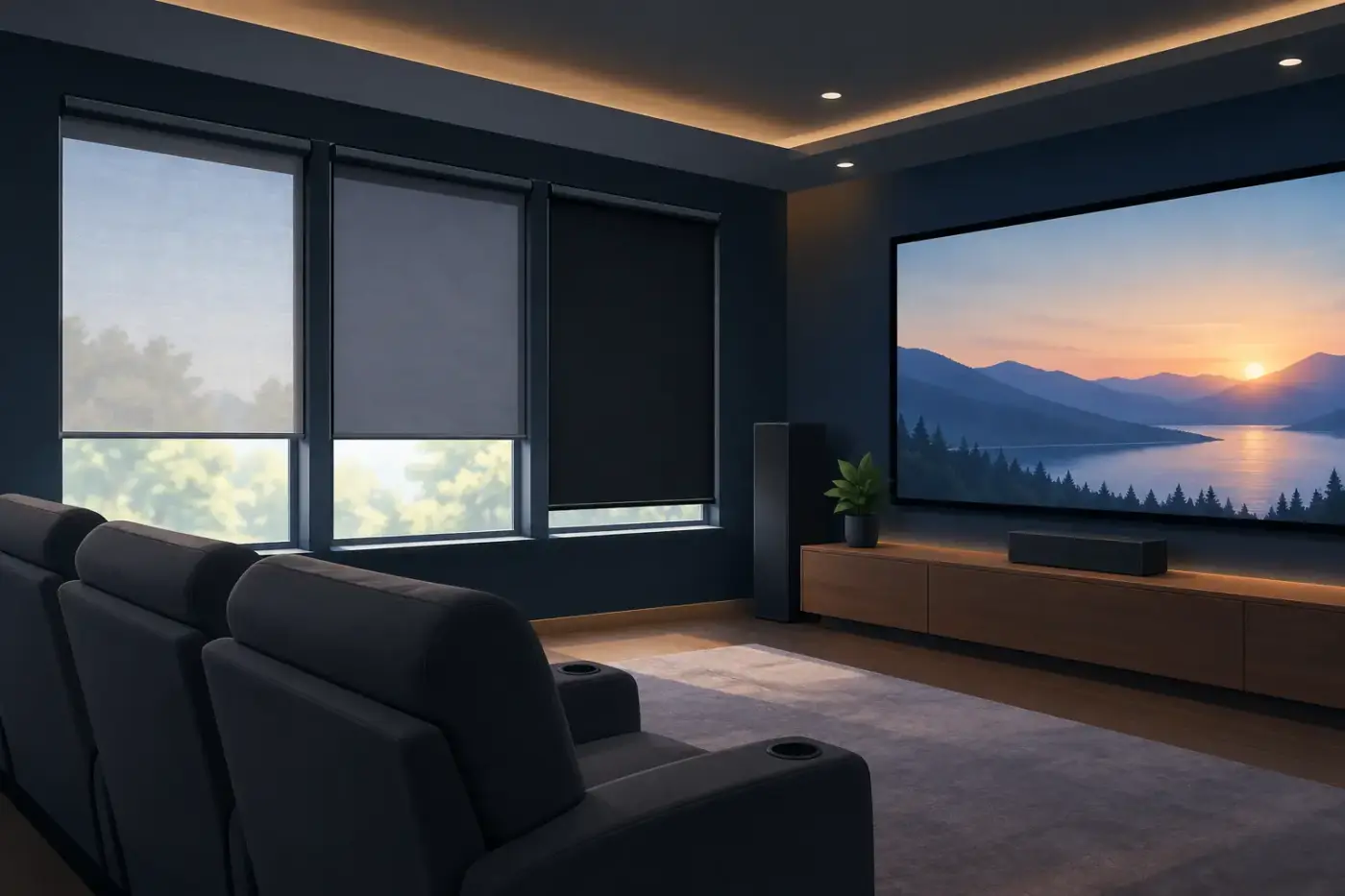
A projector can deliver deep blacks and vivid color, but a bright strip of daylight at the edge of a window can still pull you out of the movie. The best shades for home theaters do more than make a room darker. They control glare, limit light leaks, support year-round comfort, and complement the way the space is used when the screen is off.
For a dedicated theater, light control usually comes first. For a media room that also serves as a family gathering space, the right answer may be a more flexible combination of shades, drapery, and motorized operation. The best choice depends on the window shape, sun exposure, viewing habits, and how dark you truly want the room to become.
What Home Theater Shades Need to Do
A good home theater treatment should reduce both direct sunlight and reflected light. Direct sunlight can wash out an image immediately, while reflected light from snow, pale walls, flooring, or nearby windows can soften contrast even when the sun is no longer shining directly on the screen.
Opacity matters, but it is not the whole story. A blackout fabric blocks light through the material itself, yet small gaps around the sides, top, or bottom of the shade can still allow daylight into the room. This is why custom measurement and the right mounting approach matter so much in a theater setting.
In Northwest Colorado, strong high-altitude sun can be a factor throughout the year. A treatment that keeps afternoon glare off the screen in summer may also help reduce heat loss at the window during colder months. The goal is not simply darkness. It is a comfortable room that performs well for a matinee, a game day, or a late-night movie.
Best Shades for Home Theaters: Top Options
Blackout roller shades
Blackout roller shades are often the most direct answer for dedicated home theaters. Their clean, minimal profile works especially well with contemporary rooms, and they can be made in a wide range of colors and textures. A darker backing can help manage light reflection, while a fabric-forward face can coordinate with the room’s finishes.
For the strongest result, blackout rollers are often mounted outside the window opening. This allows the shade to overlap the window frame and reduces the side gaps common with inside-mounted treatments. Add side channels or a properly designed fascia when maximum room darkening is the priority.
Roller shades are also an excellent candidate for motorization. With one command, multiple windows can lower before a movie starts. That convenience matters in rooms with high windows, large glass doors, or several shades that would otherwise need individual adjustment.
Cellular blackout shades
Cellular shades offer a useful balance of darkness and insulation. Their honeycomb-shaped construction traps air, helping reduce heat transfer at the window. In a mountain home with large expanses of glass, that added insulating value can make the theater feel more comfortable in every season.
Blackout cellular fabrics are well suited to multipurpose media rooms, bedrooms with projection screens, and spaces where energy efficiency carries equal weight with light control. They have a softer, more tailored appearance than roller shades and can visually warm up a room with wood beams, stone, or upholstered seating.
As with any blackout option, consider the gaps around the treatment. An inside-mounted cellular shade may be highly effective without delivering total darkness. For many households, that is entirely sufficient. For a serious projector setup, an outside mount or supplemental drapery may be worth considering.
Dual shades for rooms with more than one job
A dual-shade system combines two fabrics in one window treatment, typically a light-filtering or solar shade and a blackout shade. During the day, the front shade can soften harsh sun, preserve some outward view, and reduce glare without closing off the room. When it is time to watch a movie, the blackout shade lowers behind it.
This is one of the most practical choices for a living room or great room that doubles as a theater. It gives the room a lighter, more open feeling for daily life while providing stronger light control on demand. The trade-off is that dual systems are more complex than a single shade and may require more depth at the window.
Roman shades with blackout lining
Roman shades bring fabric, color, and a more decorative finish to a home theater. With a true blackout lining, they can provide strong light reduction while making the room feel less technical and more like a finished lounge or den. They are particularly effective in media rooms that need to connect visually with the rest of the home.
However, a lined Roman shade will not usually create the same light-blocking seal as a roller shade with side channels. Its folds and side edges may allow small amounts of light into the room. That does not make it the wrong choice. It simply makes Roman shades better suited to homeowners who value design and substantial darkening rather than complete blackout performance.
Woven shades paired with drapery
Woven shades add warmth and texture, but they are generally not a stand-alone solution for a theater. Their natural weaves can allow filtered light through, which is appealing in a living space but not ideal for screen visibility. Pairing them with lined side panels or full blackout drapery offers a more flexible approach.
This layered look can be especially striking in a second home or a great room where the theater equipment should not define the design. The woven shade provides daytime texture and privacy, while the drapery closes for movies. Properly fitted drapery also helps cover the light gaps that shades alone can leave behind.
Do You Need True Blackout?
Not every home theater needs complete darkness. A television is typically brighter than a projector and can perform well with light-filtering shades that control glare. If the room is used mostly for casual daytime viewing, a solar shade or dual shade may provide the right balance of view preservation and screen comfort.
Projectors are less forgiving. Even high-quality projectors lose contrast when ambient light reaches the screen. For a dedicated projector theater, blackout roller shades, blackout cellular shades, or layered shades and drapery are usually the better starting point.
Room finishes matter, too. Darker paint, matte surfaces, and darker flooring absorb more stray light than glossy white walls or light tile. If a room has reflective finishes, more aggressive window coverage can make a noticeable difference in picture quality.
Details That Make a Bigger Difference Than Fabric Alone
The fabric label is only part of the decision. Mounting, fit, and operation determine how the shade performs every day. An inside mount looks tidy but leaves more opportunity for light to enter around the edges. An outside mount offers more overlap and often better room-darkening results.
Consider the window itself. Large picture windows, angled glass, patio doors, and windows set high in vaulted ceilings may require different treatment types within the same room. A coordinated plan can keep the space visually consistent while giving each opening the coverage it needs.
Motorization is worth considering when shades are hard to reach or when the theater has several windows. Preset scenes can lower all theater shades at once, then raise them after the movie. Cordless operation also keeps the room cleaner-looking and avoids cords around seating, electronics, and children.
Finally, do not expect shades alone to solve every acoustic issue. Fabric treatments can soften a room visually, but they are not a substitute for purpose-built acoustic design. If sound control is a concern, lined drapery can be a helpful complement to other acoustic materials.
A Better Way to Choose Theater Shades
The most useful starting point is to watch how light moves through the room. Notice which windows create glare at different times of day, whether light reflects off nearby snow or patios, and how much privacy is needed at night. Then consider whether the room needs to feel dark all day or simply transform for movie time.
At Ben’s Blinds, an in-home consultation makes those decisions easier because fabric samples, mounting options, and shade operation can be evaluated at the actual windows. Professional measurement also helps avoid the small fit issues that can undermine an otherwise excellent blackout treatment.
A home theater should feel inviting before the opening scene and comfortable long after the credits. Choose window treatments that let the room do both.
Comments are closed