
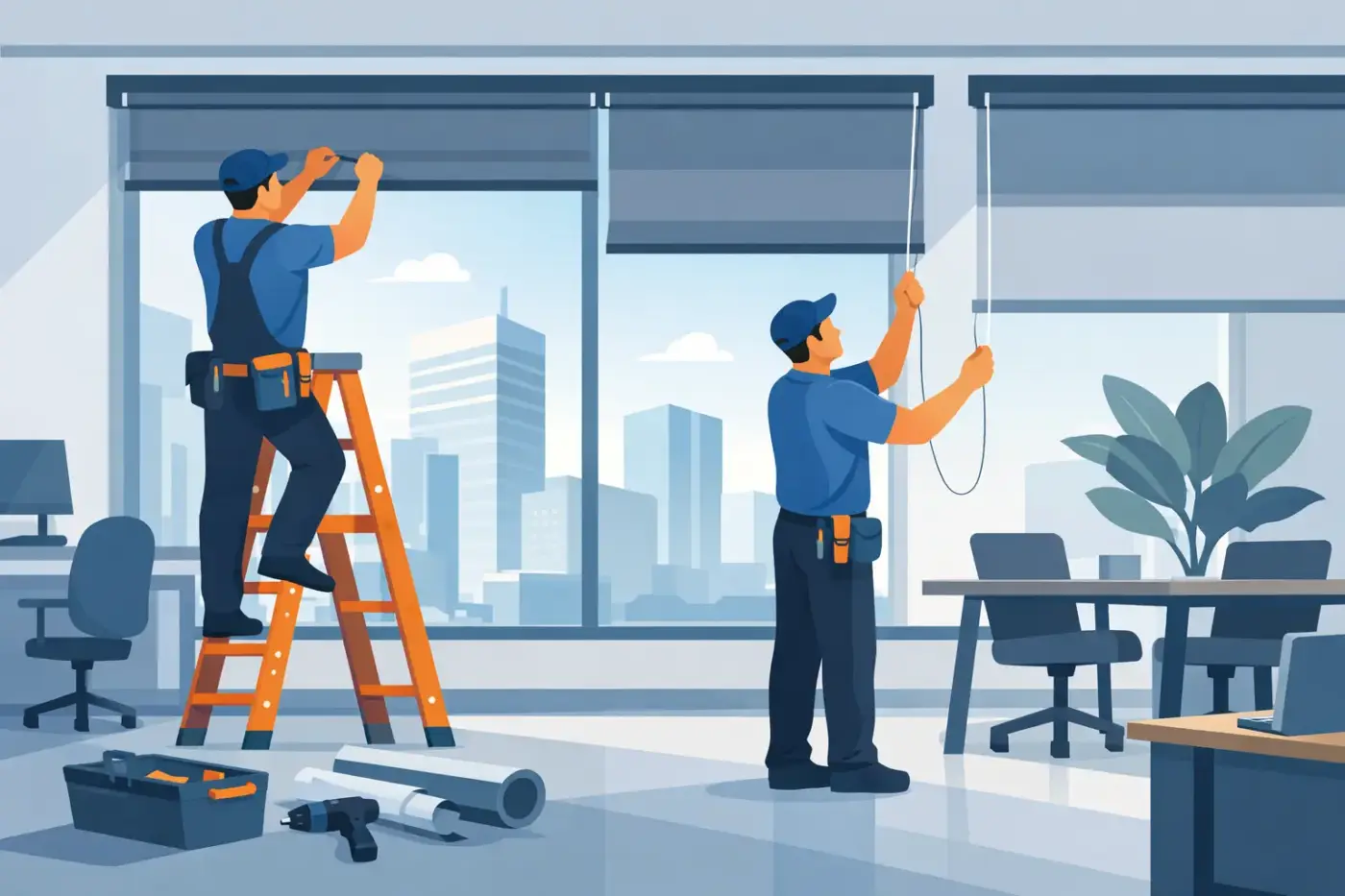
A west-facing conference room can look polished at 8 a.m. and become nearly unusable by midafternoon. Screens disappear in the glare, employees shift seats to avoid the sun, and the room heats up even when the thermostat is working overtime. Commercial window shades installation addresses those daily frustrations, but the best result depends on much more than selecting a fabric and mounting a bracket.
For offices, restaurants, lodging properties, medical practices, retail spaces, and multifamily common areas, window shades need to perform under regular use while supporting the character of the space. A professionally planned installation considers how people use each room, where the sun lands throughout the day, how windows are constructed, and who needs to operate the shades. That early planning is what turns window coverings from an afterthought into a lasting improvement.
Start With the Way the Space Is Used
The right commercial shade is rarely the same for every window in a building. A private office may need glare control without closing off mountain views. A treatment room may require dependable privacy. A restaurant dining area may need to soften direct afternoon sun while retaining a warm, welcoming feel. In a lobby or leasing office, the goal may be a clean, coordinated appearance that holds up to constant attention.
Before product choices are made, walk the space at the times of day when light is most disruptive. Notice which windows create screen glare, fade flooring or furnishings, cause hot spots, or expose employees and guests to outside views. Also consider the view from outside. At street level, shades can affect privacy, security, and the overall impression of the business.
In Northwest Colorado, elevation and clear skies can make solar exposure especially intense. That does not mean every window needs an opaque treatment. It does mean that openness factors, shade direction, and fabric color deserve thoughtful consideration. A lighter solar shade may preserve a view and reduce glare; a more opaque fabric may better suit a room where privacy is nonnegotiable.
Choosing Shades for Performance and Appearance
Commercial projects often benefit from shade styles with straightforward operation, durable materials, and a tailored fit. Roller shades are a frequent choice because they offer a crisp architectural profile and work well across large groups of windows. They are available in solar-screen fabrics that filter light while maintaining outward visibility, as well as room-darkening options for spaces that need more coverage.
For hospitality and design-forward interiors, woven shades, Roman shades, or drapery can add softness and visual depth. These options require more consideration around daily operation, cleaning, and placement, but they can make a public-facing space feel more finished. In rooms where insulation is a priority, cellular shades may help reduce heat loss at the glass while providing a quieter, more comfortable atmosphere.
Material selection should account for maintenance as well as style. A shade that looks right in a private executive office may not be the best choice near a restaurant entrance, in a children’s area, or in a high-traffic rental property. Wipeable fabrics, durable hardware, and simple operating systems can be worthwhile where staff need to maintain the space efficiently.
Color also changes performance. Darker solar fabrics generally offer a clearer view outward and can reduce glare effectively, while lighter fabrics may reflect more heat and create a brighter interior feel. Neither is automatically better. The right choice depends on the window orientation, surrounding finishes, desired privacy level, and the atmosphere the business wants to create.
Why Precise Measurement Matters in Commercial Window Shades Installation
Commercial windows are not always uniform, even when they appear to be. Frames can vary slightly from one opening to the next. Mullions, handles, alarm sensors, trim, sprinkler clearances, and uneven wall surfaces can all affect where a shade can be mounted and how it operates.
Professional measurement confirms the actual dimensions of every opening rather than assuming one set of measurements applies across the room. It also identifies whether an inside mount or outside mount will provide better coverage and a cleaner appearance. An inside mount can look integrated and compact, but it requires sufficient depth and a reasonably square opening. An outside mount can cover more of the glass and reduce side light gaps, though it needs enough wall or trim space for secure hardware.
Large windows introduce additional considerations. A single wide shade may create a minimal look, but it can be heavier to operate and may need more substantial hardware. Dividing a large bank of windows into multiple coordinated shades can make operation easier and allow occupants to control light by zone. The visual rhythm of the window wall matters too, particularly in conference rooms, storefronts, and guest-facing spaces.
Accurate measurement protects the budget. Ordering shades based on approximate dimensions can lead to delays, awkward gaps, interference with window hardware, or a remake that could have been avoided. For a business, that can mean disrupted schedules and a space that remains uncomfortable longer than expected.
Plan the Mounting and Operation Before Ordering
The installation surface matters as much as the shade itself. Brackets may need to be secured into wood blocking, metal framing, concrete, or other substrates. A reliable installer evaluates what is behind the mounting area and selects the appropriate fasteners and support. This is especially important for heavier shades, oversized windows, and motorized systems.
Operation should fit the people using the room. Manual shades can be a practical, cost-conscious solution for individual offices or windows adjusted occasionally. Chain-operated systems offer consistent control but should be installed with appropriate safety devices and tensioning. Cordless options create a clean appearance for certain applications, though they may not be the best fit for very large or frequently adjusted commercial shades.
Motorization is worth considering in shared spaces, tall windows, and areas with many shades operating together. A conference room can move from presentation mode to daylight mode with a button press. A lobby can maintain a consistent appearance across difficult-to-reach windows. Scheduled controls can also help manage sun exposure during predictable parts of the day.
Still, motorization is not necessary everywhere. It adds cost and requires planning for power, charging access, or battery replacement. The most useful approach is often selective: automate hard-to-reach or highly visible windows, and use well-designed manual shades where hands-on operation is simple.
Coordinate Light Control Across the Building
A commercial installation should feel intentional from room to room, even when the functional needs differ. Matching every shade exactly is not always the goal. A street-facing lobby may need solar shades, while an interior meeting room needs room-darkening treatments. What matters is that colors, hardware, and proportions work together.
Think about how shades will look in both open and closed positions. Open shades should stack neatly without blocking too much glass. Closed shades should align consistently across grouped windows. This level of coordination is particularly valuable in properties where tenants, clients, guests, or prospective buyers notice the details.
It is also helpful to establish who will be responsible for operating shades. In a workplace, a lack of clear expectations can result in every window being left down all day, even when daylight would improve the room. Simple controls, clear zones, and settings that match the room’s purpose make it more likely the shades will be used as intended.
Schedule Installation Around Business Operations
Commercial installations need to respect the rhythm of the business. An office may prefer work completed before employees arrive. A restaurant may need installation between service periods. A lodging property may need rooms scheduled around reservations. Planning ahead allows measurement, ordering, and installation to fit the operational calendar rather than interrupt it.
A full-service provider can help keep the process organized by confirming product selections, documenting each window, coordinating delivery, and completing final adjustments once the shades are in place. At Ben’s Blinds, that hands-on approach is designed to give business owners one accountable point of contact from the first on-site conversation through installation.
After installation, test every shade in the conditions it was designed for. Lower solar shades during peak sun, check sightlines from workstations, and operate motorized groups from their intended controls. Small adjustments to limits, alignment, or operating habits can make a meaningful difference in day-to-day comfort.
The best time to plan commercial shades is before glare, heat, and privacy complaints become a routine part of the workday. A careful on-site consultation gives you a clear path to treatments that look appropriate for the space, operate reliably, and make the people inside more comfortable.
Comments are closed