
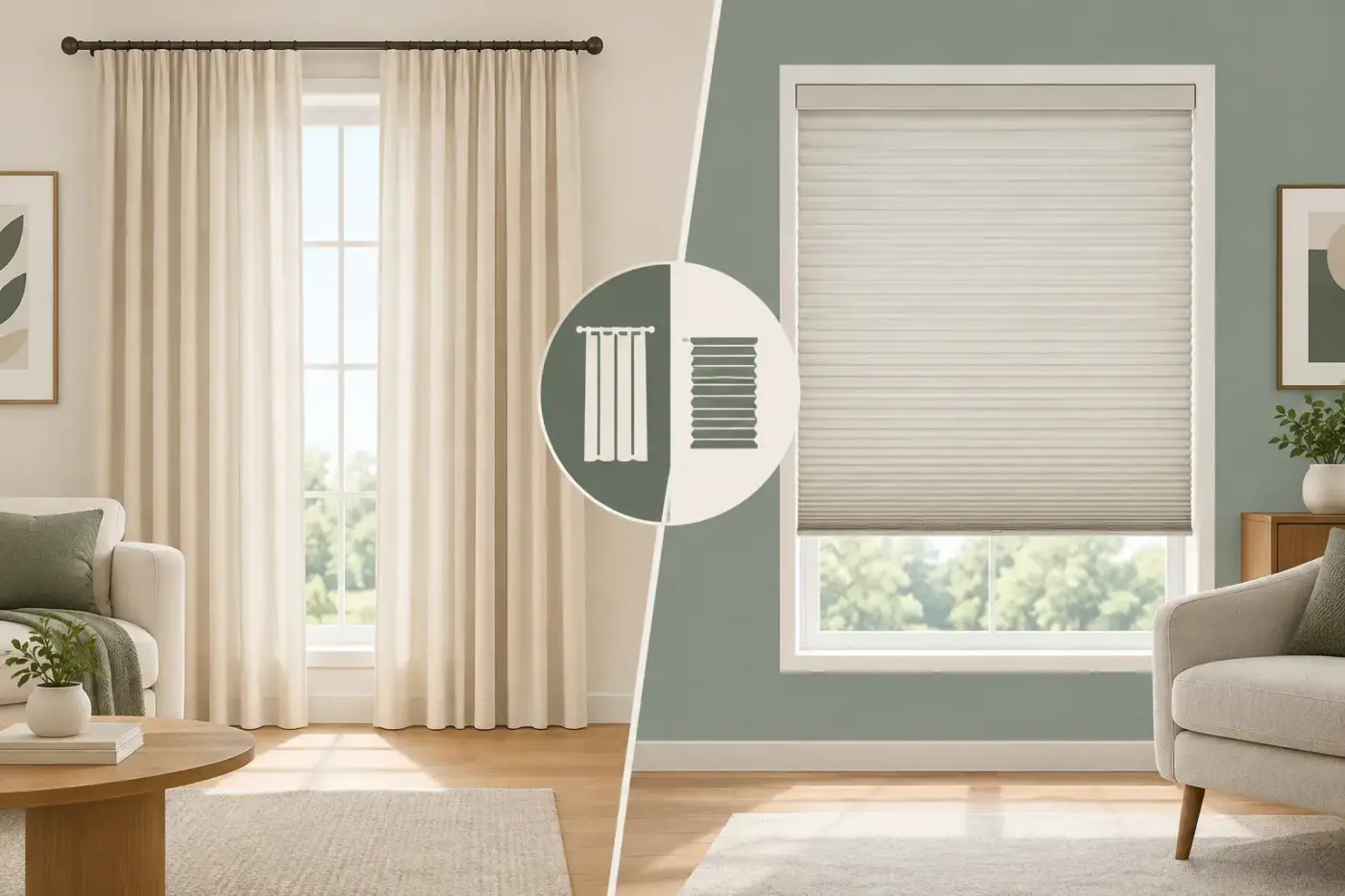
A west-facing great room in the mountains can feel wonderfully bright at breakfast and uncomfortably hot by midafternoon. A bedroom with a dramatic view may need complete darkness at night without making the room feel closed in during the day. That is why the choice between curtains versus cellular shades is more than a decorating decision. Each treatment handles light, privacy, insulation, and proportion differently – and the best answer depends on how you use the room.
Curtains Versus Cellular Shades: The Core Difference
Curtains are fabric panels that hang beside or across a window from a rod or track. They can be sheer, lined, room-darkening, or blackout, and they bring softness, color, pattern, and visual height to a space. Their appeal is largely aesthetic, but the right fabric and lining can also improve privacy and reduce drafts.
Cellular shades, sometimes called honeycomb shades, are engineered fabric shades with air pockets that resemble a honeycomb when viewed from the side. Those cells create an insulating layer at the glass, making cellular shades a particularly practical option for homes that experience cold winters, intense sun, or noticeable temperature swings.
Neither is automatically better. Curtains tend to make the stronger design statement, while cellular shades usually offer more precise day-to-day light control and better window-level insulation. Many homes benefit from using both together.
When Cellular Shades Make the Most Sense
Cellular shades are often a smart starting point for bedrooms, offices, living areas with large glass expanses, and any room where energy performance matters. Because the shade sits close to the window, it helps limit heat loss in winter and reduces solar heat gain when direct sun is strong.
Better insulation at the glass
In a Northwest Colorado home, windows can be a source of both beautiful views and unwanted heat transfer. A cellular shade adds a pocket of still air between the room and the glass. This can make a room feel more comfortable near the window, particularly during cold evenings or on bright, high-altitude afternoons.
Single-cell shades provide useful insulation with a lighter profile. Double-cell options add another layer of air pockets and can be worth considering for especially exposed rooms, large windows, or homes where comfort and energy efficiency are top priorities.
More controlled light and privacy
Cellular shades come in several opacity levels. Light-filtering fabrics soften harsh daylight and reduce glare while keeping the room bright. Room-darkening and blackout fabrics are better suited to bedrooms, media rooms, and spaces where early morning light is a concern.
Top-down/bottom-up operation is one of the most useful cellular-shade features for mountain homes. It lets you lower the top portion of the shade to admit daylight and retain a view of the sky while keeping the lower part covered for privacy. This is especially helpful for windows facing a nearby road, neighboring home, or patio.
A clean fit for challenging windows
Cellular shades work well inside the window opening, which gives them a neat, low-profile appearance. They are also available for many window shapes and sizes, including narrow windows, wide openings, French doors, and skylights. Proper measurement matters here. An inside mount requires sufficient depth and square, usable window openings, while an outside mount can cover more of the glass and help limit light gaps.
Their streamlined look is a strength, but it can also be a limitation. In a room with exposed beams, stone, warm wood, or architectural detail, a cellular shade may provide the function without adding the softer visual layer some spaces need.
Where Curtains Have the Advantage
Curtains are often the right choice when a room needs warmth, character, or a stronger sense of finish. They are particularly effective in great rooms, dining rooms, primary bedrooms, and second homes where a polished, welcoming look matters as much as performance.
Softer design and more visual presence
Fabric changes the feeling of a room in a way few window treatments can. Linen-like panels can feel relaxed and tailored. Velvet or heavier woven fabrics can add richness and help a larger room feel more grounded. Patterned drapery can connect upholstery, rugs, and wall colors without overwhelming the space.
Curtains also offer a useful design tool for windows that feel undersized or too widely spaced. Mounting a rod higher and wider than the window can create the impression of more height and width. This approach can be especially valuable in rooms with vaulted ceilings or expansive walls where a small window treatment might otherwise look lost.
Flexible privacy and room darkening
With the proper lining, curtains can provide excellent privacy and strong room darkening. Blackout-lined panels are a dependable choice for bedrooms and nurseries, though they do not always create total darkness. Some light can still enter around the sides, above the rod, or between panels.
Curtains are simple to operate, but they are generally less exact than shades. Opening them halfway does not provide the same controlled view, privacy, and light balance as a top-down/bottom-up shade. For a room where you regularly adjust coverage throughout the day, that difference can matter.
Insulation depends on construction
Curtains can help with drafts and temperature control, particularly when they are full, lined, and installed close to the wall or window. However, they rarely create the same insulating barrier as a well-fitted cellular shade. A thin decorative panel may make a room look warmer without noticeably changing its comfort near the glass.
For homeowners focused on insulation, curtains work best as a complementary layer rather than the only treatment. Combining lined drapery with cellular shades can improve both comfort and appearance.
Comparing Daily Use in Real Rooms
In a primary bedroom, the decision often comes down to sleep quality and style. A blackout cellular shade provides consistent coverage with a clean look. Adding drapery panels softens the room, frames the view, and can reduce the light that escapes around the shade edges.
In a great room, light-filtering cellular shades can manage glare on screens and furnishings while preserving a bright, open feeling. Curtains may be more appropriate when the room needs a decorative focal point, acoustic softness, or a more layered, finished look. If the windows are exceptionally large, motorized shades can make frequent adjustments far easier.
For a home office, cellular shades usually have the advantage. They reduce glare without requiring you to close off the room completely. Top-down/bottom-up shades are particularly useful when you want natural light above a computer screen and privacy below it.
In a dining room or formal sitting area, curtains often earn their place through proportion and personality. The space may not need frequent light adjustments, and fabric can make the room feel more intentional for gatherings and everyday use.
The Best Answer May Be Both
Layering curtains over cellular shades is not simply a luxury look. It solves several practical problems at once. The cellular shade handles privacy, insulation, and adjustable light control. The curtains add texture, visual scale, and another layer of light management.
This pairing is especially effective in bedrooms and large living spaces with strong sun exposure. You might use a light-filtering cellular shade during the day, then close lined drapery in the evening for added privacy and warmth. In a bedroom, a room-darkening shade combined with blackout-lined drapery can create a much more restful environment than either treatment alone.
The key is planning the layers together. Rod placement, stack-back space, fabric weight, shade depth, and window trim all affect the final result. A treatment that looks balanced in a fabric sample or online image can feel too heavy, too narrow, or difficult to operate once installed.
How to Make the Right Choice for Your Home
Start with the room’s nonnegotiable need. If that need is insulation, glare reduction, privacy with daylight, or frequent adjustment, cellular shades are usually the more functional foundation. If the need is warmth, visual impact, better proportions, or a custom-furnished look, curtains deserve serious consideration.
Then consider the details that are hard to judge without seeing the product in place: the direction of the sun, the depth of the window, the view you want to preserve, ceiling height, existing finishes, and who will operate the treatment. Motorization may make sense for tall, hard-to-reach, or frequently adjusted windows, while cord-free options can provide a clean appearance and straightforward use.
A professional in-home consultation makes these trade-offs easier to evaluate in the actual light of your room. Ben’s Blinds can bring fabrics, shade samples, and operating options to the window itself, then handle measurement and installation so the finished treatment fits the home as well as the plan.
The right window treatment should make your home more comfortable without asking you to give up the light, views, and character that made you love it in the first place.
Comments are closed