
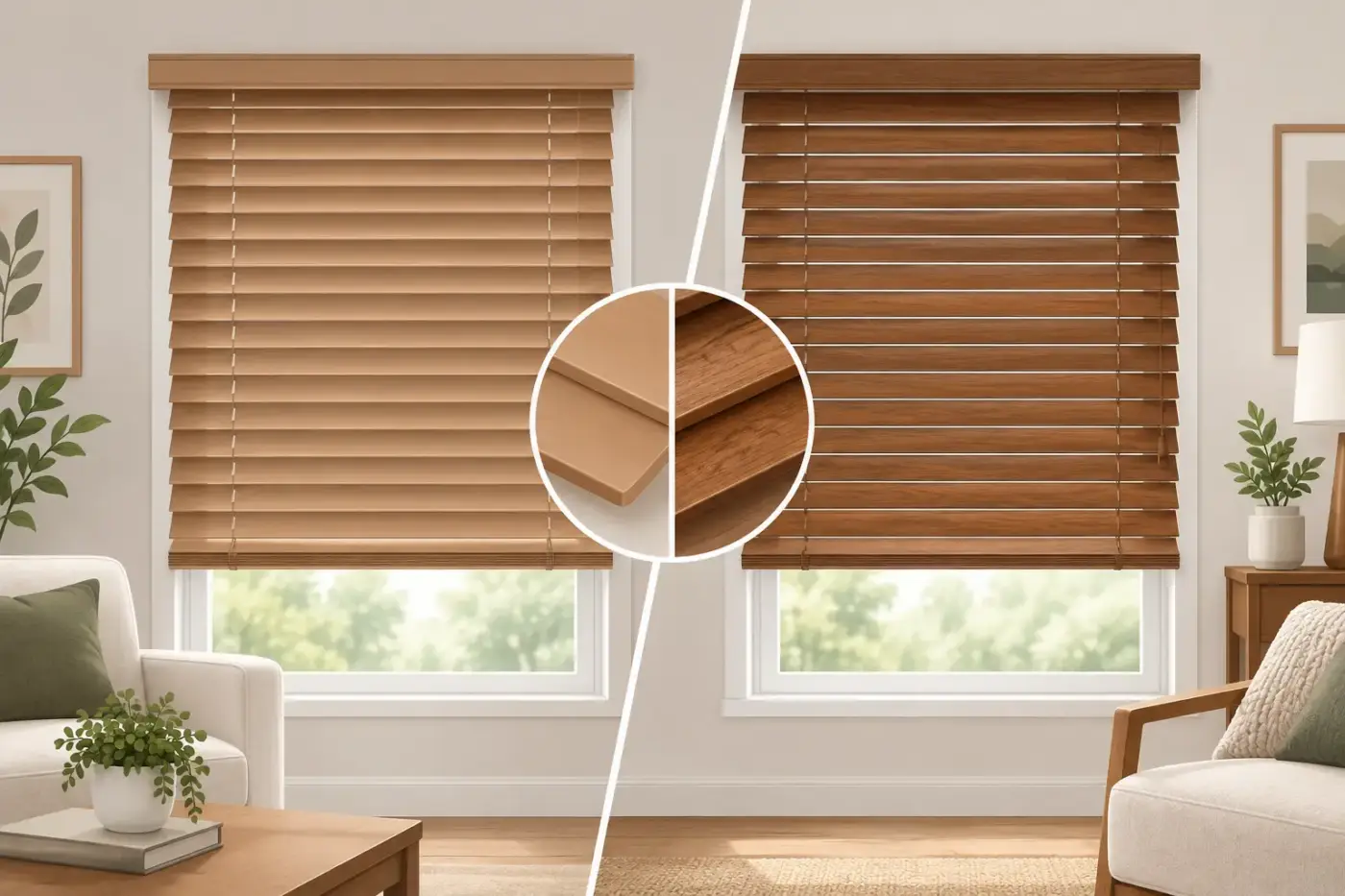
A blind that looks right in a showroom can behave very differently after a few Colorado seasons of bright sun, dry winter air, snowy boots, and daily use. When considering faux wood versus wood blinds, the better choice is rarely about appearance alone. Both offer classic slat styling, adjustable privacy, and dependable light control. The deciding details are usually the room, the window, and how you live in the space.
For a great room with mountain views, real wood may bring the warmth and architectural presence you want. For a bath, laundry room, or hardworking rental, faux wood often delivers the more practical long-term result. Understanding the trade-offs makes it easier to choose a treatment that feels intentional, not merely adequate.
Faux Wood Versus Wood Blinds: The Core Difference
Wood blinds are made from natural hardwood, usually with a painted or stained finish. Their grain, depth of color, and lighter overall weight give them a refined, furniture-like character. They are especially appealing in homes with natural stone, timber details, warm flooring, or traditional trim.
Faux wood blinds are made from durable composite materials, PVC, or a combination of engineered materials. Quality options are designed to recreate the look of painted wood, with smooth finishes and substantial slats. They do not have the natural variation of hardwood, but they offer a clean, consistent appearance that works comfortably in many interiors.
Both products let you tilt slats to direct daylight, reduce glare, and create privacy without fully losing the view. Both can be custom measured for a much cleaner fit than a ready-made blind. The biggest distinctions appear in moisture tolerance, weight, finish options, and cost.
When Real Wood Blinds Make Sense
Real wood blinds add a level of visual warmth that faux materials cannot fully duplicate. A stained wood finish can echo ceiling beams, cabinetry, furniture, or trim, helping a room feel connected rather than pieced together. In a living room, office, dining room, or primary bedroom, that detail can be worth the investment.
Wood is also naturally lighter than faux wood. This matters on large windows, where a heavy blind can be harder to raise and lower and may require more substantial support. For expansive windows common in mountain homes, lighter materials can improve daily operation and make motorization or cord-free controls feel more effortless.
Wood blinds are a strong choice for windows that are well protected from moisture. They perform beautifully in dry living areas, but natural materials can react to changing humidity. Excess humidity may cause warping, bowing, or finish changes over time. For that reason, real wood is generally not the first recommendation for a steamy bathroom, above a kitchen sink, or in a laundry room with regular moisture exposure.
There is also a design consideration. Wood blind finishes tend to offer richer stains and more nuanced color. If your goal is to preserve the character of a custom home, historic space, or room built around natural materials, wood often earns its place.
Where Faux Wood Blinds Have the Advantage
Faux wood blinds are exceptionally well suited to rooms where water, humidity, and frequent cleaning are part of normal life. They resist moisture better than real wood, which makes them a reliable solution for bathrooms, kitchens, laundry rooms, mudrooms, and many commercial settings.
They are also easy to care for. A quick dusting or wipe with a damp cloth handles most routine maintenance. That durability is particularly useful for vacation properties, rentals, homes with children or pets, and spaces that see a lot of traffic. A good faux wood blind provides the traditional horizontal-blind look without asking the homeowner to worry as much about the environment around it.
Cost is another practical advantage. Faux wood is often more budget-friendly than real wood, especially when furnishing several rooms at once. That does not mean it has to look inexpensive. With professional measurement, appropriate proportions, and a finish selected in the actual room, faux wood can look polished and intentional.
The trade-off is weight. Faux wood slats are usually heavier than natural wood, particularly on wide or tall windows. On a small bathroom window, that difference is insignificant. On a large bank of windows, it can influence lift performance, mounting requirements, and the overall feel of the treatment. This is one reason an in-home evaluation is more valuable than choosing strictly from a sample board.
Light Control and Privacy: Similar, With Important Details
Both wood and faux wood blinds provide flexible light control. Tilt the slats upward or downward to soften harsh sun, reduce glare on screens, and protect furnishings from direct exposure. Fully closed slats create useful privacy, while a partially open position maintains a connection to the outdoors.
Neither option creates total blackout conditions on its own. Small light gaps naturally exist between slats and around the edges of the blind. In bedrooms where darkness is a priority, blinds can be paired with lined drapery or another room-darkening treatment. In a living area, those small gaps may be a worthwhile exchange for the classic look and daily adjustability of horizontal blinds.
For high-elevation homes, sun direction matters. West-facing windows can receive intense afternoon light, while large south-facing exposures may need regular adjustment throughout the year. The right slat size, color, and operating system can make those windows more comfortable without covering the view all day.
Consider Energy Efficiency in Context
Wood and faux wood blinds both add a modest layer between the glass and the room, which can help with comfort near a window. Closing the slats during a hot afternoon can reduce direct solar heat and glare. In winter, closing them at night can provide an added sense of insulation.
Still, blinds are primarily chosen for light control, privacy, and style rather than maximum insulating performance. If energy efficiency is the leading goal, cellular shades often provide a stronger insulating benefit because their structured cells trap air. For some homes, the best answer is not choosing one concern over another. Wood blinds in main living areas may provide the desired style, while insulating shades serve bedrooms or especially cold-facing windows.
Color, Finish, and the Scale of the Window
Choose wood when the finish itself is part of the room’s design story. Stained tones can coordinate with alder, oak, walnut, or other wood details, while painted wood offers a crisp, tailored finish. Faux wood is often best in white and soft neutral tones, where its smooth, durable surface feels especially at home.
Slat size affects the result as well. Wider slats create a more open, substantial look and can suit larger windows. Narrower slats may feel more traditional and can work well where a lighter visual profile is preferred. The right proportion depends on the size of the window, trim depth, and the surrounding architecture.
A thoughtful color selection also changes how the blind manages daylight. Bright white can keep a room feeling fresh and clean. Warm whites and soft wood tones can make strong Colorado sunlight feel less stark. Looking at samples against the actual wall color, flooring, and view is the most reliable way to judge the result.
A Room-by-Room Decision Can Be the Best Design Choice
There is no requirement to use one blind material throughout an entire house. In fact, mixing materials strategically often produces the best balance of style and performance. Real wood can define the great room and bedrooms, while faux wood handles bathrooms, laundry spaces, and other high-moisture areas with confidence.
Consistency does not require identical materials in every room. It can come from coordinating slat sizes, similar color families, and a shared approach to mounting and operation. This creates a cohesive home while allowing each room to do its job well.
Professional measuring is especially helpful with blinds because fit affects nearly everything: how well they block side light, how smoothly they operate, whether they clear handles and trim, and how finished they look from inside and outside. Ben’s Blinds can assess those details in the home, where window size, sun exposure, moisture, and design priorities are all visible at once.
The best blind is the one you will enjoy using every day. Let a stained wood finish bring warmth where it matters most, and let durable faux wood take the pressure off in the rooms that work hardest.
Comments are closed