
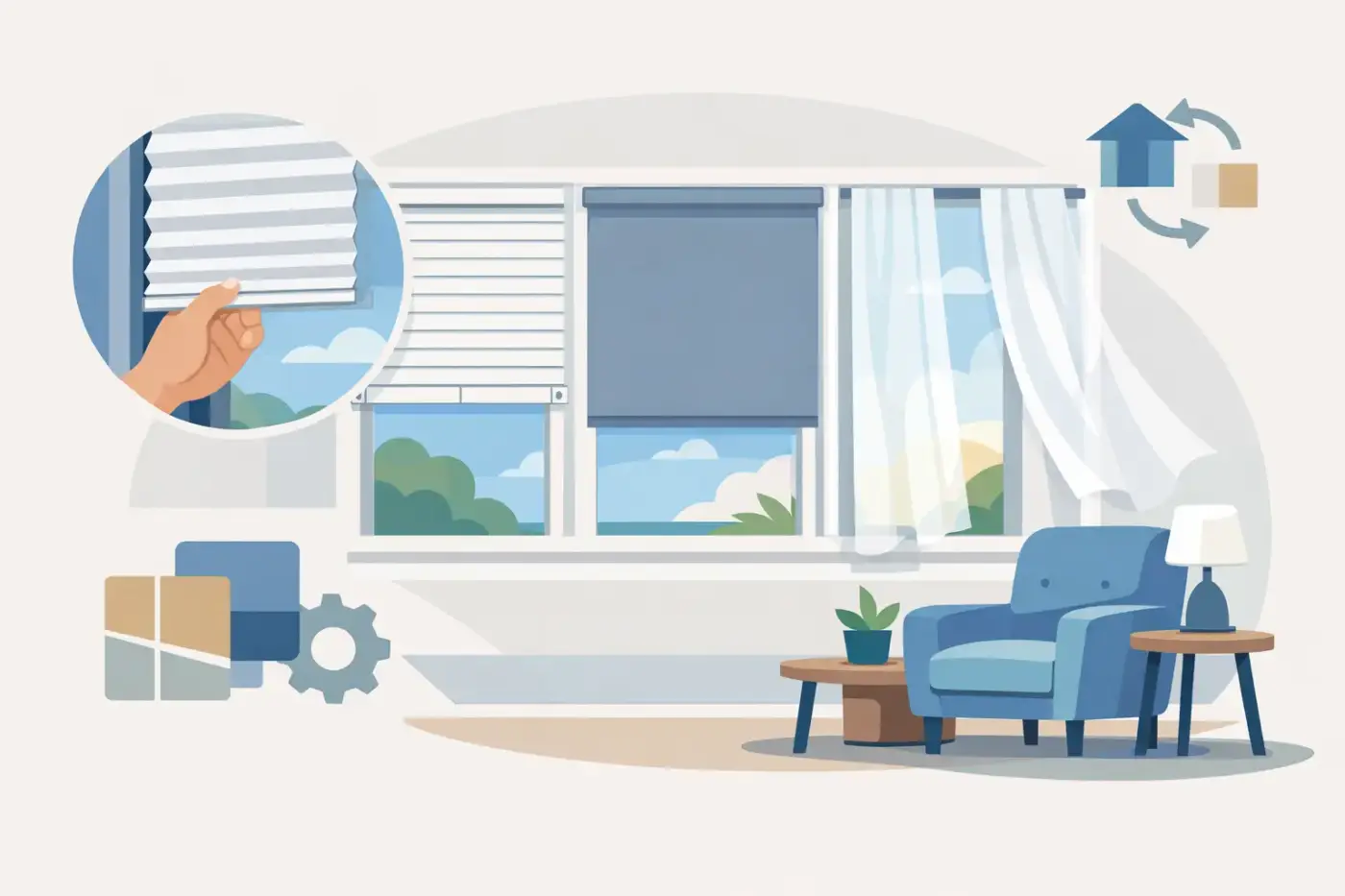
A cord hanging beside a sunny living-room window can interrupt an otherwise polished space, but appearance is only part of the decision. This guide to cordless window coverings explains how cord-free blinds and shades work, where they fit best, and how to choose an option that feels right for your home, your windows, and the way you live in the room.
Cordless operation has become a preferred choice for many homeowners because it creates a cleaner window line and removes accessible lift cords. It can be especially appealing in homes with children, pets, wide views, and carefully designed interiors. Still, “cordless” is not a single product category. The best choice depends on the treatment style, window size, desired light control, and whether you want hands-on or motorized operation.
Why Choose Cordless Window Coverings?
The immediate benefit is a more refined appearance. Without a dangling cord, shades and blinds look intentional from every angle, including when they are raised. That matters in open-concept rooms, bedrooms with tall windows, and spaces where window treatments contribute as much to the design as the furniture or flooring.
Safety is another meaningful consideration. Cordless products eliminate exposed lift cords, which can reduce hazards for young children and pets. This does not mean every window treatment is automatically risk-free. Some products may still have accessible components, and child-safe operation depends on correct product selection and professional installation. If safety is a priority in a nursery, playroom, vacation rental, or family gathering space, discuss the room’s needs before settling on a style.
Cordless operation also makes daily use feel simpler. A well-made shade can be lifted or lowered by its bottom rail, handle, or fabric edge, while cordless blinds typically use a tilt wand or other cord-free control for slat adjustment. For hard-to-reach windows, motorization can provide the same uncluttered look with even greater convenience.
A Guide to Cordless Window Coverings by Style
The right cordless treatment begins with how you need the room to function. Privacy, insulation, glare reduction, and design direction all shape the recommendation.
Cellular shades
Cellular shades are a strong fit for Colorado homes because their honeycomb-shaped construction helps create an insulating layer at the window. That can make a noticeable difference in rooms with winter chill, intense afternoon sun, or large expanses of glass. Cordless cellular shades have a clean, minimal profile and are available in light-filtering and blackout fabrics.
For bedrooms, media rooms, and guest suites, blackout cellular shades can improve darkness and privacy. In living areas, light-filtering fabrics soften bright sunlight while preserving a welcoming glow. Top-down/bottom-up operation is worth considering when you want daylight near the ceiling but privacy at eye level, such as in a bathroom or a street-facing bedroom.
Roller and solar shades
Roller shades offer a crisp, contemporary look and work beautifully when the goal is simple light control with minimal visual weight. Fabric choices range from soft light-filtering materials to room-darkening options, so the shade can fade into the background or become a design element.
Solar shades are especially useful in rooms with mountain views, strong UV exposure, and persistent glare. Their open weave filters sunlight and helps protect furnishings while maintaining an outward view during daylight hours. Openness factor, fabric color, and the direction of the window all affect the result. A more open weave typically preserves more of the view but provides less daytime privacy and light control.
At night, solar shades alone do not offer the same privacy as an opaque shade. Many homeowners pair them with drapery panels or select a dual-shade system that provides both a solar layer and a room-darkening layer.
Roman and woven shades
Cordless Roman shades bring softness and tailored texture to a room. They are a natural choice for dining rooms, bedrooms, and homes that lean traditional, transitional, or relaxed mountain-modern. Depending on the fabric and lining, they can filter light gently or provide substantial room darkening.
Woven wood shades add organic character through materials and textures that feel at home alongside timber, stone, and natural finishes. Their beauty comes with a trade-off: light may filter through the weave, and natural materials can have variations in color and texture. Adding a privacy or blackout liner gives you more control, particularly in bedrooms and homes with nearby neighbors.
Cordless blinds and shutters
Cordless wood, faux wood, and aluminum blinds remain practical choices where adjustable slats are the priority. Tilting the slats allows you to redirect sunlight, balance privacy, and maintain some view without fully raising the treatment. Faux wood is often a smart option in moisture-prone areas because it is durable and easy to maintain.
Shutters do not use lift cords in the conventional sense, and their hinged panels and adjustable louvers offer a durable, architectural solution. They provide excellent light management and can visually anchor a room, particularly on larger or unusually shaped windows. Their more substantial appearance is a feature for some homes and a consideration for others, especially if a softer fabric look is preferred.
Manual Cordless or Motorized Operation?
Manual cordless treatments are dependable, uncluttered, and well suited to accessible windows used throughout the day. They are often the right answer for standard bedroom, kitchen, and living-room windows. A quality treatment should raise evenly, hold at the desired height, and feel comfortable to operate without pulling or forcing the material.
Motorized shades are particularly helpful for tall windows, windows behind furniture, skylights, and large groups of treatments that need to move together. They also make it easy to schedule shades around changing sunlight, which can help manage glare and heat gain in south- and west-facing rooms. Battery-powered motorization avoids visible cords and can simplify installation in many existing homes, while hardwired systems may be a good fit during new construction or major renovation.
The trade-off is cost and planning. Motorization adds convenience, but it also requires decisions about power, controls, battery access, and integration with the room. It makes the most sense when it solves a real daily-use challenge rather than simply adding technology for its own sake.
What to Consider Before You Choose
Start with the window’s role in the room. A primary bedroom may need darkness and privacy, while a great room may call for glare control that protects the view. A home office needs a treatment that reduces screen glare without making the room feel closed off. One home can use several cordless styles while still looking cohesive when colors, hardware, and fabric textures are selected with care.
Window size and shape matter as well. Extra-wide windows may require multiple shades, different lift systems, or motorization to ensure smooth operation. Deep window trim, French doors, sliding doors, and arched openings each require their own approach. A product that looks ideal in a showroom may not offer the same fit or function on a specific window.
Also consider sun exposure throughout the year. Northwest Colorado’s clear skies and high-altitude sun can be hard on flooring, artwork, and upholstery. Treatments that filter UV exposure can help preserve interiors, while insulating cellular shades can add comfort during colder months. The best solution is rarely about blocking all light. It is about gaining control over it.
Why Custom Measurement Makes a Difference
Cordless treatments depend on precise sizing. A shade that is even slightly out of square can leave unwanted light gaps, rub against trim, or operate unevenly. The mounting method, bracket placement, fabric deductions, and clearance around handles all affect the final result.
An in-home consultation lets you compare opacity, color, and texture in the actual light of your home. It is also the right time to test how a cordless treatment will be used around furniture, doors, pets, children, and changing seasonal sun. Ben’s Blinds can help narrow the options, measure each opening accurately, and professionally install the finished treatment so it performs as intended.
Cordless window coverings should make a room easier to enjoy, not add another compromise to manage. Choose the operation and material that support how you use the space, then let the light, views, and comfort of your home take center stage.
Comments are closed