
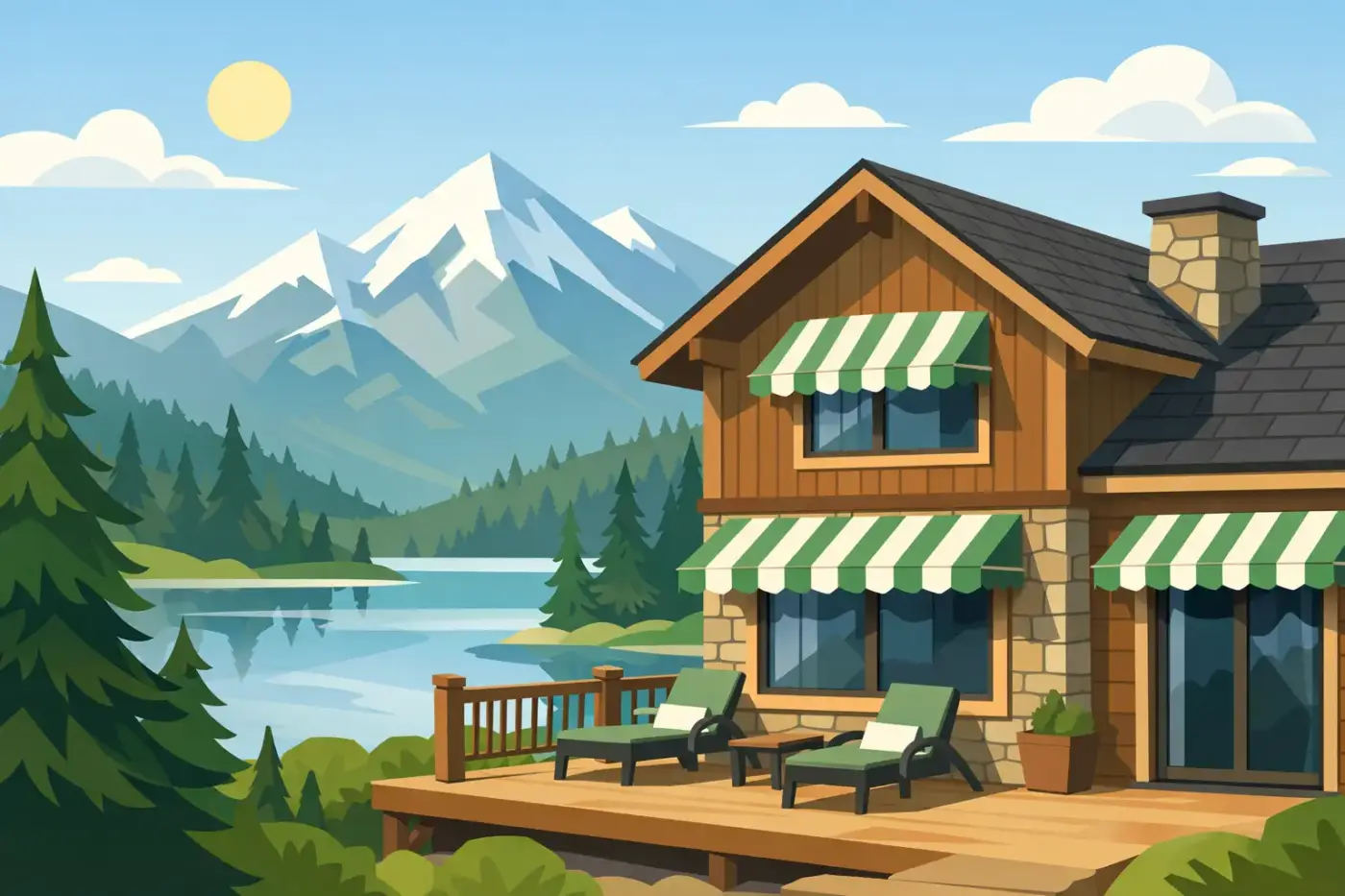
A west-facing window can turn a favorite room into the hottest place in the house by midafternoon. Window awnings address that heat before sunlight reaches the glass, giving homeowners a practical way to reduce glare, protect interiors, and make patios and rooms more comfortable during bright Colorado days.
Unlike interior shades, which manage light after it has entered the window, an exterior awning blocks a meaningful portion of direct solar heat at the source. That difference matters in mountain homes, where high elevation, intense sun, large glass walls, and changing seasonal temperatures can all put comfort to the test. The right awning is not simply an add-on above a window. It is a carefully chosen exterior shading system that should fit the architecture, sun exposure, wind conditions, and the way you use the space.
What Window Awnings Can Do for Your Home
The most immediate benefit is shade. A properly sized awning can soften harsh afternoon light, reduce distracting reflections on screens, and make rooms feel more usable without closing off every view. For homes with hardwood floors, artwork, upholstery, or wood furnishings near sunny windows, exterior shade can also help limit fading caused by prolonged UV exposure.
Window awnings can contribute to energy efficiency as well. When less solar heat reaches the glass, an air-conditioning system may not have to work as hard during warm stretches. The result depends on the direction of the window, the type of glass, insulation levels, and the local weather, so an awning is not a substitute for efficient windows or a well-insulated home. Still, it can be a smart part of a larger comfort plan.
There is also a design benefit. Awnings add depth and character to a facade that may otherwise feel flat. On a contemporary mountain home, a clean-lined metal canopy can look intentional and architectural. On a cottage-style home or a downtown commercial storefront, fabric awnings can introduce color, scale, and a welcoming sense of shelter.
Choosing the Right Type of Window Awning
The best choice starts with function. Do you need reliable shade for a sun-soaked bedroom, protection from light rain at a side entry, or a visual upgrade for a business frontage? Each goal points toward different materials and operating styles.
Fixed Awnings for Consistent Shade
Fixed awnings stay in place year-round and are often the right fit for windows that receive predictable, intense sun. They can be made with fabric over a durable frame or with more rigid materials such as metal. Because they do not retract, they provide shade whenever the sun is out and create a permanent architectural feature.
Their trade-off is flexibility. A fixed awning cannot be rolled away when you want full winter sun through a window, which can be valuable in Colorado. It also needs to be engineered and installed with snow, wind, drainage, and the building surface in mind. The most successful designs balance projection, pitch, and attachment details rather than treating the awning as a one-size-fits-all product.
Retractable Awnings for Flexible Coverage
Retractable awnings are especially useful over patios, decks, and larger openings, though they can also work for select window applications. They extend when shade is needed and retract when you want open sky, natural light, or reduced exposure during storms.
This flexibility appeals to homeowners who enjoy winter sunlight but want relief during the hottest part of summer. Motorization can make operation easy, particularly on high or hard-to-reach installations. Wind sensors are worth discussing for exposed locations, since an awning should be retracted in strong winds unless it is specifically designed to remain deployed under those conditions.
Fabric Awnings for Color and Softness
Fabric awnings have a tailored, classic appearance that works beautifully with traditional homes, resort properties, and retail spaces. Available in solids, stripes, and textured patterns, they can complement exterior paint, stonework, trim, and landscaping without overpowering the home.
Performance depends heavily on the fabric quality and construction. Look for exterior-rated materials designed to resist fading, mildew, and moisture. Darker fabrics generally provide stronger glare control, while lighter colors may keep the visual effect brighter. The choice is not only about color – weave, opacity, and the amount of shade desired all affect the finished result.
Metal Awnings for a More Architectural Look
Metal window awnings offer a crisp, permanent profile and can be a strong option for homes seeking durability with minimal fabric maintenance. They are often selected for modern, industrial, ranch, or commercial architecture. Depending on the design, they may provide strong weather protection and hold up well over time.
The appearance needs careful consideration. A metal awning that is too heavy, too shallow, or mismatched with the roofline can feel out of place. Custom sizing and finish selection help it look like part of the building rather than an afterthought.
Size, Direction, and Seasonal Sun Matter
Awnings work best when their dimensions match the window and the sun path. A south-facing window receives high-angle summer sun and lower-angle winter sun, which creates an opportunity for an awning to shade the window in summer while allowing more warming light inside during winter. The exact result depends on projection, window height, roof overhangs, and surrounding trees or structures.
East- and west-facing windows are more challenging because low-angle sun can penetrate beneath a horizontal awning. For these exposures, a deeper projection, side panels, exterior solar shades, or a combination of exterior and interior treatments may provide better control. A professional assessment is useful here because a solution that looks right on paper can underperform at the time of day glare is most bothersome.
In Steamboat Springs and throughout Northwest Colorado, elevation and weather exposure add another layer to the decision. Snow load, wind, roof runoff, and the condition of the exterior wall all influence what can be installed safely. A durable product is important, but proper measurement, mounting, and hardware selection are just as important to long-term performance.
Coordinate Awnings With Interior Window Treatments
Exterior shading and interior window treatments do different jobs, and they often work best together. An awning can reduce heat and direct sun before it reaches the glass. Inside, cellular shades can add insulation, solar shades can preserve views while filtering glare, and drapery can bring softness, privacy, and design cohesion to the room.
This layered approach is particularly useful in homes with expansive windows. You may want the exterior awning to manage midday heat, then lower interior shades in the evening for privacy. In a bedroom, blackout-capable interior treatments may still be necessary even when an exterior awning reduces the brightness of morning or afternoon sun.
Questions to Settle Before You Buy
Before selecting a style, consider how much shade you need, when you need it, and what the exterior can support. A good project begins with practical questions: Is the window exposed to afternoon sun? Do you want the awning to stay up all year or retract? Is the goal heat control, visual appeal, weather protection, or all three? Will it need to coordinate with shutters, siding, stone, or existing exterior finishes?
Budget should include more than the awning itself. Custom fabrication, mounting conditions, motorization, electrical access, and professional installation can all affect the final investment. That does not mean every project needs the most complex system. It means the recommendation should reflect the home rather than a standard retail size.
A thoughtful in-home consultation makes those decisions easier. Seeing the window orientation, checking the mounting area, and reviewing finish samples in natural light can prevent costly compromises. Ben’s Blinds helps homeowners evaluate exterior shading alongside the interior treatments that make a room comfortable from morning through night.
The best window awning is the one that earns its place every sunny day: it should cool the space, suit the architecture, and let you enjoy the views and light that made you love the home in the first place.
Comments are closed