
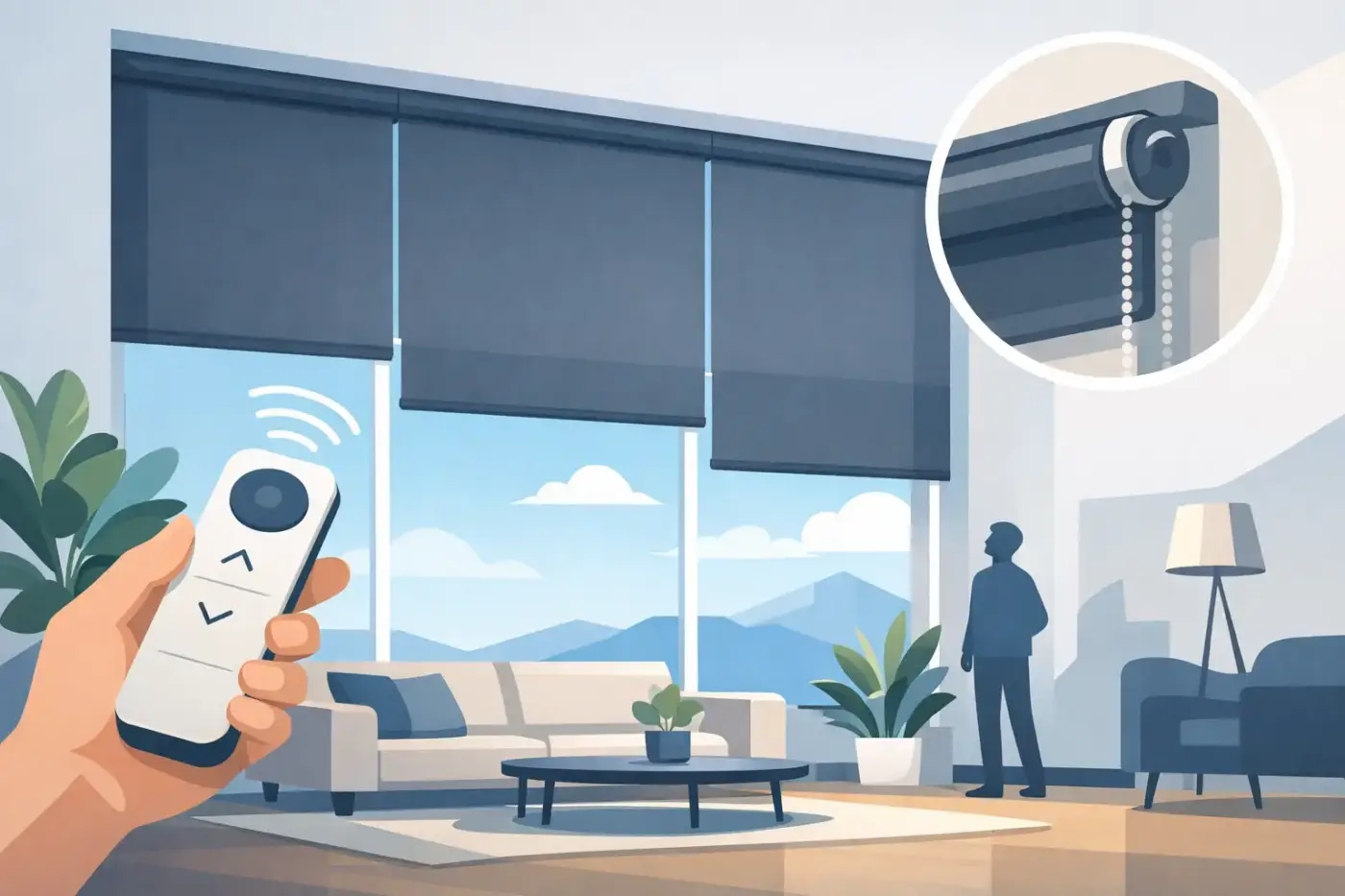
A spectacular two-story window can make a room feel open, bright, and connected to the Colorado landscape. It can also become the one window you cannot comfortably adjust when afternoon glare hits the sofa, summer sun warms the room, or privacy matters after dark. Motorized shades for high windows turn that hard-to-reach glass into a useful part of the home rather than a permanent source of light and heat.
For tall great rooms, stairwells, lofts, and windows above patio doors, motorization is not simply a luxury feature. It is a practical way to manage light, comfort, and privacy every day without a pole, ladder, or awkward manual cord. The best result comes from choosing the shade style, fabric, power source, and controls as one coordinated system.
Why high windows need a different approach
A shade that works beautifully at eye level may not be the right answer 15 feet above the floor. High windows are more exposed to direct sun, harder to clean and service, and often grouped in ways that make uneven positioning noticeable. They also tend to sit in rooms where daylight is a major design feature, so the window treatment needs to control the light without making the architecture feel heavy.
Manual operation is possible in some situations, particularly with a continuous-loop control or an extension pole. But it asks you to reach the window every time conditions change. In a mountain home, those conditions can change quickly. Morning light may be welcome, while intense late-day sun can create glare on a television, fade furnishings, and make a room feel warmer than it should.
Motorization lets multiple shades move together at a chosen time or with the touch of a button. That consistency is especially valuable for a bank of high windows. Instead of leaving one shade halfway open because it is difficult to reach, you can set every shade at the same height and maintain a clean, intentional look.
Choosing motorized shades for high windows
The right shade begins with what you need it to do. A room with dramatic views may call for filtered light and reduced glare rather than complete darkness. A bedroom, media room, or guest suite may need room-darkening performance. Windows that face a neighboring property may need privacy at night without losing daylight during the day.
Solar shades for view and glare control
Solar shades are often a strong choice for high, sun-exposed windows. Their specialized fabrics reduce glare and filter ultraviolet light while preserving an outward view during the day. They have a clean, architectural profile that suits contemporary homes, great rooms, and commercial spaces.
Openness matters here. A more open weave preserves a clearer view and admits more light, while a tighter weave provides greater glare and heat control. The right balance depends on the orientation of the windows, the view, and how the room is used. For a south- or west-facing wall of glass, a tighter fabric can make a meaningful difference in comfort.
Cellular shades for insulation
High windows can contribute to heat gain in summer and heat loss in winter. Cellular shades add an insulating layer through their honeycomb construction, making them a thoughtful option for bedrooms, living spaces, and other rooms where year-round comfort is the priority.
They are available in light-filtering and room-darkening fabrics, so they can serve a range of needs. For very tall windows, professional specification is helpful because fabric weight, shade width, and lift system all affect how the shade hangs and operates over time.
Roller, Roman, and woven shades for design impact
Roller shades offer crisp lines and a wide range of fabrics, from subtle light filtering to blackout materials. They are a natural fit when the window treatment should recede into the architecture. In a high great room, they can be mounted to keep the upper wall clean while still giving the homeowner reliable control.
Roman and woven shades bring more texture and softness. They can be especially effective when high windows are part of a larger composition with lower windows, drapery, or natural wood finishes. These styles may not be the first choice for every oversized opening, but the right fabric and motor system can create a warmer, more layered result than a strictly minimal shade.
Power options: plan for access and long-term use
Motorized window treatments are generally powered by rechargeable battery systems, hardwired power, or low-voltage wiring. None is universally best. The right choice depends on the window location, whether the home is under construction or being remodeled, how often the shades will be used, and how easy it will be to access them later.
Rechargeable battery motors are popular for existing homes because they avoid opening walls and can provide a clean installation. For high windows, however, battery access should be considered before the shades are ordered. Some systems can be recharged with an extension cable or charging wand, while others may require a technician or safe access method depending on the location.
Hardwired or low-voltage motors are often ideal for new construction and major renovations. Power is concealed, there are no batteries to recharge, and the system is well suited to frequently used shades or large groups of windows. It requires early coordination with an electrician and the window-treatment professional, which is far easier before drywall is in place.
A qualified consultation should cover more than whether power is available. It should account for the motor location, route for any wiring, the size and weight of each shade, and a sensible maintenance plan for the life of the treatment.
Controls should fit the way you live
A wall switch near the room entry is convenient for daily use, while a handheld remote can control a group of shades from across the room. App-based control can be useful for second homes, allowing homeowners to adjust shades before arriving or while away. Many systems also integrate with compatible home-control platforms and voice assistants.
Automation can be particularly useful with windows that are too high to adjust manually. A schedule can lower shades during the brightest part of the afternoon and raise them after sunset. Some systems use light or temperature conditions to help guide shade movement. Automation should support your routine, not create one more system to manage, so simple controls are often the best controls.
Privacy deserves attention when setting schedules. Solar shades offer excellent daytime glare control, but they do not provide the same nighttime privacy when interior lights are on. In rooms where privacy is essential, consider a room-darkening fabric, a dual-shade arrangement, or coordinating high shades with privacy treatments on lower windows.
Details that determine whether the finished look feels right
Mounting position changes both performance and appearance. An inside mount can emphasize clean window lines when the opening is square and deep enough. An outside mount can cover more glass, reduce light gaps, and accommodate openings that are not perfectly uniform. High windows sometimes need special mounting brackets or blocking behind the wall, particularly when shades are wide or heavy.
Fabric color matters, too. Lighter shades may reflect more solar energy and feel airy, while darker solar fabrics can offer a stronger outward view and a more defined visual presence. The color should be evaluated in the actual room, alongside wall finishes, flooring, and the changing daylight. A small swatch viewed in a showroom cannot fully show how a fabric will look across a two-story wall of glass.
For grouped windows, consistent alignment is essential. The bottom rails should stop at the same height, and the valances or fascia should create a unified top line. Precise measuring is what makes that polished result possible, especially in mountain homes where large windows, timber framing, stone, and uneven surfaces can complicate installation.
Professional measurement protects the investment
High windows are not a forgiving place for a near miss. A shade that is slightly too narrow can allow distracting shafts of light. A mounting point that is not properly supported can affect operation and safety. A motor selected without accounting for the shade’s size and fabric weight may not deliver the quiet, reliable performance you expect.
Professional measuring also gives you the chance to evaluate light direction, view corridors, trim depth, ceiling height, and electrical access in person. At Ben’s Blinds, that in-home process helps narrow a wide range of fabrics and systems into an option that makes sense for the room, the home, and the way you plan to use it.
The most satisfying high-window treatments preserve what made the windows appealing in the first place: the light, the view, and the sense of scale. With a properly specified motorized shade, you get to enjoy those features on your terms, whether the day calls for bright mountain light or a little more comfort and control.
Comments are closed