
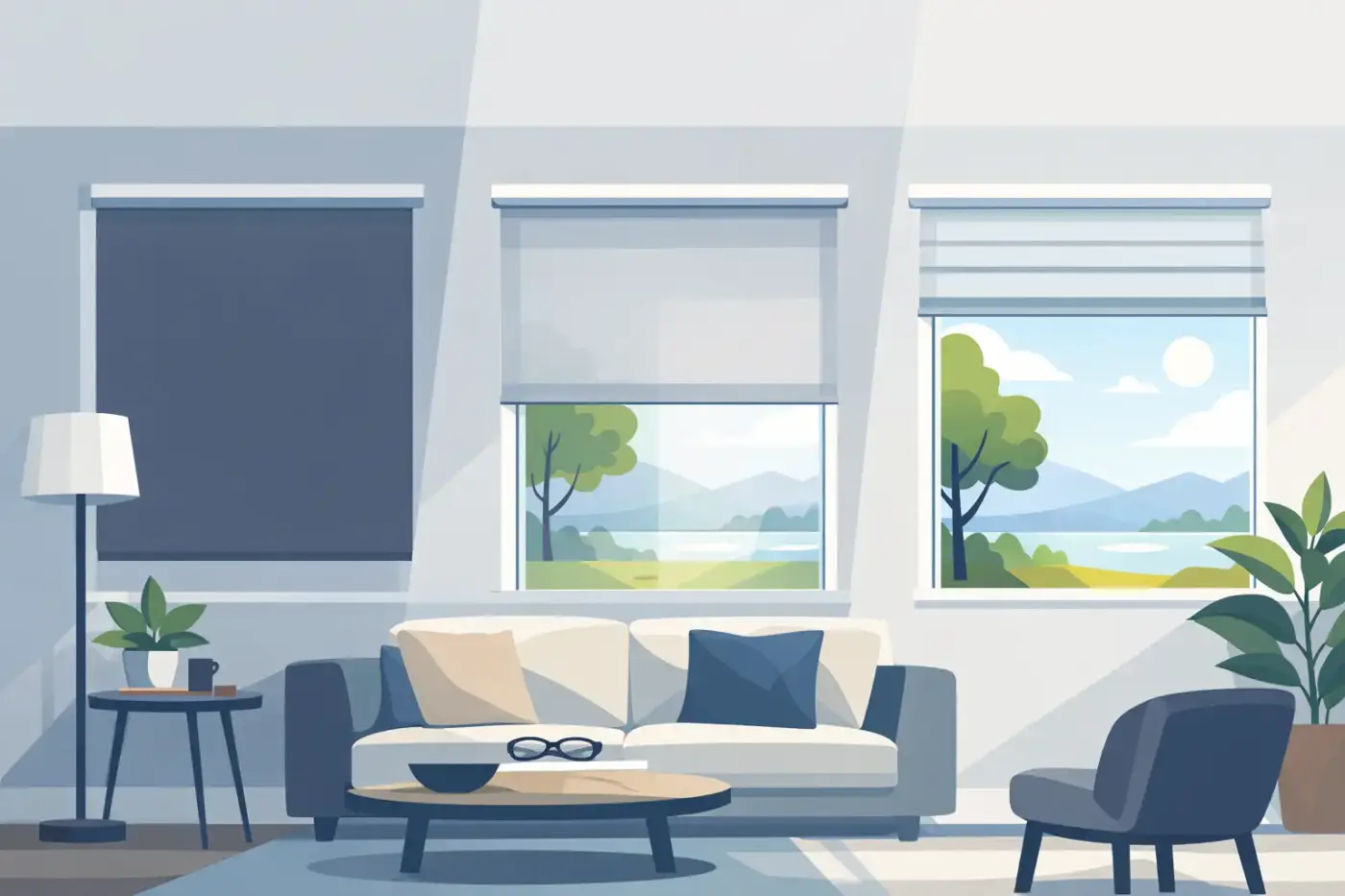
A south-facing great room can be bright and beautiful at 9 a.m., then nearly impossible to enjoy by midafternoon. In mountain homes, high-elevation sun, reflective snow, and expansive views make understanding window shade openness especially useful. It is one of the key details that determines whether a shade preserves the view you love or provides the relief your room needs.
Shade openness is most often discussed with solar roller shades and screen fabrics, but the decision affects far more than appearance. It influences glare on screens, UV exposure on flooring and furnishings, daytime privacy, and the overall feel of the room.
What Window Shade Openness Means
Openness refers to the percentage of open space in a shade fabric’s weave. A 1% openness fabric has a very tight weave with very small openings. A 10% fabric has a more open weave, allowing more light and a clearer outward view.
Think of it as looking through a finely woven screen. The greater the openness percentage, the easier it is to see through the material during the day. At the same time, more light can enter the room, along with more potential glare and less daytime privacy.
Openness is not the same as a shade’s color, thickness, or room-darkening ability. Those factors matter too. A fabric can look substantial in a sample yet have a relatively open weave, which is why viewing materials at the actual window is so valuable.
How Different Openness Levels Perform
There is no universal best percentage. The right choice depends on what happens in the room, which direction the windows face, and how much privacy you need.
1% to 3%: Stronger Control and More Privacy
Lower-openness solar shades are often a good fit for rooms with intense direct sun, close neighboring homes, or frequent screen use. They reduce glare more effectively and provide a greater degree of daytime privacy than more open fabrics. They also limit UV exposure, helping protect hardwood floors, artwork, upholstery, and rugs from fading over time.
The trade-off is a softer, less detailed view. You can still see outward, particularly through a darker fabric in daylight, but the shade reads more like a filter between the room and the landscape. A 1% fabric can be an excellent choice for west-facing windows, home offices, and media spaces where light control is a higher priority than a crisp view.
5%: The Popular Middle Ground
A 5% openness shade is often a balanced choice for living areas, kitchens, and great rooms. It admits pleasant natural light while reducing the harshness that causes squinting, screen glare, and overheated areas near the glass. The view remains visible, although it has a more filtered character than it would through a 10% fabric.
For many Colorado homes, 5% offers a practical compromise. It can soften the strong afternoon sun without making a room feel closed off from the mountains, trees, or ski-area views beyond the windows.
7% to 10%: Clearer Views and Brighter Rooms
Higher-openness fabrics are best for homeowners who place the highest value on maintaining an open connection to the outdoors. They let in more daylight and preserve more visual detail, making them appealing for windows with exceptional views and limited direct exposure.
The trade-off is reduced glare control and less daytime privacy. A 10% shade may feel too open on a west-facing window or in a room where nearby homes look directly in. It can be a beautiful choice for a shaded elevation or a remote-view property, but it is not always the most practical answer for every wall of glass.
Daytime Privacy Is Not Nighttime Privacy
One of the most common misunderstandings about solar shades is that a lower openness percentage provides complete privacy. It does not.
During the day, when it is brighter outside than inside, solar shade fabrics can provide useful privacy while maintaining a view out. At night, that relationship reverses. With interior lights on and darkness outside, people outdoors may see silhouettes or activity inside, especially with a more open weave.
Bedrooms, bathrooms, street-facing rooms, and windows near neighboring properties often need a second layer for nighttime privacy. This could be a room-darkening roller shade, a cellular shade, drapery panels, or a dual-shade system that pairs a solar shade with a privacy shade. The best solution allows each layer to do its job rather than asking one fabric to handle every condition.
Openness, Color, and Direction All Work Together
The openness percentage is only one part of the performance equation. Fabric color changes how a shade manages light and views. Darker solar fabrics generally provide a sharper view outward because they reduce reflected light on the room side of the shade. Lighter fabrics can make the interior feel brighter and may better complement a soft, airy design palette, but the view through them can appear less defined.
Window direction matters just as much. South- and west-facing glass often needs stronger glare and heat management, particularly at elevation. East-facing rooms may need help with morning glare, while north-facing windows may allow for a more open fabric when privacy permits. Snow reflection can also intensify light from below, creating glare even when the sun is not directly in the window.
A home does not have to use one openness level everywhere. A great room may benefit from 5% solar shades on the sunny side and a more open fabric on protected view windows. Bedrooms may use solar shades for daytime light filtering and a separate blackout layer for restful sleep. Custom treatments should respond to the room, not force every room into the same formula.
What Openness Does Not Solve
Solar shades are excellent for filtering light, reducing glare, and protecting interiors from UV exposure. They can also make a warm room more comfortable by reducing solar gain. However, they are not typically the first choice when insulation is the primary concern.
For windows that feel cold in winter, cellular shades are often worth considering because their honeycomb construction creates insulating air pockets. Lined drapery can also add softness and another layer at the glass. For a room that needs both view preservation and year-round comfort, a layered approach may be more effective than choosing a solar shade alone.
Likewise, no openness level creates total darkness. If a space needs a theater-like experience, a nursery-darkening solution, or dependable sleep conditions, room-darkening or blackout materials with proper side coverage should be part of the conversation.
How to Choose the Right Openness for Your Windows
Start with the room’s daily frustrations. If you routinely move seats to avoid glare, cannot see a laptop screen, or notice fading near a wall of windows, a lower openness level may be worthwhile. If the view is the reason you chose the home and the window has little direct sun, a higher openness fabric may be the better fit.
Then consider privacy at the times you actually use the room. A secluded mountain property may have very different needs than a condo near a neighboring building. Finally, look at samples against the glass in both bright daylight and, when possible, evening conditions. Fabric behaves differently in a showroom than it does in your home.
At Ben’s Blinds, an in-home consultation makes those comparisons easier. You can see how fabric openness, color, and operating style work with your exposure, furnishings, and view before committing to a custom treatment.
The most comfortable rooms are not necessarily the darkest or brightest ones. They are the rooms where the light feels intentional, the view remains available when you want it, and the shade works quietly in the background of everyday life.
Comments are closed