
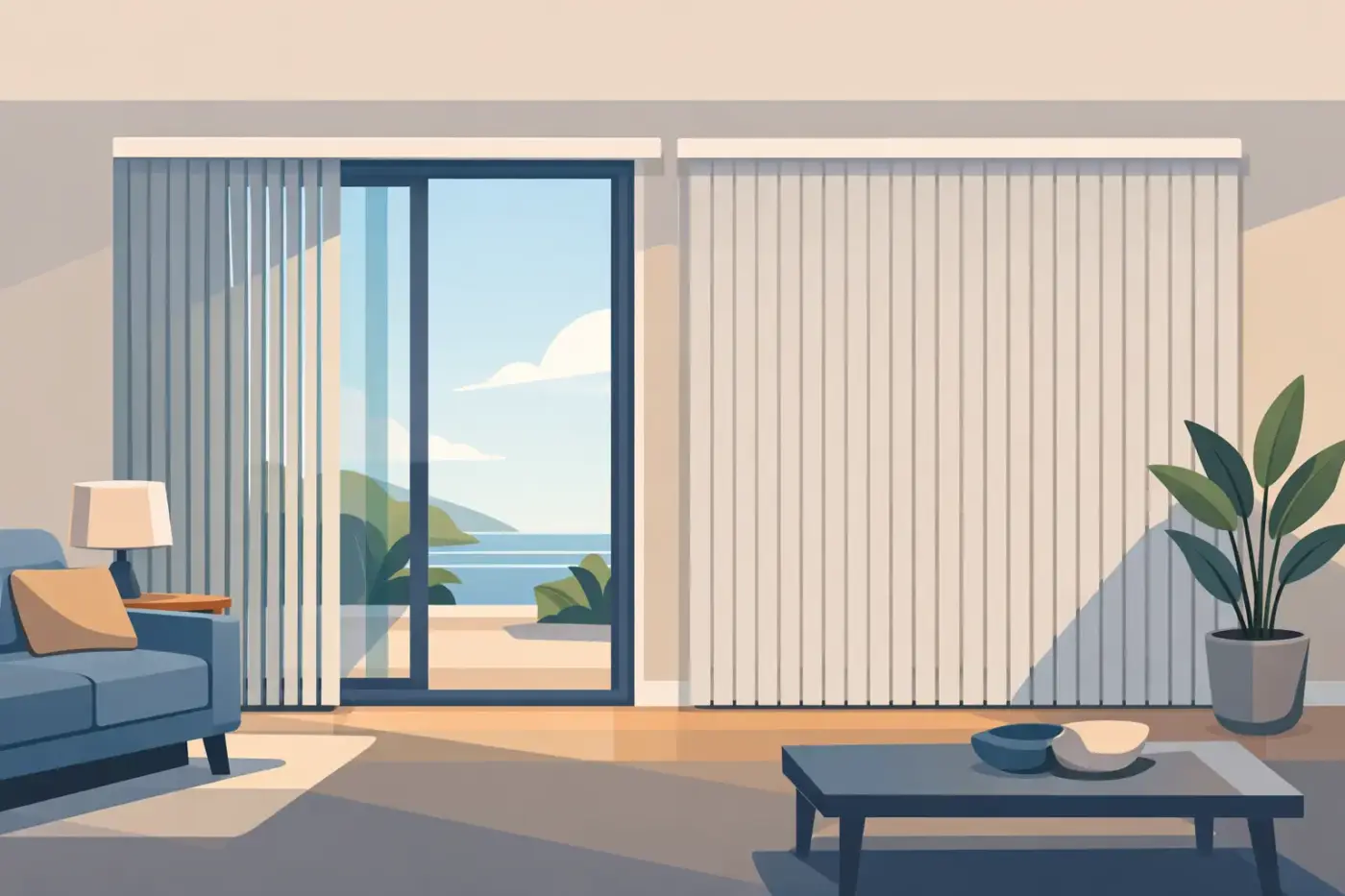
A sliding glass door can be one of the best features in a room – until afternoon glare, lost privacy, and an awkward door covering make it harder to enjoy. If you are researching vertical blinds sliding doors, you are likely looking for a treatment that covers a wide opening without getting in the way of daily traffic. The right vertical blind does exactly that, while giving the room a more finished, intentional look.
For mountain homes, condos, rental properties, and commercial spaces, the decision is about more than covering glass. A sliding door may face strong western sun, open to a deck used year-round, or frame a view worth preserving. Vertical blinds remain a practical option because they are built around how a patio door moves and how people actually use it.
Why Vertical Blinds for Sliding Doors Still Make Sense
Unlike many window treatments designed to raise and lower, vertical blinds travel side to side. That makes them a natural match for sliding doors. The vanes can stack neatly to one or both sides, keeping the active portion of the door accessible instead of forcing you to lift a large shade every time someone heads outside.
Their other advantage is adjustable light control. Tilt the vanes slightly to soften direct sun while keeping some daylight in the room. Close them more fully for privacy after dark. Open them wide when the view is the point. This level of control is especially useful in Colorado homes, where bright sun and reflective snow can create glare well beyond the summer months.
Vertical blinds also suit unusually wide openings. A custom track can be specified for the door’s exact width, with vane size, stacking direction, and control style selected for the room. Off-the-shelf options can leave gaps, drag along the floor, or stack on the wrong side of the opening. Proper measurement changes how the treatment looks and functions every day.
Start With the Door, Not the Fabric Sample
The first question is simple: which panel of the sliding door gets used most often? The blind stack should generally move away from that active door panel. If the wrong side is chosen, the vanes may sit exactly where people need to pass, turning a convenient treatment into a daily irritation.
Door configuration matters as well. A two-panel patio door, a three-panel door, and a large multi-panel glass wall need different track layouts. Some installations work best with a single draw that stacks on one side. Others benefit from a split draw, with vanes opening from the center. The best choice depends on the door operation, furniture placement, view, and where the room has enough wall space for the stack.
Also consider nearby vents, baseboards, handles, and trim. A treatment that appears straightforward on paper can become complicated once these details enter the picture. An in-home consultation makes it possible to check clearances and see how the material, color, and opacity behave in the actual light of the space.
Choosing Materials for Comfort and Durability
Vertical blinds are available in more than the familiar smooth white vinyl. That classic option is still useful in high-traffic areas because it is durable, easy to clean, and often budget-conscious. For a mudroom entry, rental unit, or busy family room, vinyl can be a sensible choice.
Fabric vanes offer a softer, more tailored appearance. They can bring texture and warmth to a great room or bedroom while helping the treatment feel more connected to upholstered furniture, drapery, or area rugs. Depending on the material, fabric verticals can provide a filtered glow rather than the sharper look of a hard-surface blind.
For a more polished, contemporary effect, consider textured, embossed, or S-shaped vanes. Curved vanes fit more closely together when closed, creating a fuller visual line and reducing the small light gaps associated with traditional flat vanes. They are a good option for homeowners who want the operational convenience of vertical blinds with a more refined finish.
Material selection should account for sun exposure. South- and west-facing doors can be demanding on any window treatment. A quality product with colorfast materials and properly specified components will hold up better over time. If heat gain is the main concern, the material and opacity should be evaluated alongside other options, such as solar shades or cellular shades, rather than assuming one treatment solves every problem.
Light Control, Privacy, and the View
Vertical blinds let you fine-tune light throughout the day. With the vanes angled toward the ceiling, you can redirect some daylight deeper into the room. A slight tilt can reduce television glare without making the space feel closed off. When privacy matters, rotating the vanes closed gives a more complete barrier than leaving an uncovered door exposed after sunset.
That said, closed vertical blinds do not offer the same insulating performance as a cellular shade, and they do not disappear as completely as some panel-track systems. If a door is exposed to severe winter cold or intense summer heat, a layered solution may be worth considering. Drapery panels paired with a functional blind can add softness, improve comfort near the glass, and create a more substantial design statement.
For homes with a standout view, the stack size is worth discussing. Wider vanes generally mean fewer individual vanes and a cleaner open view, but they can create a larger stack at the side. Narrower vanes make a smaller stack but introduce more vertical lines across the glass when closed. Neither is automatically better. It depends on whether the room prioritizes the open view, a minimal closed appearance, or maximum light adjustment.
Design Details That Make Vertical Blinds Feel Custom
A well-planned vertical blind should complement the architecture instead of looking like an afterthought. Neutral whites, warm grays, taupes, and soft natural textures often work well with mountain interiors, painted trim, and wood finishes. A darker tone can frame a large expanse of glass beautifully, though it may feel more prominent when the blinds are closed.
The headrail deserves attention, too. A clean, color-coordinated headrail and professionally leveled installation make a visible difference, particularly on tall doors in open living areas. If the room calls for a more decorative treatment, a fabric valance or coordinated drapery can conceal the operating hardware and add visual height.
Control choice is another practical detail. Wand control is familiar and straightforward, while cord-free and motorized options can simplify operation for wide, frequently used doors. Motorization can be especially helpful when the door is behind furniture, part of a second-home property, or one of several treatments managed together. It is not necessary for every space, but it can make daily light management easier.
Professional Measurement Protects the Fit
Sliding doors leave little room for measurement errors. A track installed too low can interfere with the floor or door handle. One installed too high can create an unwanted light gap. Even a slightly out-of-level floor can affect how the vanes hang and whether they clear the surface cleanly.
Professional measurement accounts for the finished floor, trim depth, mounting surface, door hardware, and the room needed for the stack. Installation also matters: the headrail must be securely mounted, evenly aligned, and adjusted so the vanes traverse and rotate reliably. These details are easy to overlook, yet they determine whether the treatment feels smooth and dependable or becomes frustrating within a few months.
When Another Treatment May Be Better
Vertical blinds are a strong answer for many patio doors, but they are not the only answer. Panel-track shades can offer a broader, more modern fabric-panel look. Cellular vertical shades can improve insulation at a large glass opening. Sliding panels and drapery can be a better visual fit for a formal room or a door with exceptionally wide expanses of glass.
The right choice comes down to how the room is used. A busy back door needs durable, easy access. A primary bedroom may place privacy and room-darkening higher on the list. A view-facing great room may favor low-profile stacking and carefully filtered light. Looking at samples and operation styles in the home makes these trade-offs much clearer than comparing product photos alone.
A sliding door should invite you outside, not make you wrestle with a window treatment. With the correct stack direction, material, and custom fit, vertical blinds can bring practical privacy and sun control to the glass while keeping the path to the patio easy to use. A thoughtful in-home consultation from Ben’s Blinds helps turn those small decisions into a treatment that feels right for the room from the first day.
No responses yet