
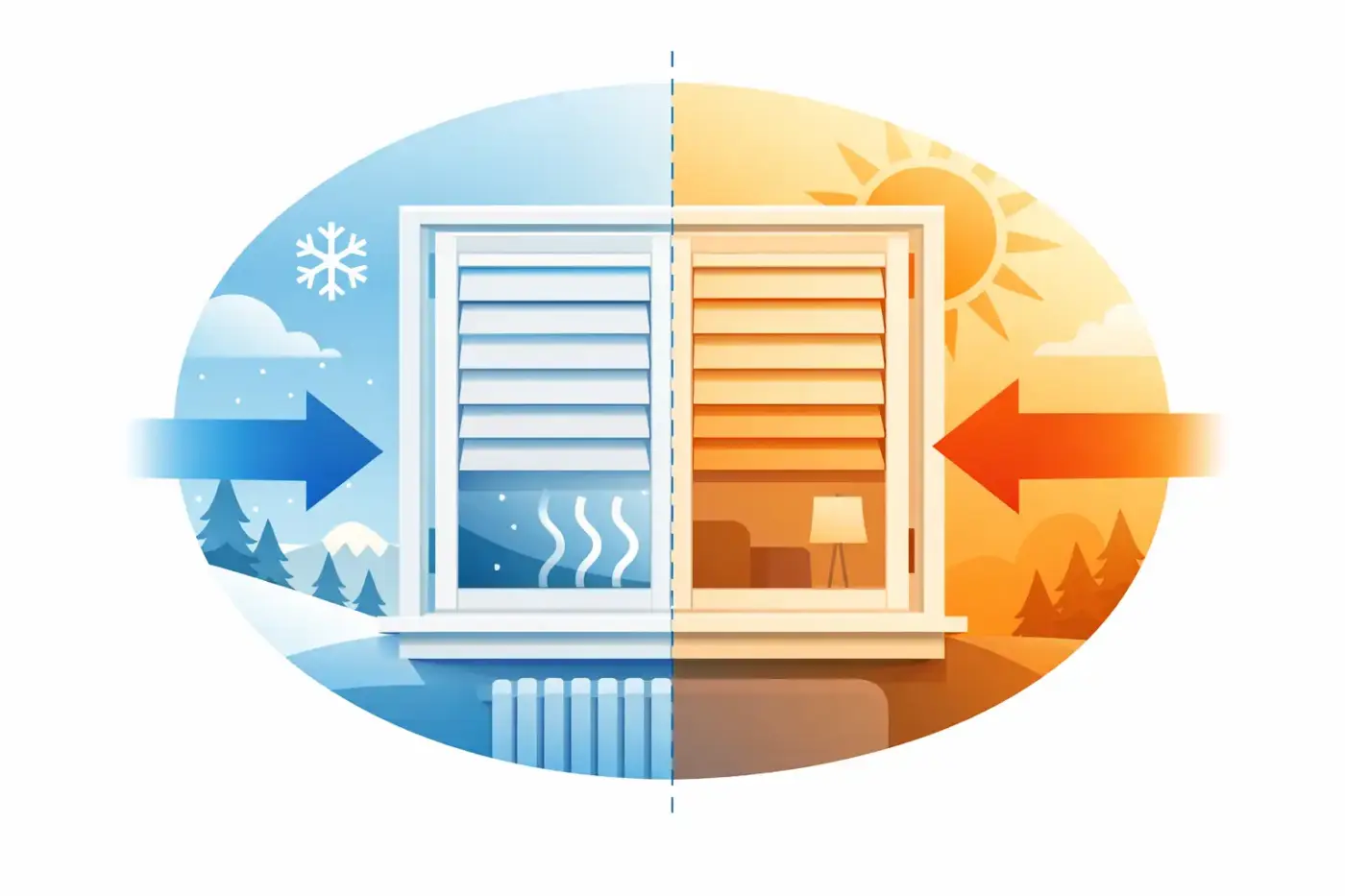
A beautiful mountain view can come with a very cold pane of glass in January and intense afternoon sun in July. For homeowners trying to make rooms feel more comfortable without giving up architectural character, plantation shutters for insulation are worth a close look. They will not turn an older single-pane window into a high-performance replacement window, but a well-made, closely fitted shutter can add a meaningful layer of control at the glass.
That added layer matters in Northwest Colorado, where wide temperature swings, bright high-altitude sun, and long heating seasons put windows to work. The real question is not simply whether shutters insulate. It is whether the shutter design, material, fit, and daily use suit the window and the way you live in the room.
How plantation shutters help insulate a window
Windows lose and gain heat through the glass and frame. Plantation shutters create an interior barrier between the room and that window surface. When the panels are closed, the material and the pocket of air between the shutter and glass can slow the movement of heat. In winter, that can make the area near a window feel less chilly. In summer, closed louvers can reduce direct solar heat and glare before they spread across the room.
The effect is especially noticeable on large windows, older windows, and windows with strong exposure. A bedroom that feels cold along one exterior wall, a great room with a wall of glass, or a west-facing office that gets uncomfortable late in the day may all benefit from better window coverage.
Shutters also offer a practical advantage over many softer treatments: you can adjust the louvers. Tilt them to direct daylight upward, preserve some privacy, and reduce the harshest sun without fully closing the room off. For periods of maximum insulation, close the louvers and panels fully.
The fit matters as much as the shutter
A custom shutter is not just a decorative panel mounted over a window. Its insulating value depends heavily on how closely it follows the window opening. Large gaps around the sides, top, or bottom allow room air to circulate against the glass, which reduces the benefit of the barrier.
Professional measuring helps account for details that are easy to miss with an off-the-shelf product: out-of-square openings, deep trim, cranks, locks, divided windows, and uneven surfaces in a mountain home. The panels should close cleanly, the louvers should align, and the installation should allow the shutter to operate easily every day. A shutter that is difficult to close is less likely to be used when the temperature drops.
The louver size and panel configuration also influence performance and appearance. Larger louvers provide a more open view when tilted, while smaller louvers create more frequent points of adjustment. Multi-panel openings may need panels that fold or bypass one another, particularly at patio doors and wide picture windows. The best arrangement balances insulation, access, light control, and the proportions of the room.
Wood, composite, and insulation performance
Material choice affects durability, appearance, and how a shutter responds to changing conditions. Natural wood shutters bring warmth, fine detail, and a classic furniture-quality look. They are often an excellent fit for living areas, bedrooms, and spaces where the finish is central to the design. Wood is naturally less conductive than metal, which supports its role as an interior insulating layer.
Composite shutters are engineered for stability and moisture resistance. They can be a smart choice for bathrooms, laundry rooms, kitchens, and areas with frequent humidity changes. Quality composite options also provide a substantial, well-fitted barrier at the window. Their exact thermal performance varies by construction, so it is better to compare the entire shutter system rather than assume one material always insulates more than another.
For either material, construction quality counts. Solid rails, tight louver closure, durable hinges, and a precise frame make a greater difference than a surface finish alone. A low-cost shutter that warps, sags, or develops gaps over time will not deliver the same comfort or long-term value.
Where shutters make the biggest difference
Plantation shutters can be especially useful where homeowners need several functions from one treatment. They provide privacy in a street-facing bedroom, soften early-morning sun in an east-facing kitchen, and add a finished architectural look that does not require cords or hanging fabric.
They are often a strong choice for:
- Bedrooms where nighttime privacy and a less drafty feeling are priorities.
- Living rooms with large, sunny windows that need glare control without sacrificing the view.
- Vacation homes where durable, easy-to-operate treatments are valuable between visits.
- Bathrooms and kitchens where a moisture-tolerant shutter can offer privacy and adjustable daylight.
- Commercial spaces that need a polished appearance, light control, and straightforward daily operation.
That said, shutters are not automatically the best insulating treatment for every window. Cellular shades are designed around air-trapping pockets and can offer very strong insulation, particularly when fitted closely to the opening. Drapery with a proper return and lining can also create a substantial barrier, while adding softness and sound absorption. Some homes benefit most from layering – for example, shutters for adjustable daylight and privacy with drapery panels used for added warmth and design depth.
Manage sun gain, not just winter heat loss
Insulation conversations often focus on cold weather, but the summer side of the equation is equally valuable. Colorado sun can be intense, particularly at altitude. A room with south- or west-facing glass may feel warm even when outdoor temperatures are moderate.
Plantation shutters allow you to angle louvers away from direct sun while still bringing in reflected daylight. This is more flexible than leaving a shade either fully up or fully down. Closing the panels during the hottest part of the afternoon can help limit solar gain, protect flooring and furnishings from fading, and reduce the load on air conditioning where it is used.
Orientation should guide the recommendation. South-facing windows receive predictable sun that changes with the seasons, while west-facing glass often creates the strongest late-day glare and heat. North-facing windows may gain less solar heat but can feel colder during winter. Looking at the room in person makes these differences easier to evaluate than selecting a treatment from a small sample or an online photo.
Set realistic expectations for energy savings
Plantation shutters contribute to comfort and energy efficiency, but they are one part of the home’s thermal envelope. If a window has failed seals, damaged weatherstripping, significant air leakage, or single-pane glass, the underlying issue may need attention first. Shutters can reduce the sensation of cold near the window and add protection from sun, but they cannot correct a failing window frame.
Energy savings also depend on use. Shutters offer their strongest insulating benefit when closed during cold nights or periods of direct, unwanted sun. Homeowners who prefer every panel open all day for the view will still enjoy the design and light-control benefits, but should expect a smaller thermal effect.
It is also worth considering the home as a whole. Attic insulation, air sealing, window quality, HVAC performance, and exterior shading all affect utility use. Custom shutters are best viewed as a comfortable, durable improvement that supports those larger efficiency efforts while solving privacy and style needs at the same time.
Choosing shutters with confidence
The most useful starting point is to identify what feels wrong in the room. Is the problem a cold draft near the bed, relentless glare on a television, fading floors, a lack of privacy, or a window that looks unfinished? Those answers help determine whether shutters alone are the right answer or whether a layered treatment would serve the room better.
During an in-home consultation, Ben’s Blinds can assess the window construction, exposure, trim, room use, and surrounding finishes before recommending materials and configurations. Seeing samples against the actual wall color and daylight is also the best way to choose a finish that feels intentional rather than merely functional.
A well-fitted shutter gives a window more than a polished frame. It gives the room another way to respond to the weather outside, so the view remains part of the home without dictating how comfortable the home feels inside.
Comments are closed