
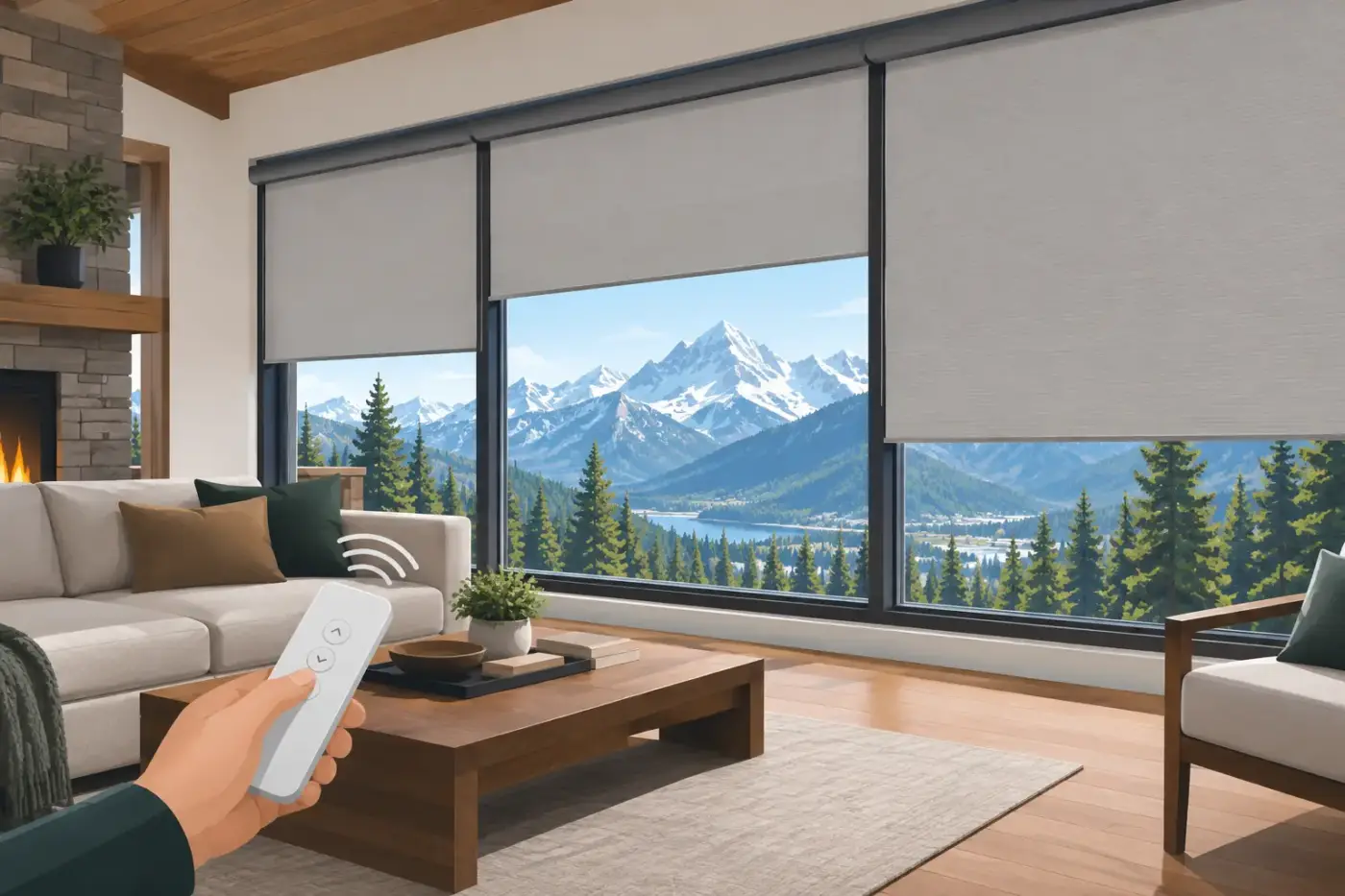
A high window above a vaulted great room can be beautiful until late-afternoon sun turns the sofa into the brightest seat in the house. Motorized blinds make those hard-to-reach windows practical, while giving everyday spaces an easier way to manage privacy, glare, heat, and natural light. For homes throughout Colorado’s mountain communities, that convenience can also support better comfort through changing seasons.
The best system is not simply the one with the most features. It is the one that suits the window, the room’s use, the home’s architecture, and the way you prefer to live in the space. A bedroom may need room-darkening control at the touch of a button, while a living room may benefit from automated solar shades that preserve views without leaving occupants squinting into the afternoon sun.
What Motorized Blinds Can Do for Your Home
Motorization replaces manual cords, wands, and pull chains with a quiet motor operated by a handheld remote, wall control, app, or smart-home system. Depending on the product, treatments can raise, lower, tilt, or move to a preset position. The result is less daily effort and more consistent control over the light entering a room.
That matters in homes with broad banks of glass, clerestory windows, skylights, or windows behind furniture. Rather than leaving a treatment in one position because it is inconvenient to reach, you can adjust it as conditions change. A single command can close several shades in a great room before dinner, open bedroom treatments in the morning, or lower west-facing shades when direct sun starts heating the room.
Motorization also brings a cleaner look to many window coverings. Cordless operation reduces visual clutter and removes dangling cords, which is especially valuable in homes with children or pets. The finished appearance feels intentional, particularly on large or prominent windows where uneven manual adjustments can be noticeable.
Motorized Blinds and Shades: Choosing the Right Treatment
People often use the term motorized blinds to describe nearly any powered window treatment. In practice, the best option may be a true blind with adjustable slats, a shade that raises and lowers, or drapery that traverses along a track. The right choice depends on what you need the treatment to accomplish.
For adjustable light and privacy
Wood, faux wood, aluminum, and vertical blinds give you the ability to tilt slats. This makes them useful when you want filtered daylight and daytime privacy without fully blocking the window. Motorized tilt is particularly appealing for tall windows or multiple windows that should look aligned from the exterior.
Blinds can be a practical choice for offices, kitchens, and rooms where fine-tuning the angle of incoming light is more useful than complete coverage. Keep in mind that slatted products have small gaps by design. If a bedroom needs the darkest possible setting, a room-darkening shade or a layered treatment may be better suited.
For views, glare reduction, and sun control
Solar shades are often a strong fit for mountain homes with expansive views and intense sun exposure. Their fabric filters glare and ultraviolet light while maintaining an outward view during the day. Motorization makes it easy to lower them when the sun shifts, then raise them when you want the glass completely open.
Fabric openness matters. A more open weave generally provides a clearer view and more daylight, while a tighter weave delivers greater glare reduction and privacy. The ideal balance varies by orientation, elevation, nearby homes, and how the room is used. A west-facing media room may call for more sun control than a north-facing dining room.
For insulation and bedroom comfort
Cellular shades are known for their insulating structure. Their air pockets can help reduce heat transfer at the window, which is useful during cold Colorado winters and sunny summer afternoons. When paired with motorization and schedules, they can be positioned more consistently at the times of day when insulation and sun management matter most.
For bedrooms, consider room-darkening cellular shades, roller shades, or Roman shades with an appropriate liner. Side light gaps are normal with most inside-mounted products, so the degree of darkness you can achieve depends on the window shape, mounting method, fabric, and whether side channels or layered drapery are part of the design.
For softness and architectural impact
Motorized Roman shades and drapery bring warmth to rooms where texture and tailored detail matter as much as light control. Drapery panels can soften large walls of glass, improve acoustics, and frame a view beautifully when open. On an automated track, they are especially useful for wide sliding doors, large picture windows, and bedroom walls where a more complete coverage is desired.
These treatments require careful planning. Fabric weight, stack-back space, ceiling height, and the location of doors or furnishings all affect how the finished installation looks and functions. Custom measurement helps prevent a beautiful fabric choice from becoming a treatment that interferes with trim, hardware, or daily traffic flow.
Power Options and Smart Controls
Motorized window treatments are available with battery power, plug-in power, and hardwired power. None is automatically best for every project.
Battery-powered systems are flexible and often ideal for existing homes, especially when wiring is not readily available. They can keep installation less invasive, but batteries will need recharging or replacement over time. The maintenance interval varies based on shade size, frequency of use, fabric weight, and the system itself.
Plug-in systems offer dependable power when an outlet is nearby and the cord can be discreetly routed. They can work well for a single treatment or a smaller group of windows, although outlet placement should be considered before finalizing the plan.
Hardwired systems are often worth considering during new construction or a substantial renovation. They avoid battery maintenance and can be an excellent long-term solution for numerous treatments, tall windows, or fully integrated smart-home controls. They do require coordination with an electrician early enough to place power where it will be concealed and accessible.
Smart controls add another layer of convenience, but they should serve a real purpose. Schedules can raise shades in the morning, lower sun-facing treatments during peak glare, and close bedroom shades at night. Scene-based controls can adjust several rooms at once. For second-home owners, remote access may provide added peace of mind by allowing treatments to be checked or adjusted while away.
A smart-home system is helpful when it simplifies routines, not when it adds another confusing app. During planning, consider who will use the controls most often and whether a simple wall control, remote, phone app, or integrated system will feel most natural.
Plan for the Window, Not Just the Product
Motorization performs best when the window treatment is selected as part of the room rather than as an afterthought. Window depth affects whether an inside mount will sit properly. Trim, handles, door swings, and nearby furnishings can change the mounting approach. On large or angled windows, the weight and size of the treatment influence which product and power option are appropriate.
Colorado homes also present conditions that deserve attention. Strong high-altitude sunlight can fade flooring, furnishings, and artwork over time, so the fabric’s solar performance matters. Large windows can contribute to heat gain in summer and heat loss in winter, making insulation and scheduling more meaningful. For vacation homes, durable materials and dependable operation may take priority over the most elaborate automation package.
This is where in-home evaluation has real value. Seeing samples against the actual wall color, view, sun exposure, and window trim leads to better choices than selecting from a small online image. A professional measure also confirms the details that determine whether a treatment operates smoothly and looks properly tailored.
When Motorization Is Worth the Investment
Motorization is often easiest to justify on windows that are tall, wide, difficult to access, or used frequently. It is also valuable when several treatments need to move together, such as shades across a wall of glass. In those situations, convenience quickly becomes part of the home’s everyday comfort.
For a smaller budget, it may make sense to prioritize the most demanding windows first. Start with a sun-heavy great room, a primary bedroom, a stairwell, or a media room, then add compatible treatments in other spaces later. A well-planned project can leave room to expand without making the home feel pieced together.
The lowest upfront price is not always the best measure of value. Properly specified custom treatments are designed around the window and supported by professional installation, which helps protect the investment in both the product and the home. At Ben’s Blinds, an in-home consultation makes it easier to compare fabric options, operation styles, and power choices where they will actually be used.
The most satisfying motorized treatments tend to disappear into the rhythm of a home. They lower when the afternoon glare arrives, close when privacy matters, and open when a fresh mountain view is the best part of the room. A thoughtful plan lets that convenience feel effortless while keeping the design distinctly your own.
No responses yet