
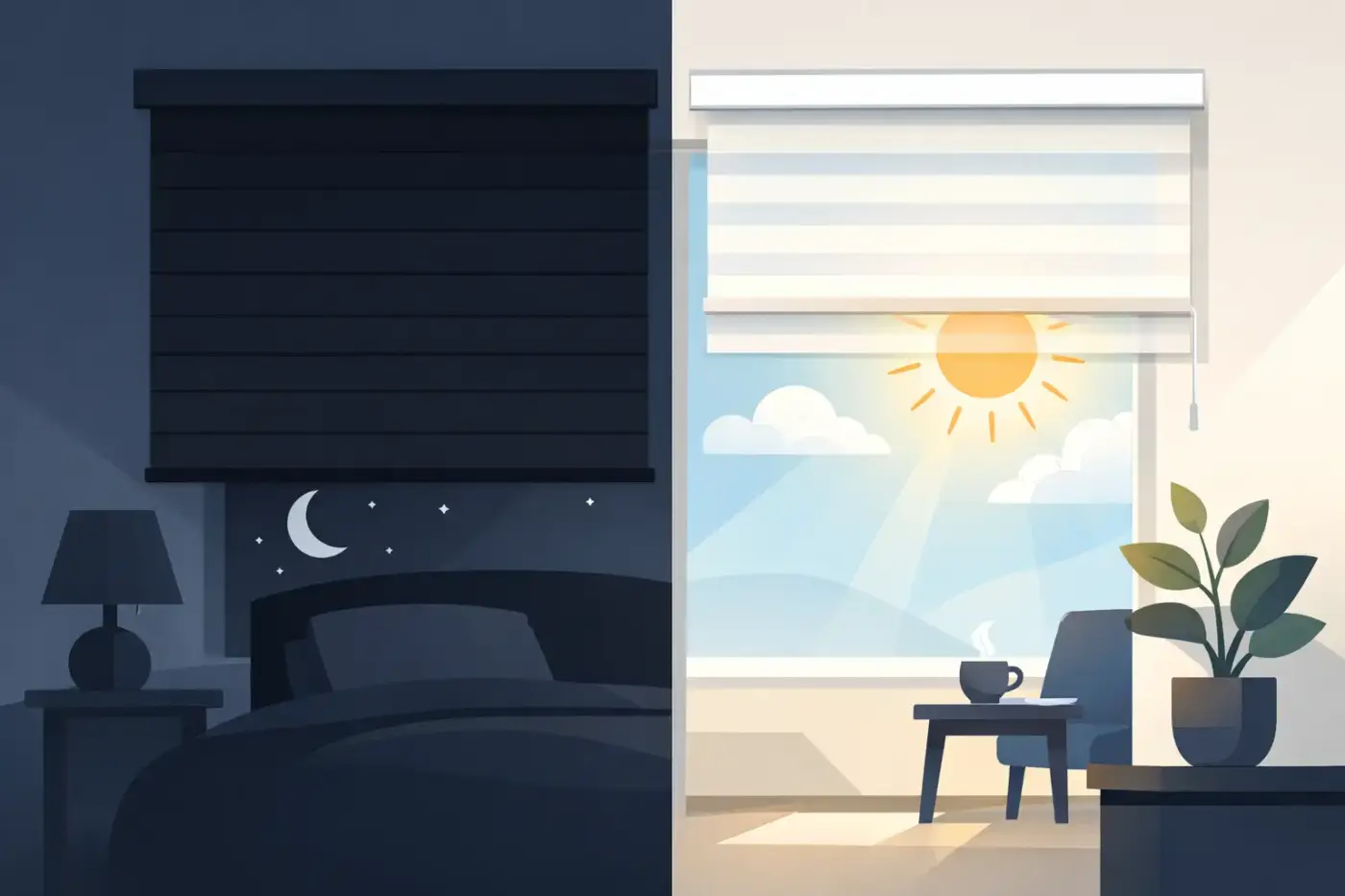
A west-facing bedroom in Steamboat Springs can be beautifully bright at 7 p.m. in July and far too bright when a child is trying to sleep. That is where the choice between blackout versus light filtering shades becomes more than a design detail. The right shade changes how a room feels throughout the day, affecting sleep, privacy, screen glare, heat gain, and the character of natural light.
Neither option is automatically better. Blackout shades offer the strongest light control, while light filtering shades preserve a soft connection to daylight. The best choice depends on the room, window orientation, how you use the space, and how much you want to see of the view when the shades are down.
What blackout shades actually do
Blackout shades are made with opaque materials or room-darkening liners that block most incoming light when lowered. They are often chosen for bedrooms, media rooms, nurseries, and guest rooms, where darkness, privacy, and reduced glare matter most.
A well-specified blackout shade can make a dramatic difference during early summer sunrises and long mountain evenings. It can help shift workers sleep during the day, make a projector easier to see, and give guests a more restful place to recharge. In rooms with strong western exposure, blackout fabrics also reduce the intensity of late-day sun.
Still, “blackout” does not always mean complete darkness. Light can enter around the sides of a shade, above the headrail, or below the sill, particularly on large windows or doors. The amount of light leakage depends on the product style, mounting method, window depth, and how precisely the treatment is measured and installed.
For the darkest result, consider inside-mounted shades with careful measuring, outside-mounted shades that overlap the window opening, or side channels where appropriate. Layering a blackout shade with custom drapery can further reduce edge light while adding softness and visual depth.
Best rooms for blackout shades
Bedrooms are the most common choice, especially for people sensitive to light or homes that host visitors. Nurseries benefit from predictable nap-time darkness, while media rooms benefit from reduced reflection on televisions and screens. Blackout shades can also be practical in a home office when a bright window makes video calls or computer work uncomfortable.
Their trade-off is simple: when they are down, the room is darker. If your favorite part of a living room is the view of the ski area, valley, or changing weather, you may prefer a treatment that controls glare without closing off the outdoors completely.
What light filtering shades do differently
Light filtering shades soften incoming sunlight rather than blocking it. They diffuse harsh rays, reduce glare, and fill a room with an even, comfortable glow. Instead of direct beams of sun across a floor or dining table, the light feels gentler and more controlled.
This makes light filtering shades a natural fit for living rooms, kitchens, dining areas, and other spaces used throughout the day. They can protect furnishings from some sun exposure, improve comfort near bright windows, and maintain a welcoming atmosphere without making the room feel closed in.
Privacy is an important consideration. During daylight hours, light filtering shades generally provide useful privacy from outside views. At night, however, interior lights can create silhouettes visible from outdoors. In a street-facing living room, ground-floor bedroom, or nearby-neighbor situation, a light filtering shade may need to be paired with drapery, a second shade, or another privacy-focused treatment.
Best rooms for light filtering shades
Choose light filtering shades when daylight is part of the room’s purpose. A kitchen often needs glare control without losing the cheerful feel of morning light. A great room with expansive glass may benefit from softened sun while keeping the space open and connected to its surroundings. They are also an appealing option for offices where natural light supports daily work but direct sun on a monitor does not.
Fabric selection makes a meaningful difference. Some materials produce a bright, airy effect, while others create a warmer, more textured look. Woven shades, Roman shades, and cellular shades can all be specified with light filtering fabrics, each bringing a different level of structure, insulation, and design presence.
Blackout versus light filtering shades: compare the daily experience
The most useful way to compare these options is to picture the room at the times you use it most. A blackout treatment prioritizes control. A light filtering treatment prioritizes softened daylight.
For sleep, blackout is usually the clear winner. It limits morning light, reduces outside illumination, and creates a more restful environment. For daytime living, light filtering shades often feel more natural because they cut the glare without asking you to choose between harsh sun and a dark room.
For privacy, blackout fabrics offer stronger coverage when closed. Light filtering shades offer daytime privacy but can be less private after dark. For a room that needs both a view-friendly daytime setting and complete nighttime privacy, dual shades are often a smart solution. These systems combine a light filtering or solar shade with a separate blackout shade in one coordinated treatment.
Energy performance depends on construction as well as opacity. Blackout fabric can reduce solar heat and help buffer a room from exterior conditions, but cellular shades are often especially effective because their honeycomb-shaped cells trap air. In Northwest Colorado, that added insulation can be valuable during cold winters and sunny summer afternoons. The right option should account for your window orientation, glass type, and whether heat retention or solar control is the bigger concern.
Consider the shade style, not just the fabric opacity
Opacity is only one part of the decision. The shade’s style influences the look of the room, its insulation value, and the way it operates.
Cellular shades are a versatile choice for homeowners who want light control and energy efficiency. They are available in light filtering and blackout options, making it possible to use a consistent style across the home while tailoring performance by room. Roller shades create a clean, minimal profile and work well in contemporary spaces, especially when paired with side panels or drapery. Roman shades bring a more tailored, decorative presence and can be lined for room darkening or blackout performance.
Woven wood shades provide texture and warmth, but their natural weave typically allows some light through unless they are paired with a liner. Solar shades are excellent for reducing glare and protecting views in bright rooms, though they are not designed to deliver nighttime privacy or bedroom darkness on their own.
The hardware and operation deserve attention, too. Motorized shades can make tall, wide, or hard-to-reach windows easier to manage. They also make it practical to adjust several treatments as the sun moves across the home. For second homes and investment properties, programmable operation can help protect interiors from strong sun even when the home is unoccupied.
A room-by-room approach usually works best
Many homes do not need one answer everywhere. A primary bedroom may need blackout cellular shades, while an adjacent sitting area benefits from light filtering woven shades. A media room might call for blackout roller shades, while the main living area uses solar or light filtering shades to preserve daylight and views.
This room-by-room approach also creates a more thoughtful visual plan. Treatments do not need to be identical to feel cohesive. Coordinating colors, textures, headrails, and drapery fabrics can create continuity while allowing each space to perform as it should.
Custom measurement matters most when light control is a priority. Windows are rarely as uniform as they appear, and mountain homes often include large glass expanses, angled ceilings, deep trim, and specialty shapes. A treatment that is beautifully made but poorly sized can leave distracting gaps, interfere with window operation, or fail to provide the privacy expected from it.
Make the choice in the actual room
Fabric samples can look very different in a showroom than they do against your flooring, wall color, views, and afternoon sun. Seeing options in the home makes it easier to judge whether a light filtering fabric is bright enough, whether blackout coverage is necessary, and whether a layered solution would better suit the space.
At Ben’s Blinds, an in-home consultation helps bring those decisions into focus. The goal is not simply to select a shade, but to find the combination of light control, privacy, insulation, operation, and style that makes each room more comfortable to live in.
If you are torn between blackout and light filtering, start with the moments that matter most: waking up, working near a window, watching a movie, hosting guests, and settling in after dark. Those everyday habits will point you toward a treatment that looks right and works even better.
No responses yet