
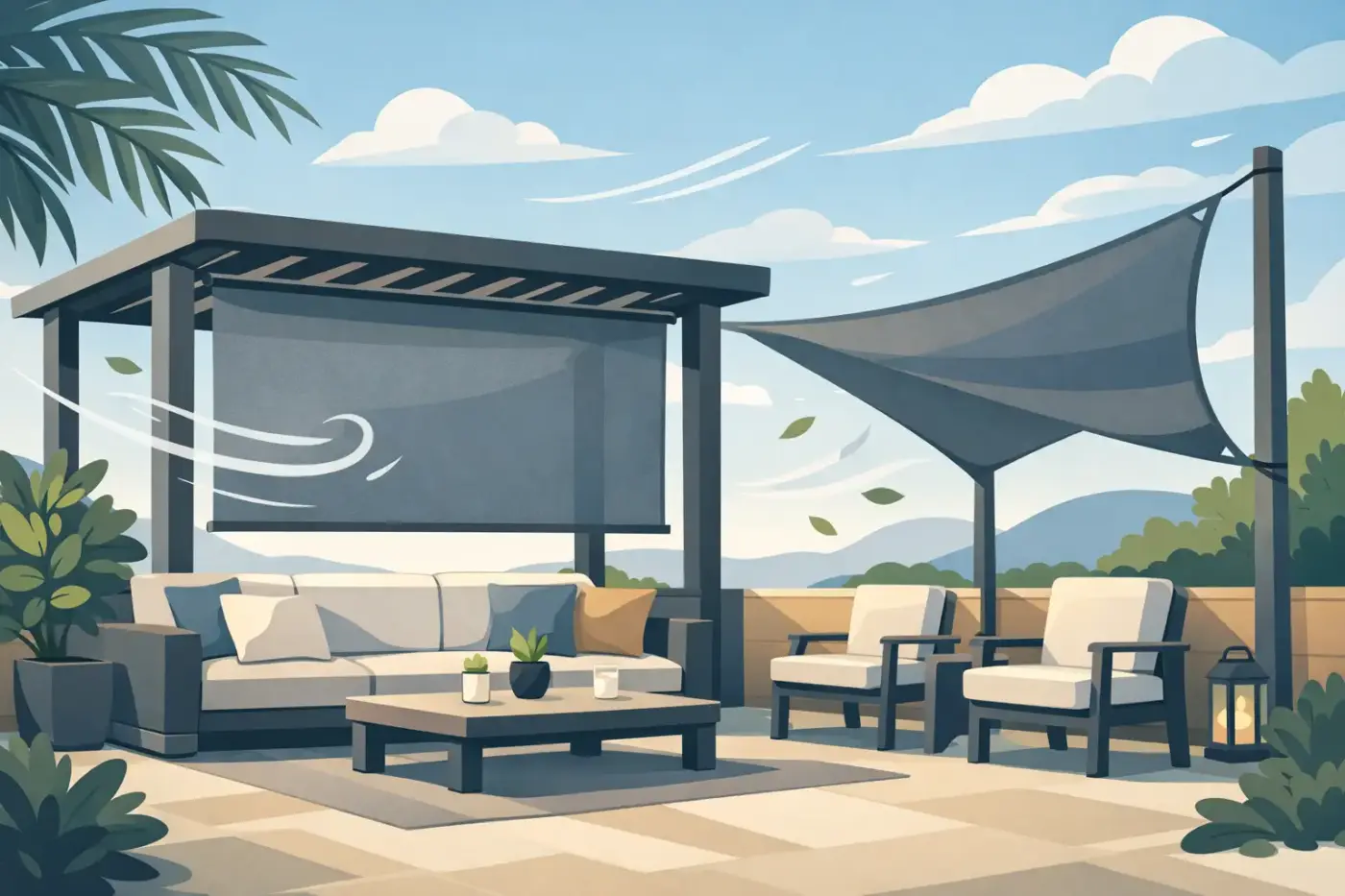
A patio shade that looks great on a calm afternoon can become a noisy, damaged frustration after one strong mountain gust. For outdoor shades for windy patios, the real question is not simply which fabric you like best. It is whether the entire system – shade, guides, brackets, mounting surface, and controls – is designed for the conditions at your home.
In Steamboat Springs and across Northwest Colorado, patios often face intense sun, sudden wind shifts, snow, and broad temperature swings. A custom outdoor shade can make an exposed deck, covered patio, or outdoor dining area far more comfortable. But choosing the wrong operating style or mounting method can leave you with a treatment that rattles, billows, or needs to be raised whenever the weather changes.
Why Wind Changes the Shade Conversation
Every exterior shade has a wind tolerance, but that does not mean it should stay lowered in every storm. Wind puts pressure on the fabric and pulls on the hardware. The larger the opening and the more exposed the patio, the more force the system must manage.
A standard free-hanging shade is often appropriate for a protected porch with limited wind exposure. On an open deck, however, its bottom bar can swing, the fabric can flap, and repeated movement can wear on the edges and brackets. The problem is not necessarily the shade itself. It is a mismatch between the product and the site.
The strongest solution usually combines a properly rated outdoor fabric with a guided or tensioned system. These details keep the shade controlled as it moves and reduce the opportunity for wind to get behind it.
The Best Outdoor Shade Systems for Windy Patios
Guided exterior shades
Guided shades run within side channels or along cables that keep the bottom rail aligned with the opening. Side-channel systems are generally the more protective choice because the fabric edges are held closer to the frame. They create a cleaner appearance, improve coverage at the sides, and greatly reduce side-to-side movement.
Cable-guided shades can be a good fit where a more open, lighter visual effect is preferred or where the structure makes channels impractical. They still offer much more stability than a free-hanging shade, although they may not be the first choice for a highly exposed, wind-prone elevation.
Zip-guided outdoor screens
For patios that regularly see wind, zip-guided screens are often worth serious consideration. The fabric is retained in track systems along both sides, which helps it stay taut and limits gaps. This type of system is especially useful on covered patios and pergolas where homeowners want dependable glare control, insect protection, or privacy without closing off the view.
The trade-off is that these are custom architectural systems, not a simple off-the-shelf shade. They need precise measurements, suitable framing, and secure installation. That investment tends to make more sense when the patio is used often and exposure is a consistent issue.
Retractable shades with thoughtful use
A retractable exterior shade remains a practical option for many patios, especially when it can be raised before high winds arrive. It offers flexibility: lower it for late-day sun and privacy, then retract it when conditions become unsettled.
Motorization can make that habit much easier. Rather than wrestling with a large manual shade when the wind picks up, you can raise it quickly. Some systems can also be paired with wind sensors that automatically retract the shade when gusts reach a preset level. Sensors are helpful protection, but they should not replace common sense during severe weather or when the home will be vacant for an extended period.
Fabric Matters, but It Is Not the Whole Story
Outdoor solar fabrics are popular because they filter glare and heat while preserving a connection to the landscape. Their openness factor determines how tightly the fabric is woven. A more open fabric provides a clearer outward view and more airflow, while a tighter weave offers stronger shade and privacy.
For a windy patio, airflow deserves attention. A fabric with some openness can allow a portion of the wind to pass through rather than catching it like a sail. That can reduce pressure on the system. Still, a more open weave will not make an underbuilt shade suitable for a highly exposed opening.
Color also affects performance. Darker fabrics typically provide better outward visibility during daylight because they reduce glare, while lighter colors can reflect more solar heat and create a softer look from inside the patio area. On a west-facing deck, the right fabric can make the difference between avoiding the space at 5 p.m. and enjoying dinner outside.
Expect outdoor materials to be selected for sun and moisture exposure, but remember that no fabric is maintenance-free. Dust, pollen, and occasional moisture marks are normal. A gentle rinse or light cleaning with manufacturer-approved methods helps preserve the appearance and operation of the shade.
Start With the Patio Structure
A shade system is only as reliable as the structure supporting it. This is why measuring an opening alone is not enough. The installer also needs to assess where brackets will attach, what material is behind the mounting point, whether posts are plumb, and how much clearance is available for the roller, cassette, tracks, and bottom bar.
Solid framing is ideal. Mounting into substantial posts, headers, masonry, or properly reinforced structural members gives the hardware the support it needs. Decorative trim, thin metal cladding, or aging wood may require a different approach. On some patios, adding a structural mounting surface is a sensible first step before selecting the shade.
The location of the opening matters as well. A patio tucked between the house and a side wall has very different wind behavior than one set above a valley with an unobstructed view. Wind can also funnel through narrow spaces and around corners in ways that are not obvious from a quick look. An in-home assessment helps identify those patterns before a product is ordered.
Size, Orientation, and Daily Use
Large openings are beautiful, but they require more planning. As a shade gets wider or taller, it has more surface area exposed to wind. Dividing one expansive opening into two or three coordinated shades can sometimes improve control, reduce stress on each unit, and make operation more manageable.
Orientation should guide the design. South- and west-facing patios may need substantial solar protection, while an east-facing patio may only need relief during morning use. If the primary goal is privacy from a nearby home, a lower openness fabric or a more enclosed guided system may be the better answer. If the goal is preserving a mountain view, a darker, more open solar fabric may offer the right balance.
Consider how the patio is actually used. A dining patio may benefit from screens that lower to block the harshest sun but remain raised for an open-air evening. A hot tub enclosure may prioritize privacy and wind buffering. A rental property may need simple, durable controls and clear operating guidance for guests.
Installation Details That Protect the Investment
Professional installation is particularly valuable with exterior shades because small alignment errors can affect daily performance. Tracks must be level and square. Fabric needs to roll evenly. Fasteners must be appropriate for the building material, and the system has to be tested at full extension before the project is complete.
A well-installed shade should operate smoothly without rubbing, binding, or leaving uneven gaps. It should also have an operating plan suited to its exposure. Even premium guided screens have wind limits, and the safest practice is to raise exterior shades when severe weather is expected unless the manufacturer specifically states otherwise.
For homeowners who want convenient operation, motorized shades can be paired with wall controls, remotes, or smart-home systems. The best choice depends on the size of the shades, electrical access, and how often they will be adjusted. Battery-powered options can work in some situations, while hardwired power may be preferable for larger or frequently used installations.
Choosing a Solution With Confidence
The right outdoor shade is not always the one with the highest wind rating or the darkest fabric. It is the one that fits the structure, exposure, view, privacy needs, and way you use the patio. A sheltered covered porch may need a refined solar shade with cable guides. An exposed outdoor room may call for a zip-guided screen, stronger mounting, and motorized retraction.
At Ben’s Blinds, an in-home consultation allows those choices to be evaluated where they matter: on your patio, in your actual light, with the surrounding architecture and weather exposure in view. You can compare fabric colors and openness, discuss control options, and receive recommendations based on the opening rather than a generic product listing.
A well-chosen exterior shade should make the patio feel more usable, not more complicated. When the next bright, breezy afternoon arrives, you should be able to lower it with confidence, settle into the space, and let the view remain part of the experience.
Comments are closed