
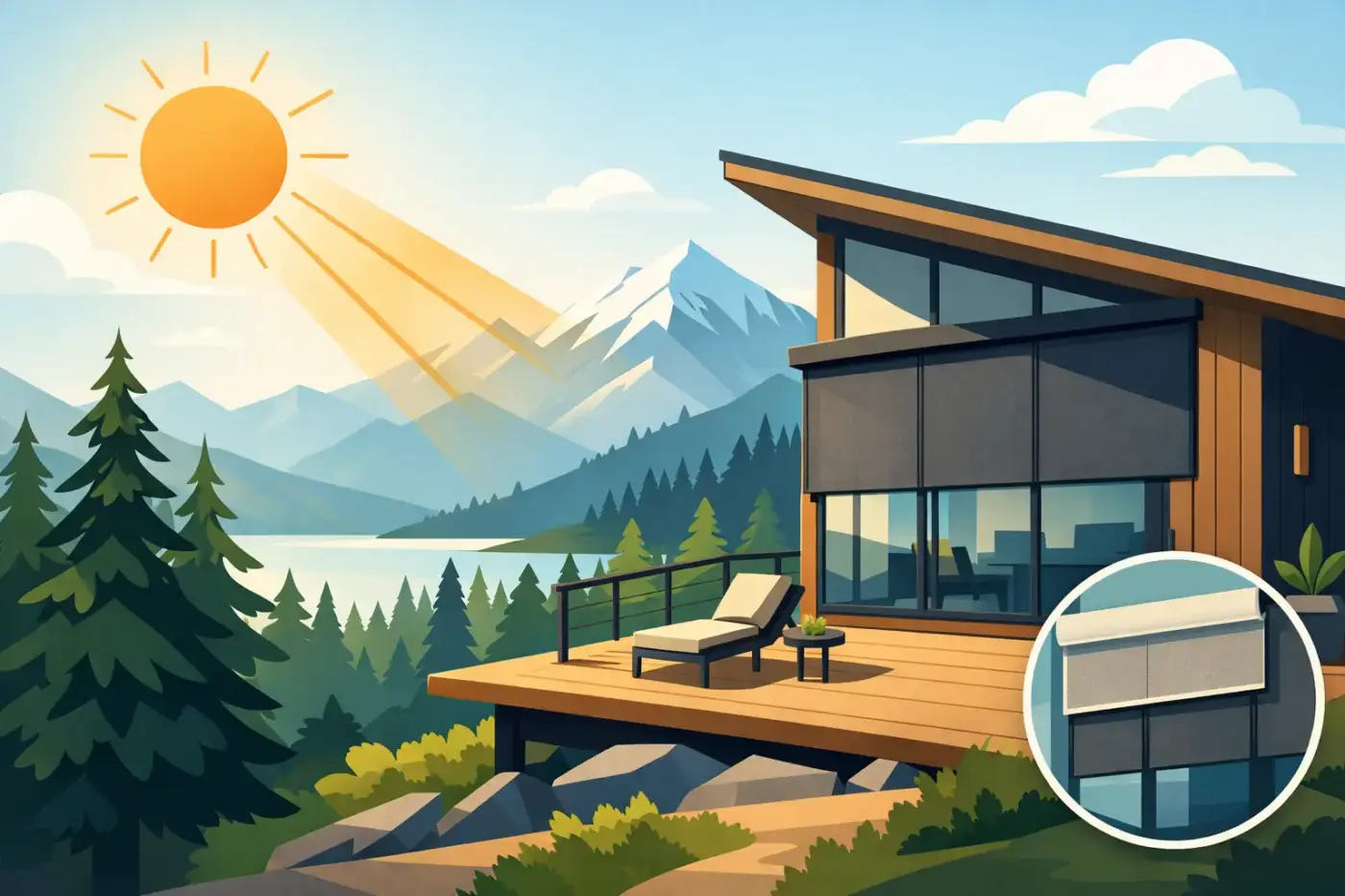
A wall of glass is one of the best parts of a mountain home – until afternoon sun turns the living room into a glare zone, fades the rug near the windows, or makes a favorite view difficult to enjoy. Solar shades for mountain homes are designed for exactly this balance: soften intense sunlight and protect interiors without closing off the landscape that drew you there.
For homes in Steamboat Springs and across Northwest Colorado, the right solar shade is rarely a one-size-fits-all decision. Window direction, elevation, snow reflection, surrounding trees, privacy needs, and the way each room is used all affect the best choice. A custom approach lets the shade perform well while still fitting the architecture and character of the home.
Why Mountain Windows Need More Than Basic Coverage
Mountain light is beautiful, but it can be demanding. Higher elevations bring strong UV exposure, and the lower angle of winter sun can reach deep into rooms. Snow-covered ground adds another source of reflected brightness, particularly in great rooms, kitchens, and home offices with broad west- or south-facing glass.
That brightness does more than cause occasional discomfort. Prolonged sun exposure can contribute to fading on wood floors, artwork, upholstery, and flooring. It can also make television screens hard to see, raise perceived room temperature on sunny days, and create a sharp contrast between a bright window and the rest of the space.
Solar shades filter light through a specially designed woven fabric. Rather than blocking the window completely, they reduce glare and UV exposure while maintaining an outward view during daylight hours. This is what makes them especially appealing for rooms where the view is part of the design.
What Solar Shades Can and Cannot Do
Solar shades are excellent at managing glare, softening bright light, and helping protect furnishings from sun damage. They provide a clean, tailored look that works equally well in contemporary mountain homes, remodeled condos, and more traditional log or timber-frame spaces.
They are not, however, a complete answer to every window challenge. A solar shade will not provide the same insulating value as a cellular shade, and it does not offer full nighttime privacy when interior lights are on. In the evening, people outside may be able to see silhouettes or more, depending on the fabric color, openness, and lighting conditions inside.
That does not make solar shades the wrong choice. It simply means the product should be selected for its strengths. In a view-facing living room with little nearby traffic, solar shades may be all you need. In a bedroom, bathroom, or street-facing space, pairing them with drapery, a secondary blackout shade, or another privacy-focused treatment often makes more sense.
Choosing the Right Openness Factor
The most important solar-shade decision is usually the openness factor. This number refers to the percentage of open space in the fabric weave. A lower percentage has a tighter weave and provides more glare control, greater daytime privacy, and stronger UV filtering. A higher percentage offers a clearer, more open view but allows more light into the room.
Lower Openness for Bright, Exposed Rooms
A 1% to 3% openness fabric is often a strong choice for rooms with direct sun, expansive glass, or significant snow glare. It creates a more filtered appearance at the window and can make a home office, media room, or sunny kitchen much more comfortable. The view remains visible, but it will be softer and less crisp.
Higher Openness for View-First Spaces
A 5% to 10% openness fabric preserves more visual connection to the outdoors. This can be a good fit for a great room overlooking a ski run, valley, or mountain range, especially where direct sun is less intense. The trade-off is lighter filtering and less daytime privacy.
There is no universally correct percentage. A south-facing wall of glass may need a tighter weave than a shaded north-facing window in the same home. Looking at actual fabric samples in the room, at the time of day the light is strongest, is far more useful than choosing from a small online image.
Fabric Color Changes the Experience
Color affects both the look of the shade and the view through it. Darker solar fabrics generally provide a sharper view to the outside because they reduce reflected light on the room side of the shade. They can feel visually quiet against a bright mountain backdrop and often suit modern interiors well.
Lighter fabrics reflect more light and can make a room feel softer and brighter. They may be a natural fit with pale woods, warm neutrals, and airy interiors, though the view through the fabric can appear less defined. In some homes, a medium tone offers the most balanced result.
The exterior-facing color matters, too. Many homeowners want a consistent appearance across windows, especially on a home with several elevations visible from the driveway or neighboring properties. A professional consultation can account for interior design preferences without losing sight of exterior cohesion and community requirements.
Privacy After Dark Deserves a Plan
Daytime privacy is one of solar shades’ benefits, especially when the brighter outdoors makes it difficult to see inside. At night, that relationship reverses. With lights on indoors and darkness outside, a solar shade alone is not a dependable privacy treatment.
For bedrooms and other private areas, consider a dual-shade system. One shade can be a solar fabric for daylight, while a second room-darkening or blackout shade provides privacy and sleep support at night. Drapery panels can accomplish a similar goal while adding softness, acoustic comfort, and a more layered design.
This combination is also useful in second homes. It gives owners an easy way to manage daytime sun, nighttime privacy, and a polished finished look without changing treatments season to season.
Motorization Makes Large Windows Easier to Live With
Many mountain homes have tall, wide, or hard-to-reach windows. Manual shades can work well on accessible openings, but they may go unused when a window is behind furniture, above a stair landing, or simply too large to adjust comfortably.
Motorized solar shades make it practical to use the treatment as intended. They can be raised for an unobstructed morning view, lowered during high-glare hours, and programmed around daily routines. For a vacation property, scheduled operation can also help manage sun exposure when the home is unoccupied.
Battery-powered systems are often a practical option for existing homes because they can avoid visible wiring in many applications. Hardwired systems may be preferable during new construction or a major remodel. The best choice depends on the window layout, access to power, control preferences, and how many shades will be installed.
Fit and Installation Matter on Mountain Homes
A solar shade looks simple once it is up, but the details behind that clean look matter. Large windows can have slight variations in width, uneven trim, deep jambs, or architectural features that affect where brackets and rollers should sit. A shade that is measured too narrowly can leave distracting light gaps. One mounted in the wrong position may interfere with a window handle, door swing, or nearby millwork.
This is where custom measuring is especially valuable. The installer can evaluate whether an inside mount or outside mount will provide the better result, account for trim and hardware, and consider how the fabric will align across a bank of windows. For wide openings, the design may call for multiple coordinated shades rather than one oversized unit.
Solar shades are also available with details that change performance and appearance, including fascia systems that conceal the roller and bottom rails designed to complement the room. These finishing choices are subtle, but they help the treatment feel intentional rather than added on.
A Better Way to Choose Solar Shades for Mountain Homes
Start with how you want each room to feel at different times of day. A kitchen may need reduced glare during breakfast and dinner. A great room may need view preservation first. A bedroom may need filtered daylight plus true privacy after sunset. Once those priorities are clear, fabric openness, color, lift system, and supplemental treatments become easier to narrow down.
It also helps to think beyond a single window. Coordinating solar shades across a main living area can create visual calm, while allowing different fabrics or privacy solutions in bedrooms and bathrooms. The goal is not to make every room identical. It is to make the whole home feel considered.
At Ben’s Blinds, an in-home consultation brings samples, measurement expertise, and practical guidance directly to the windows that need attention. Seeing fabrics against your finishes and mountain views makes the final decision far more confident. The right solar shade should let the landscape stay present while making every room more comfortable to enjoy.
Comments are closed