
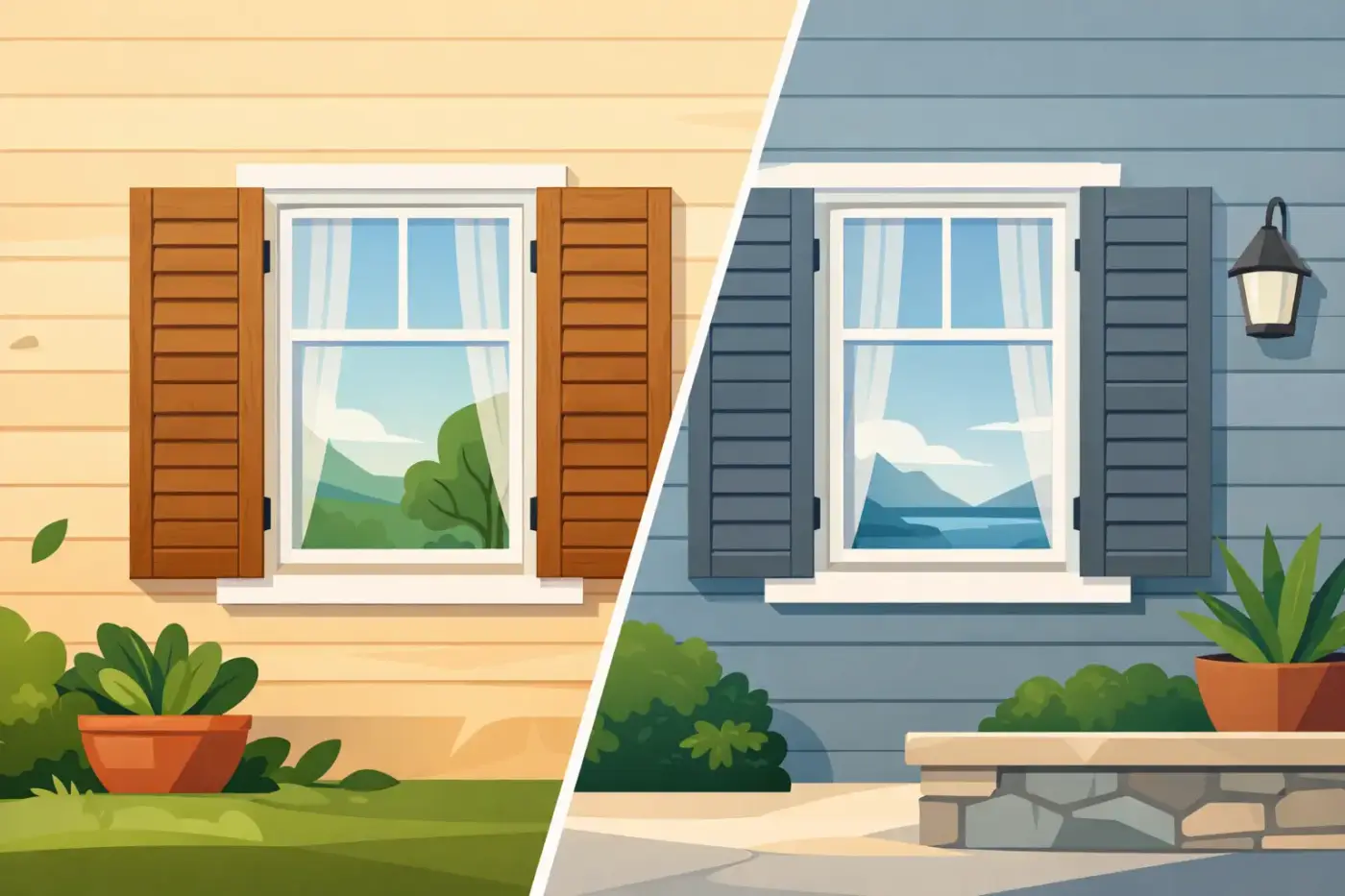
A south-facing great room can make one shutter decision feel very different from another. Strong mountain sun, dry winter air, snow reflected through glass, and the occasional steamy bathroom all place different demands on window treatments. When homeowners compare wood versus composite shutters, the better choice is rarely about one material being universally superior. It is about selecting the right shutter for the room, the window, and the way you want the home to feel.
Both options provide the tailored look, privacy, adjustable light control, and architectural presence that make shutters a lasting design choice. The differences show up in their material, finish, weight, resilience around moisture, and price. A thoughtful comparison helps ensure the shutters look right on installation day and continue to perform beautifully for years.
What Wood Shutters Bring to a Room
Wood shutters are made from real hardwood and are valued for their warmth, natural grain, and refined appearance. They have a depth and character that works especially well in mountain homes, traditional interiors, transitional spaces, and rooms with other natural finishes such as timber beams, hardwood floors, or stone.
Because wood is strong without being overly heavy, it can be crafted into slimmer louvers and more detailed panel designs than many composite materials. That matters on larger windows, specialty shapes, and windows where preserving the view is a priority. Narrower louvers can create a more delicate, furniture-quality look, while still giving you flexible control over sun and privacy.
Wood shutters also offer excellent finish flexibility. A painted finish can feel clean and tailored, while a stained finish can coordinate with cabinetry, trim, flooring, or exposed wood details. In a home where the shutters are meant to feel like part of the architecture rather than simply a window covering, real wood often has the edge.
That said, wood is a natural material. It performs best in relatively dry, temperature-stable spaces and needs a quality finish to help protect it from sunlight and everyday use. In rooms with sustained humidity or direct water exposure, the material deserves more consideration.
Where Composite Shutters Make Sense
Composite shutters are manufactured from engineered materials, often a blend of wood-based components, polymers, or PVC. Product construction varies by manufacturer, so the term “composite” should not be treated as a single material category. What the better options have in common is a painted, uniform finish and greater resistance to moisture than natural wood.
For bathrooms, laundry rooms, pool-adjacent spaces, kitchens with frequent steam, and homes that may sit vacant for parts of the year, composite can be a practical choice. It will not absorb moisture in the same way as wood, making it less likely to warp or swell when humidity rises.
The material also creates a crisp, consistent painted look that suits many contemporary, casual, and classic interiors. White and soft neutral shutters can brighten a room, complement painted trim, and give windows a clean built-in finish without requiring a stained wood aesthetic.
Composite shutters tend to be heavier than wood shutters. On very wide or tall windows, that added weight can affect how panels are configured and how many hinges or support points are needed. This is where professional measurement matters: a design that looks simple on a sample may require a different panel layout to operate smoothly on the actual window.
Wood Versus Composite Shutters in Colorado Homes
Colorado homes often present a mix of conditions under one roof. A dry, sun-filled living room may be ideal for wood shutters, while a primary bathroom with a large soaking tub may call for composite. Choosing one material for the entire house can create a cohesive look, but it is not always necessary.
Many homeowners use wood shutters in main living areas, bedrooms, offices, and dining rooms where warmth and finish detail matter most. Composite shutters can be used in bathrooms, mudrooms, laundry rooms, or other high-humidity spaces, often in a coordinating white or neutral paint color. With careful color selection and consistent louver sizing, the materials can work together without looking mismatched.
Sun exposure should also be part of the discussion. Shutters are excellent at managing glare because louvers can be tilted to redirect light while retaining daylight and partial views. They can also add an insulating layer at the window, particularly when panels are closed. Still, shutters are not a replacement for well-performing windows. Their energy benefit is best viewed as an added layer of comfort, not a cure for an inefficient window or a drafty frame.
Appearance, Light Control, and Privacy
Both wood and composite shutters offer the same basic functional advantages: adjustable louvers, a clean fit within the window opening, and reliable privacy when closed. The visual experience, however, can differ.
Wood tends to feel more dimensional, particularly with stain finishes that reveal grain and variation. It can soften a large wall of glass and add warmth to rooms with hard surfaces. Composite typically has a smoother, more uniform painted appearance. It is a strong fit when the goal is bright, crisp, easy-to-coordinate window trim.
Louver size has nearly as much impact as material. Larger louvers create a more open, contemporary look and allow a broader view when tilted open. Smaller louvers can feel more traditional and provide a finer level of light adjustment. The right proportion depends on the scale of the window, ceiling height, view, and surrounding architecture.
For bedrooms and street-facing windows, shutters offer valuable privacy control without forcing the room into darkness all day. Tilted louvers can shield direct sightlines while allowing light to enter. In a living room with a scenic view, panels can be opened fully when privacy is not needed, leaving the glass unobstructed.
Durability and Everyday Care
Well-made shutters are designed to be long-term window treatments. Their durability depends on quality construction, correct fit, appropriate material selection, and proper installation.
Wood shutters should be dusted regularly with a soft cloth or microfiber duster. Avoid soaking the louvers or using harsh cleaners, especially on stained finishes. Composite shutters are similarly easy to dust and are generally more forgiving of occasional damp wiping, which can be useful in bathrooms and kitchens. In either case, avoid abrasive pads and excessive moisture around hinges and moving parts.
If a home is used seasonally, shutters can be especially appealing because they are structured, durable, and simple to operate when you return. But seasonal homes still benefit from the right material in the right space. A bathroom that stays closed up through changing weather conditions is not the place to choose wood solely for visual continuity.
Cost and Long-Term Value
Wood shutters are often priced at a premium because of the material, finish options, and detailed craftsmanship. Composite shutters can be a more budget-conscious alternative in many configurations, though high-quality composite products are still a custom investment. Price also changes with window size, panel layout, louver size, specialty shapes, and installation requirements.
Rather than comparing only the initial price, consider what the shutter needs to accomplish. A real wood shutter may be worth the investment in a prominent great room where its finish becomes part of the design. A composite shutter may deliver better long-term value in a humid bathroom, where moisture resistance is more important than visible grain.
Custom measuring is central to that value. Shutters must account for handle clearance, sill depth, window trim, frame irregularities, and how each panel will open. An accurate in-home consultation prevents the common problems that arise when a shutter is selected from a sample without seeing the full window and room.
Choosing the Right Shutter for Each Space
Start with the room rather than the product. Ask whether the space has humidity, how much direct sun it receives, whether the view is a focal point, and whether you want the shutters to blend with painted trim or highlight natural wood tones. Then consider the practical details: panel weight, window size, privacy needs, and how often the treatment will be adjusted.
At Ben’s Blinds, that conversation happens in the home, where materials and finishes can be viewed in the actual light and against the colors already in the room. It is often the easiest way to see whether warm wood or a durable composite finish better supports the space.
The best shutter choice should feel intentional every time you open the louvers to a mountain view, close them against late-afternoon glare, or settle into a room that feels more private and complete.
No responses yet