
A west-facing great room can be bright and beautiful at breakfast, then nearly impossible to enjoy by late afternoon. In mountain homes, that shift happens quickly: strong sun, broad views, changing seasons, and large expanses of glass all place real demands on a room. Smart home window coverings give homeowners a practical way to manage those conditions without giving up the view, the daylight, or the design of the space.
The most useful systems do more than raise and lower a shade from a phone. They help make a home more comfortable at the times comfort matters most – when the sun hits a television, when a bedroom needs to stay dark, when a second home is empty, or when cold weather makes windows feel less inviting. The right solution starts with the treatment itself, then pairs it with controls that fit the way the home is used.
What makes window coverings smart?
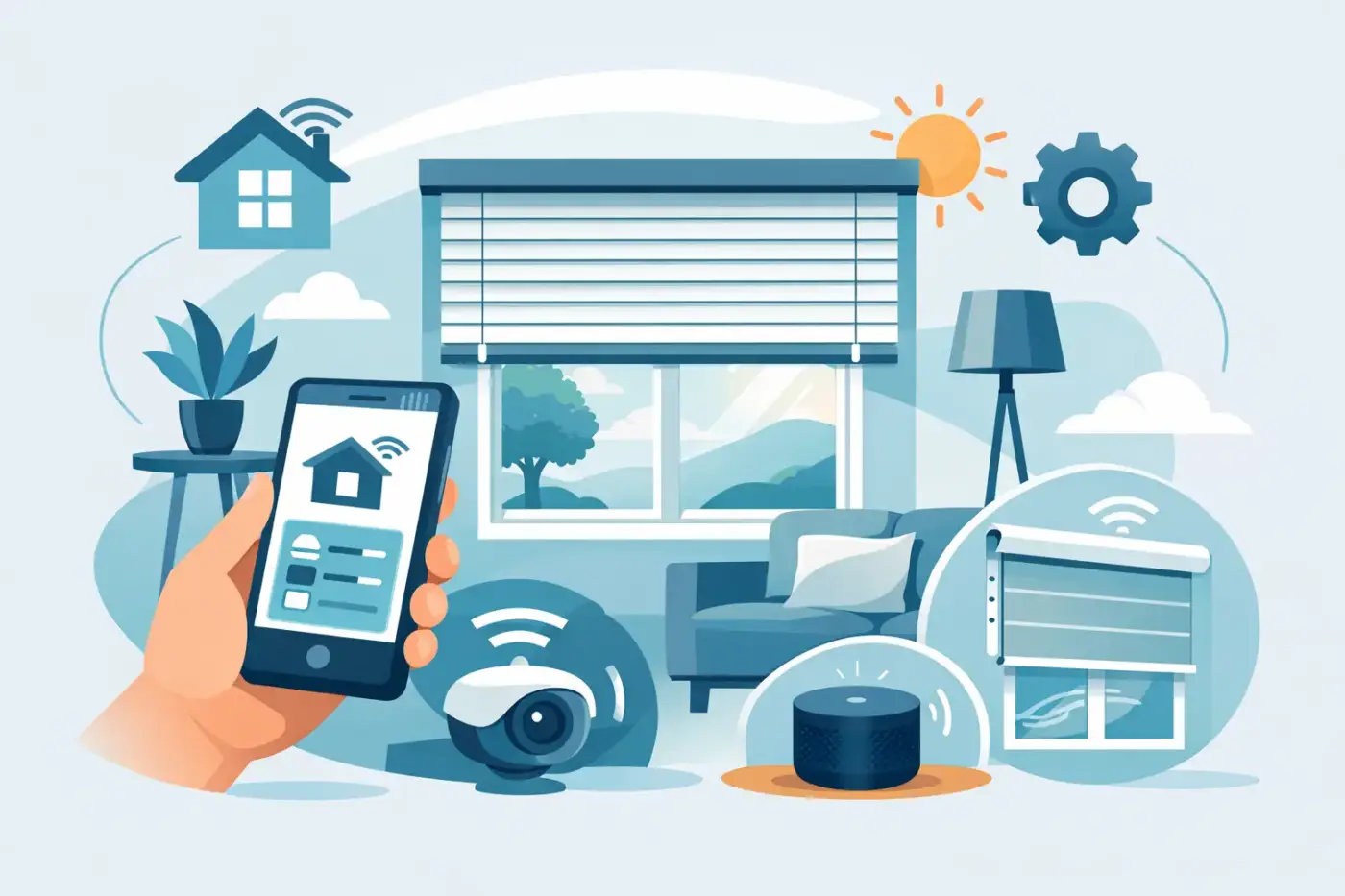
Smart window coverings use motorized operation, often controlled by a wall switch, handheld remote, app, voice assistant, timer, or home-automation system. Depending on the product and control package, a homeowner may operate one shade, a roomful of shades, or several areas of the house at once.
That convenience is valuable, but the bigger benefit is consistency. Instead of remembering to close sun-facing shades every afternoon, a schedule can do it automatically. Instead of walking through a vacation property before leaving to adjust every window treatment, groups of shades can be set to a preferred position with one command.
Motorization is available across many custom treatment styles, including roller and solar shades, cellular shades, Roman shades, woven wood shades, drapery, and some blinds and shutters. Not every material, window shape, or application calls for the same operation, which is why choosing the right product first matters. A beautifully automated shade that does not provide enough glare control or privacy will still fall short.
Smart home window coverings solve everyday problems
For many Northwest Colorado homes, intense sunlight is the first reason to consider automated shades. A solar shade can soften glare while maintaining an outward view during the day. In a media room, bedroom, or south-facing living area, room-darkening or blackout-capable shades may be a better fit. Automation lets those treatments respond to the clock, a scene, or a homeowner’s routine rather than becoming another daily task.
Privacy is another common reason. Homes with close neighbors, street exposure, or large evening windows often need a different level of coverage after sunset than they do during the day. A programmed evening setting can lower shades or close drapery at a set time, bringing privacy to the room without the need to make a round of the house each night.
Energy comfort also deserves attention. Window coverings do not replace quality windows or a well-designed heating and cooling system, but they can make a noticeable difference in how a space feels. Cellular shades can add an insulating layer at the window. Properly selected shades and drapery can reduce solar heat gain in warmer months and help limit the chill that can radiate from glass in winter. Automated schedules make it easier to use those benefits regularly rather than only when someone remembers.
For second-home owners, remote operation adds another layer of convenience. A homeowner may want to lower shades before an approaching storm, create a more lived-in appearance while away, or prepare the house before arriving for a weekend. The capabilities vary by system, so it is worth discussing what remote access is needed before selecting controls.
Start with the room, not the app
It is easy to focus on apps and voice commands because they are the visible part of a smart system. Yet the best starting point is the room itself. How does sunlight move through it? Does the room need daytime view-through, complete darkness, insulation, privacy, or a combination of these needs? Are the windows easy to reach? Is the treatment meant to disappear into the architecture or become part of the room’s design?
A sunny kitchen might benefit from solar roller shades set to lower during peak glare, while still preserving views to the landscape. A primary bedroom may call for layered treatments: a soft sheer or light-filtering shade for daytime and room-darkening drapery or blackout shades for sleep. In a formal living room, motorized drapery can bring warmth and visual scale to tall windows while making an otherwise difficult treatment effortless to operate.
Large windows, high clerestory windows, and windows behind furniture are especially strong candidates for motorization. These locations can be difficult or impractical to operate manually. Automation helps ensure the treatment is used as intended, rather than staying in one position because adjusting it is inconvenient.
The right fabric and opacity still matter
No control system can compensate for the wrong opacity. Solar shades come in different openness levels, which influence glare control, daytime view, and privacy. A more open fabric typically preserves more of the view but allows more light through. A tighter weave offers greater shade and glare reduction, though the view becomes more filtered.
Roman shades, woven shades, and drapery introduce texture and softness, but the lining and construction make a major performance difference. A lined drapery panel can provide more light control and insulation than an unlined decorative fabric. Cellular shades offer excellent practical performance, especially where insulation and a clean profile are priorities. The appropriate choice depends on the room’s needs and the look the homeowner wants to create.
Power choices should fit the home
Motorized window treatments are commonly powered by hardwired electrical connections, rechargeable batteries, replaceable batteries, or solar charging options. Each has a place.
Hardwired power is often ideal for new construction and major renovations, particularly when a home has many automated treatments. It offers a clean long-term solution and can simplify operation across large installations. It does require early planning with the builder or electrician, since power needs to be placed correctly before walls are closed.
Rechargeable battery systems are popular in existing homes because they avoid opening walls or adding visible cords. They can be an excellent choice for many standard-size windows, especially when shades are not operated constantly. Charging needs vary based on shade size, fabric weight, use, and exposure, so expectations should be set realistically.
Solar charging can reduce maintenance in sun-exposed locations, but it is not a universal answer. It needs appropriate access to sunlight and may not suit every window location or architectural preference. During an in-home consultation, the practical details of each window can be evaluated before a power option is selected.
Decide how much automation is actually useful
There is a wide range between a simple remote-controlled shade and a fully integrated whole-home system. Neither approach is automatically better.
For some households, a remote or wall control that operates a group of living-room shades is all that is needed. It is intuitive, dependable, and easy for guests to use. Other homeowners want scheduled scenes, app access, voice control, and coordination with lighting or other smart-home features. Those options can be helpful in larger homes, second homes, or spaces with many windows that need to respond together.
The key is to avoid paying for complexity that will not be used. A good control plan reflects daily habits. If the main goal is stopping afternoon glare, a scheduled setting may provide nearly all the value. If the goal is managing an entire property from out of town, more advanced connectivity may make sense. Control compatibility should also be considered early when a home already uses a particular automation platform.
Professional measurement protects performance
Custom smart shades and drapery are not simply decorative additions. Fit affects light gaps, privacy, insulation, operation, and appearance. This is especially true with wide openings, angled windows, deep trim, French doors, and windows that vary slightly from one another despite appearing identical.
Professional measurement also helps identify issues that can change the best product choice: crank handles, molding depth, recessed openings, nearby doors, furniture placement, and where power can be accessed. In a home with sweeping views, the mounting approach can determine whether an open shade stacks neatly out of sight or interrupts the glass.
Installation matters just as much. Motorized treatments must be properly leveled, programmed, grouped, and tested. A full-service process removes guesswork from those details and leaves the homeowner with controls that feel natural from the first day.
Design a system that feels like part of the home
The most successful smart window coverings rarely announce themselves as technology. They simply make the room work better. Shades rise to welcome morning light, lower before glare takes over, and provide privacy at night. Drapery moves with the touch of a button and brings softness to a room that might otherwise feel dominated by glass.
For homeowners balancing mountain views, changing weather, and a carefully designed interior, the best answer is usually a tailored one. An in-home consultation with Ben’s Blinds makes it possible to compare fabrics, opacity levels, control options, and power choices in the actual light of the space. The result should feel less like another device to manage and more like a home that is ready for the way you live in it.
No responses yet