
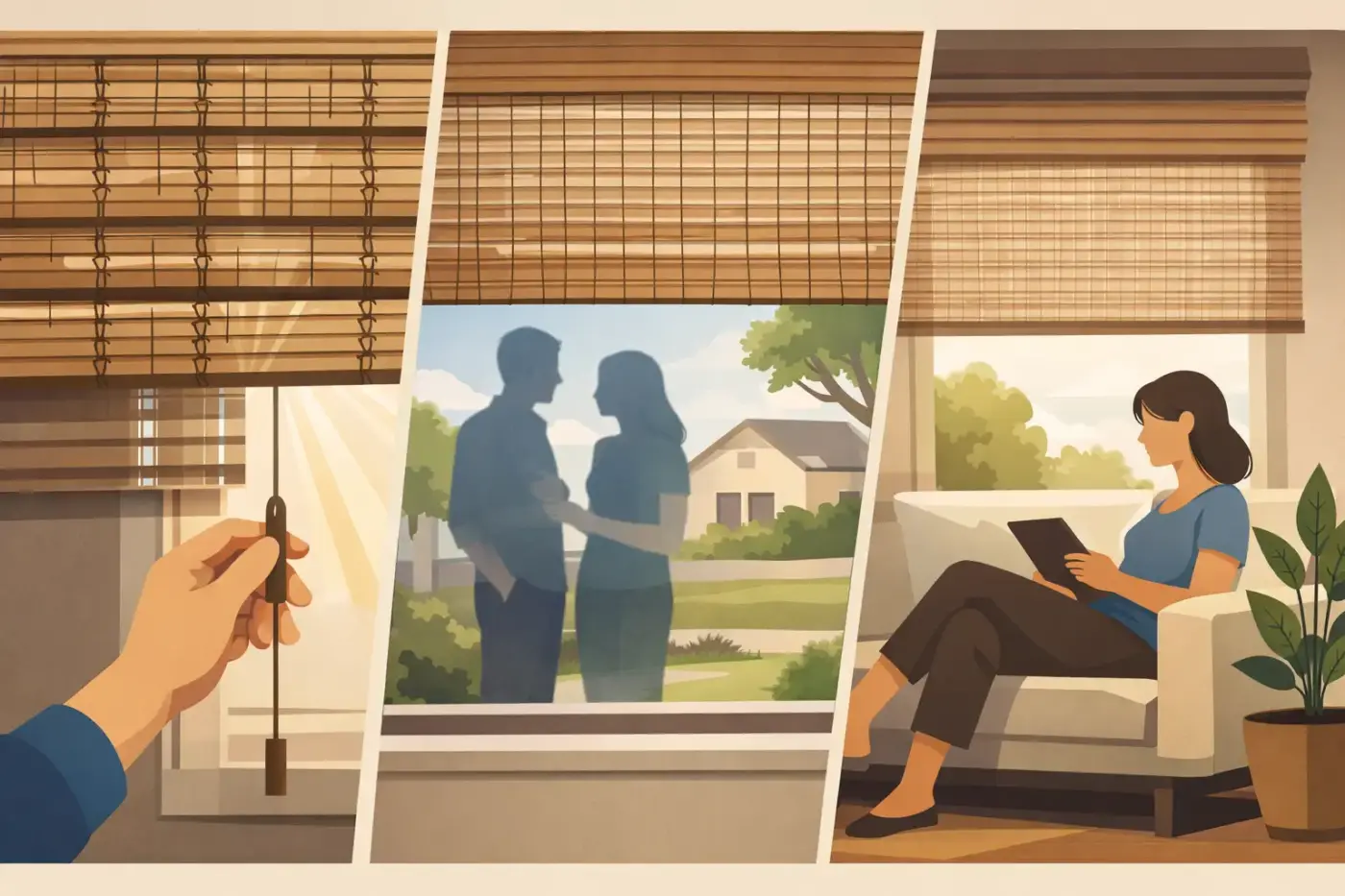
A woven shade can make a room feel warm, tailored, and connected to the natural landscape outside. But when the sun goes down and interior lights come on, homeowners often ask the practical question: will woven wood shades privacy be enough? The answer depends less on the shade’s natural fibers and more on its weave, liner, fit, and the way the room is used.
Woven wood shades are not a one-size-fits-all privacy solution. Their texture is part of their appeal, and that texture can range from open and airy to tightly constructed and nearly opaque. With the right materials and a custom approach, they can offer the relaxed, organic look many homeowners want without leaving bedrooms, bathrooms, or street-facing living spaces exposed.
What Determines Woven Wood Shades Privacy?
The first thing to understand is that a woven wood shade is made from natural or natural-look materials such as bamboo, reeds, grasses, jute, or woven fibers. These materials create visual depth that flat fabric shades cannot always match. They also create small gaps, depending on the weave.
A more open weave gently filters daylight and preserves a sense of openness during the day. It may soften views from outside, but it will not reliably block them, especially at night. A tighter weave provides more coverage, though most woven materials still allow some light and silhouette movement through without a liner.
Privacy also changes with lighting conditions. During the day, a bright exterior and a darker interior can make it difficult for people outside to see in. At night, the relationship reverses. Interior lighting can make an unlined woven shade more transparent than expected. This is why evaluating a shade only during a daytime showroom visit can be misleading. Looking at samples in the actual room, against the home’s lighting and window exposure, leads to a more confident decision.
Liners Make the Biggest Difference
For most rooms where privacy matters, a liner is the key to making woven wood shades perform as beautifully as they look. The liner sits behind the woven material, preserving the shade’s texture from inside the room while changing how much light and visibility comes through.
Privacy Liners
A privacy liner is a strong choice for living rooms, dining rooms, offices, and bedrooms where homeowners want filtered natural light with dependable daytime and nighttime coverage. It reduces visibility through the weave, softens harsh sunlight, and gives the shade a more finished appearance from the street.
It does not create a fully dark room. Some light will still pass through the shade, particularly around the edges and through lighter-colored woven materials. For many spaces, that gentle glow is exactly the goal: comfortable privacy without making the room feel closed off.
Blackout Liners
A blackout liner offers the highest level of woven wood shades privacy and stronger light control. It is especially useful in bedrooms, media rooms, nurseries, and guest spaces where early morning sun or nearby exterior lights can be disruptive.
“Blackout” describes the liner material, not necessarily the entire installed shade. Light can still appear at the sides, top, and bottom of a Roman-style woven shade, depending on the mounting method and window shape. A properly measured custom shade minimizes those gaps far better than a ready-made option, but it is helpful to set expectations: a blackout-lined woven shade delivers substantial room darkening, not the complete light seal of a specialty track system.
No Liner
Unlined woven shades are often right for rooms where the priority is texture, daylight, and a casual indoor-outdoor feeling. They work well in spaces with limited sightlines from neighbors, such as a private mountain retreat, a high window wall, or a sunroom facing open property.
They are less suitable for a bathroom, a bedroom close to another home, or a street-facing room used after dark. An unlined shade may still offer some visual screening, but it should be selected for its light-filtering character rather than its privacy performance.
The Fit Around the Window Matters
Even the best liner cannot compensate for a shade that does not fit the window properly. Privacy is affected by the small spaces around the treatment, not only the material in the center.
An inside-mounted woven shade sits within the window opening. This creates a clean, built-in look and can be ideal when the opening is square and deep enough to accommodate the shade. However, a narrow light gap remains along the sides. In many living areas, that gap is hardly noticeable. In a bedroom where darkness and privacy are priorities, it may matter more.
An outside mount extends beyond the window opening, covering more of the surrounding trim or wall. This approach can improve coverage and reduce side gaps, making it a smart option for shallow windows, uneven openings, and rooms needing stronger privacy. The visual result can still feel refined when proportions are planned carefully.
Professional measurement is particularly valuable in mountain homes, where windows may be oversized, deeply trimmed, angled, or positioned to capture dramatic views. The right installation should protect privacy while respecting the architectural details that make the room special.
Privacy Does Not Have to Mean Losing the View
Many Northwest Colorado homeowners want privacy in the evening but do not want to cover their views all day. That is where operation and layering become part of the design conversation.
A woven wood shade can be raised fully when the view is the focus, lowered to filter afternoon glare, and closed at night for privacy. Top-down/bottom-up operation, when available for the selected shade style, can be useful for windows facing a road or neighboring property. It allows light into the upper part of the room while covering the lower portion where sightlines are most direct.
Layering woven shades with stationary drapery panels is another thoughtful option. The woven shade provides everyday texture and sun control, while drapery can be drawn in the evening for more coverage, insulation, and a softer finished look. In bedrooms, this combination can improve light control without asking one treatment to do every job.
Choosing Color and Weave for Real-Life Use
Lighter woven materials often brighten a room and complement pale woods, stone, and relaxed mountain interiors. They can also reveal more contrast when lights are on behind them at night. A privacy or blackout liner helps address this, but the weave should still be chosen with the room’s use in mind.
Darker fibers and tighter patterns generally offer more visual density. They can feel more tailored and may provide better screening on their own, although an unlined dark shade is not automatically private at night. The shade’s color, liner color, and window exposure all influence the final effect.
In a south- or west-facing room, stronger sunlight may call for a liner that manages glare as well as privacy. In a bedroom with morning light, a blackout liner may be worth the added investment. In a dining room used mostly in the evening, privacy may be the deciding factor even if daytime sun control is less important.
Questions to Ask Before Ordering
Before selecting a woven shade, think about who can see into the room and when. Is the window visible from a neighboring home, driveway, sidewalk, or shared outdoor area? Do you use the room mostly during the day, after dark, or both? Are you trying to reduce glare, create darkness for sleep, or simply soften a direct view?
It also helps to consider whether privacy needs vary by season. Bare winter landscapes can expose windows that feel secluded when trees and foliage are full. Snow reflection and long summer evenings can also change how much light enters a room. These are details that are easy to overlook until the treatment is installed.
A personalized in-home consultation makes these choices easier. Ben’s Blinds can bring material and liner options into the space, assess the window dimensions and sightlines, and recommend a custom solution that balances privacy with the warmth that makes woven shades so appealing.
The best woven wood shade is not necessarily the one with the tightest weave or darkest liner. It is the one that gives your room the right amount of daylight, coverage, and character for the way you actually live there.
Comments are closed