
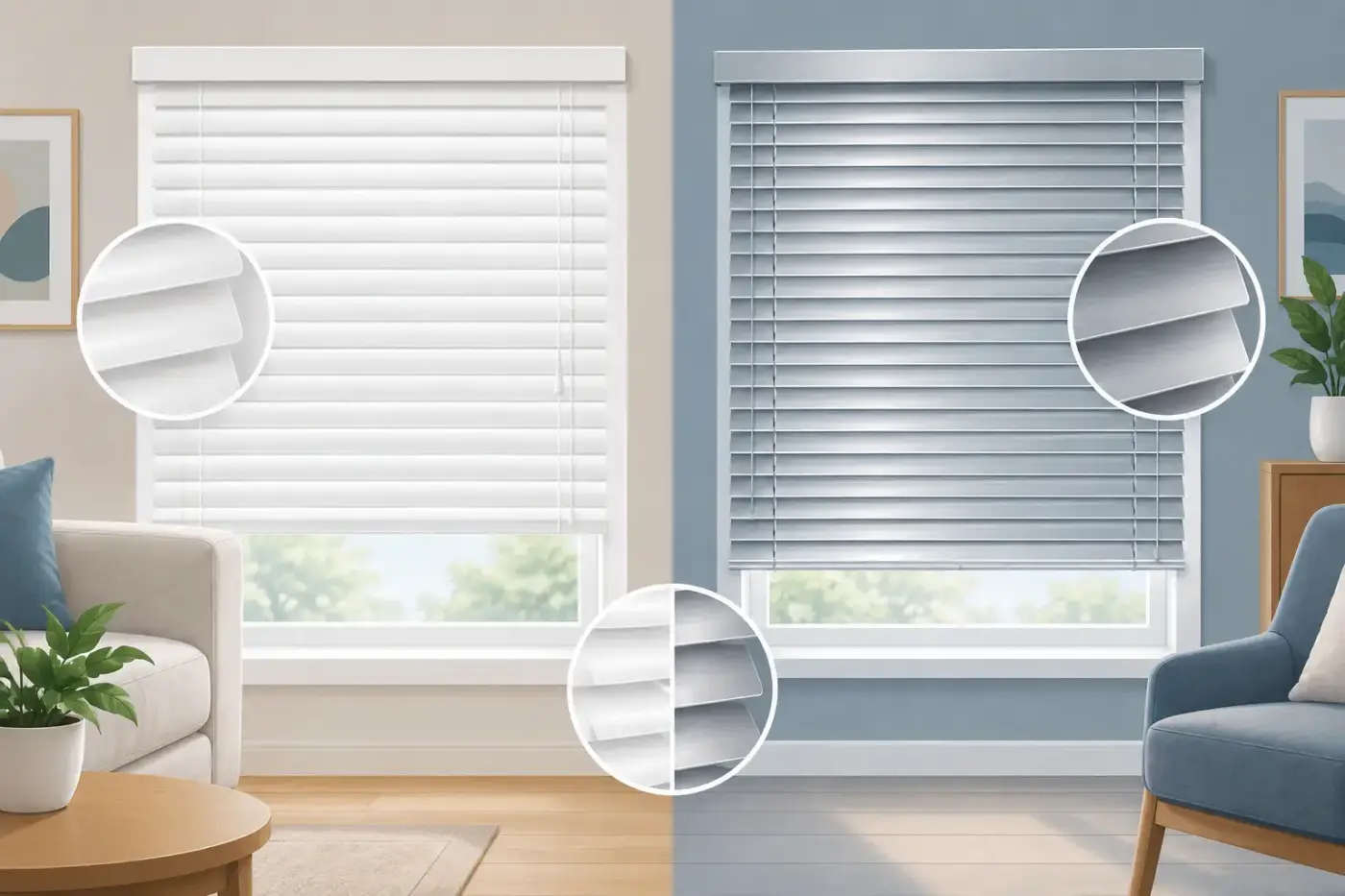
A bright west-facing room can make the difference between vinyl and aluminum blinds clear by midafternoon. One material may feel more comfortable around moisture and everyday family use, while the other offers a slimmer profile and precise control over intense sun. For homeowners weighing vinyl vs aluminum blinds, the better choice is less about which is universally best and more about what each window needs to do.
In mountain homes throughout Colorado, that question often includes strong UV exposure, changing temperatures, privacy from nearby homes or guests, and windows that are anything but standard sizes. A well-chosen blind should suit the room, the window, and the way you live there.
Vinyl vs Aluminum Blinds: The Core Difference
Vinyl blinds are typically made from PVC-based material. They have a smooth, solid appearance and are valued for their resistance to moisture, easy maintenance, and approachable cost. They are commonly used in kitchens, bathrooms, laundry rooms, rental properties, and other hardworking spaces.
Aluminum blinds use lightweight metal slats, often in a 1-inch or 2-inch profile. Their crisp, streamlined look works well in contemporary interiors, commercial settings, and rooms where detailed light adjustment matters. Aluminum is also an excellent option for windows exposed to heat and direct sunlight.
Both types use horizontal slats that tilt open and closed for privacy and light control. The differences show up in feel, durability, appearance, and how the blinds perform under the conditions of a particular room.
Where Vinyl Blinds Make the Most Sense
Vinyl blinds are a practical choice when moisture is part of the equation. Unlike natural wood products, vinyl will not absorb humidity or require special care in a steamy bathroom. A simple wipe with a damp cloth is usually enough to keep the slats looking clean.
That low-maintenance quality also makes vinyl appealing for vacation homes, guest rooms, and investment properties. When you want a dependable window covering that can handle everyday use without demanding much attention, vinyl delivers straightforward performance.
Vinyl’s solid slats can create a softer visual effect than metal. Depending on the color and finish, they can blend easily into casual interiors and provide a clean, uncomplicated backdrop rather than becoming a focal point. White and neutral finishes are especially useful when the goal is to keep the window treatment visually quiet.
There are trade-offs. Vinyl slats are generally thicker than aluminum, so they can look less refined on a large picture window or in a room with a more tailored design direction. In very hot, sun-intensive windows, lower-quality vinyl can also be more prone to warping over time. Product quality, window orientation, and proper fit all matter.
When Aluminum Blinds Are the Better Choice
Aluminum blinds have a clean, architectural character that suits many modern homes and business interiors. Their thin slats create a lighter visual profile, allowing them to sit neatly within the window opening. They are available in a wide range of colors and finishes, from soft neutrals to metallic tones.
Their biggest performance advantage is adjustable light control. Because aluminum slats are thin and responsive, they can be tilted with precision to reduce glare while preserving a view or bringing in indirect daylight. This can be particularly helpful in a home office, media room, kitchen, or living space with strong afternoon sun.
Aluminum also stands up well to heat and UV exposure. For sunny Colorado windows, that stability can be valuable. The material does not rust in normal indoor conditions, making it suitable for many kitchens and bathrooms as well, although it may dent if struck by a hard object.
A dented aluminum slat is often more noticeable than a scuff on vinyl. Homes with energetic children, large dogs, or frequently opened windows may benefit from considering how likely the blinds are to take an accidental hit. Aluminum is durable, but its slim profile is not invulnerable.
Comparing Light, Privacy, and Energy Performance
Neither vinyl nor aluminum blinds creates a complete blackout effect on its own. Light can pass between the slats and around the edges of the blind, particularly when the sun is low. Both materials can still offer effective everyday privacy and useful glare reduction when properly sized and installed.
For the strongest room-darkening results, blinds can be paired with drapery or replaced with a blackout shade designed for that purpose. This is often worth considering in bedrooms, nurseries, media rooms, and second homes where sleep comfort matters.
For insulation, the difference between vinyl and aluminum blinds is modest. Closing either blind adds a small layer between the glass and the room, which can help manage harsh sunlight and reduce some heat transfer. But if energy efficiency is the primary goal, cellular shades usually offer a greater insulating benefit because their honeycomb construction traps air.
That does not make blinds the wrong answer. In many rooms, the priority is flexible light control, privacy, durability, and a trim fit inside the window frame. The best solution may be aluminum blinds for the sunny office, vinyl in a bathroom, and cellular shades in bedrooms where winter comfort is a bigger concern.
Style and Scale Matter More Than Many Homeowners Expect
The size of the slat changes the look of the blind. Narrow 1-inch slats tend to read as crisp and minimal. They work well in compact windows, contemporary spaces, and commercial applications. Wider 2-inch slats have a more substantial appearance and can feel more at home in larger rooms or windows with deeper trim.
Color deserves equal attention. White vinyl or aluminum blends naturally with many window frames and trim packages. Warm neutrals can soften a room, while darker aluminum finishes can provide contrast in a modern space. The right finish should relate to the room’s cabinetry, wall color, hardware, and overall level of formality.
For a high-design living room or a primary suite, homeowners sometimes find that blinds alone feel a little spare. Layering them with custom drapery adds softness, improves light management, and gives the window a finished appearance. The blind handles daily privacy and glare, while the drapery contributes texture and visual warmth.
Custom Measurement Prevents Common Blind Problems
Off-the-shelf blinds can be tempting, but a close fit matters. A blind that is even slightly too narrow can leave unwanted light gaps and reduce privacy. One that is too wide or mounted without accounting for trim, handles, or window depth can operate poorly and look awkward.
This is especially relevant in mountain homes, where windows may be oversized, angled, deeply trimmed, or placed in groups with different exposure. Professional measurement accounts for the mounting surface, window depth, clearance, control placement, and the way the blind will stack when raised.
Installation also affects performance. Level mounting helps slats close evenly, while properly secured brackets keep the blind operating smoothly over time. For a larger project, seeing materials and finishes in the actual room can prevent a choice that looks right under showroom lighting but feels too cool, too bright, or too heavy at home.
How to Decide Between Vinyl and Aluminum
Choose vinyl blinds when easy care, moisture resistance, and value are your leading priorities. They are a sensible fit for bathrooms, laundry areas, guest spaces, and practical rooms where you want reliable coverage without a delicate material.
Choose aluminum blinds when you prefer a slimmer, more tailored look and want precise control over direct sunlight. They are particularly well suited to offices, kitchens, contemporary spaces, and windows where heat and glare are regular concerns.
If you are deciding for several rooms at once, there is no need to use one material everywhere. A coordinated home can use different treatments based on performance needs while maintaining a cohesive color palette and design language. Ben’s Blinds can help evaluate those details in your home, where the sun, views, finishes, and window dimensions are all part of the decision.
The right blind should make a room easier to use at every hour of the day. Start with the window that gives you the most trouble, then choose the material and fit that make that space feel comfortable again.
Comments are closed