
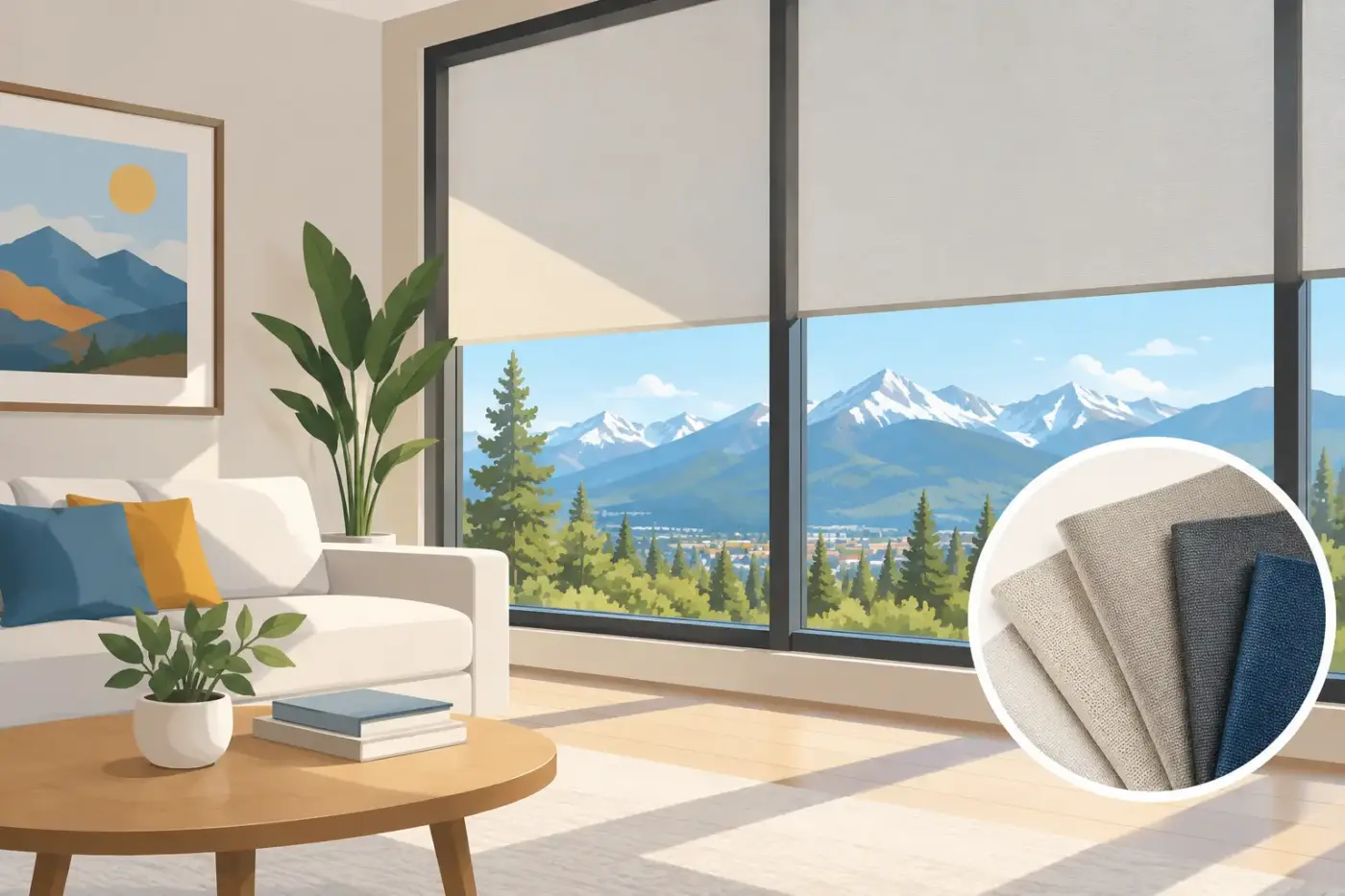
A mountain view can be the reason you chose a home, but intense afternoon sun can make that same room hard to use. Solar shade fabrics are designed for exactly that balance: they soften glare, filter UV rays, and maintain a connection to the outdoors without closing a room off behind heavy window coverings.
For homes across Northwest Colorado, the right solar fabric can make a noticeable difference in comfort. High-altitude sun, large windows, reflective snow, and changing seasonal light all affect how a space feels from morning through evening. The best choice is not simply the darkest fabric or the lowest price. It depends on your view, window direction, privacy needs, and the way you use each room.
What Solar Shade Fabrics Actually Do
Solar shades use a woven technical fabric, usually made with vinyl-coated polyester or similar durable fibers. The weave has tiny openings that allow some light and outward visibility to pass through while blocking a portion of solar heat, glare, and ultraviolet exposure.
That structure makes solar shades different from light-filtering roller shades. A light-filtering fabric generally diffuses light for a soft, private look, but it may not preserve a clear view outside. Solar fabrics are made to provide a more view-through effect during the day. They are an especially appealing option for living rooms, kitchens, home offices, and commercial spaces where daylight matters but direct sun becomes distracting.
They also help protect interior finishes. Sunlight can fade hardwood flooring, artwork, upholstery, rugs, and wood furniture over time. A solar shade will not eliminate all UV exposure, but it can significantly reduce the amount reaching your furnishings while keeping the room naturally bright.
Openness Factor Is the Decision That Matters Most
When comparing solar shade fabrics, the openness factor deserves more attention than almost any other specification. This percentage refers to how much open space exists in the weave. A lower number means a tighter weave. A higher number means a more open weave.
A 1% or 3% openness fabric offers stronger glare control, more daytime privacy, and greater UV filtering. It is often a good fit for west-facing rooms, sunny offices, media spaces, or windows that look toward a nearby home. The trade-off is a more filtered view and a slightly darker room.
A 5% openness fabric is often the middle ground for many homes. It reduces harsh light while retaining a comfortable view outdoors. For living areas with a scenic setting, this is frequently where performance and openness feel well balanced.
At 10% openness and above, the view becomes clearer and the room feels brighter. These fabrics can work well on shaded exposures or where maintaining a broad outdoor view is the priority. They provide less glare control and less privacy, however, so they may not be ideal for a sunny bedroom or a street-facing window.
The same openness percentage can feel different from one home to another. A large wall of glass facing south near Steamboat Springs will need a different approach than a smaller, north-facing window in a wooded setting. Looking at samples in the actual room is far more useful than choosing from a small online image.
Daytime Privacy Is Not Nighttime Privacy
Solar shades provide privacy during the day when it is brighter outside than inside. From outdoors, the view into the room is limited because exterior light is stronger. At night, that relationship reverses. With indoor lights on, people outside may be able to see silhouettes or more detail through the fabric.
For bedrooms, bathrooms, and close-proximity windows, solar shades are often paired with drapery panels, a second shade, or another treatment that provides nighttime privacy. A dual-shade system can be a practical choice: a solar shade handles daytime glare and views, while a room-darkening or blackout layer provides privacy when needed.
Fabric Color Changes the View and the Feel of the Room
Color is more than a design choice with solar fabric. Darker colors usually offer a sharper, more defined view through the shade. They absorb more light and reduce visual reflection on the fabric, which can make the outdoors easier to see, particularly on bright days.
Lighter fabrics reflect more light and can help a room feel airy and open. They may be the better aesthetic choice for a soft, tonal interior or a space where the shades will be visible most of the day. Their view-through can be less crisp, especially when sunlight is strong, but they can still provide useful glare and UV control.
There is no universal winner. A charcoal solar fabric may frame a mountain view beautifully in a contemporary great room, while a warm linen-inspired neutral may better suit a traditional home with natural wood finishes. The goal is to consider the fabric against your wall color, trim, furnishings, and the light coming through the glass, not in isolation.
Texture and Construction Matter, Too
Modern solar shade fabrics are available in more than the flat, commercial-looking options many people remember. Some have subtle texture, heathered color, woven character, or a refined linear pattern that works naturally in residential interiors.
For a clean, architectural look, a smooth fabric in a tailored roller shade may be right. For a softer room, the same solar performance can be integrated with drapery to add warmth and visual depth. In commercial settings, a neutral solar fabric can create a consistent appearance across multiple windows while helping employees and customers work more comfortably near glass.
Durability also matters in mountain homes, rentals, and high-use spaces. Quality fabrics should resist stretching, fraying, and discoloration under regular sun exposure. The shade system itself matters just as much: a carefully measured, properly installed treatment operates better, hangs straighter, and provides more complete coverage at the window.
Consider Window Direction Before Choosing a Fabric
Sun exposure changes throughout the day, so one fabric choice may not be right for every window. South-facing windows receive strong, consistent light that can be welcome in winter but overwhelming at certain hours. West-facing windows often create the most difficult late-day glare and heat. East-facing windows can affect morning routines, while north-facing windows may need little solar control at all.
In a home office, screen glare is often the deciding factor. A lower openness fabric may allow you to work near a window without pulling the shade fully down or closing the room off. In a dining room or great room, preserving the view may take priority, making a 5% or more open fabric a better fit.
For rooms with expansive glass, the shade’s mounting and coverage should be part of the conversation. An inside-mounted shade can look streamlined, but it may allow slim light gaps at the sides. An outside mount can provide broader coverage and can be useful when maximum glare reduction is the goal. Window depth, trim, handles, and door clearance all influence what will work cleanly.
Solar Shades Help With Comfort, but They Are Not a Standalone Insulation Solution
Solar fabrics can reduce solar heat gain by cutting direct sun before it fills the room. That can make a sunny seating area more pleasant and reduce demand on cooling during warm periods. They can also lessen the hot-and-cold contrast that makes rooms near large windows uncomfortable.
Still, solar shades are not the same as insulating cellular shades or lined drapery. If winter heat loss is your primary concern, another treatment may provide better insulation. In some homes, the best answer is layered: solar shades for daytime glare and UV control, with drapery or another insulating option to improve comfort during cold evenings.
This is why a fabric sample alone does not tell the whole story. The window’s orientation, glass type, elevation, room temperature, existing architecture, and your daily routines should shape the recommendation.
A Custom Consultation Makes the Choice Easier
Solar shade fabrics look simple once they are installed, but choosing them well involves several decisions that are easier to make in the home. Seeing samples at the window reveals how the weave affects the view, how colors read in your natural light, and whether the selected openness provides enough privacy.
At Ben’s Blinds, that process also includes precise measurement, guidance on operating options, and professional installation. Manual shades remain a dependable choice, while motorized shades can be especially helpful for tall windows, hard-to-reach glass, and rooms where light changes quickly through the day.
The right solar fabric should let you enjoy the light that makes your home special without asking you to live with glare, fading, or unnecessary heat. Start with the room you use most at the sunniest time of day, then evaluate the fabric where it will actually live.
Comments are closed