
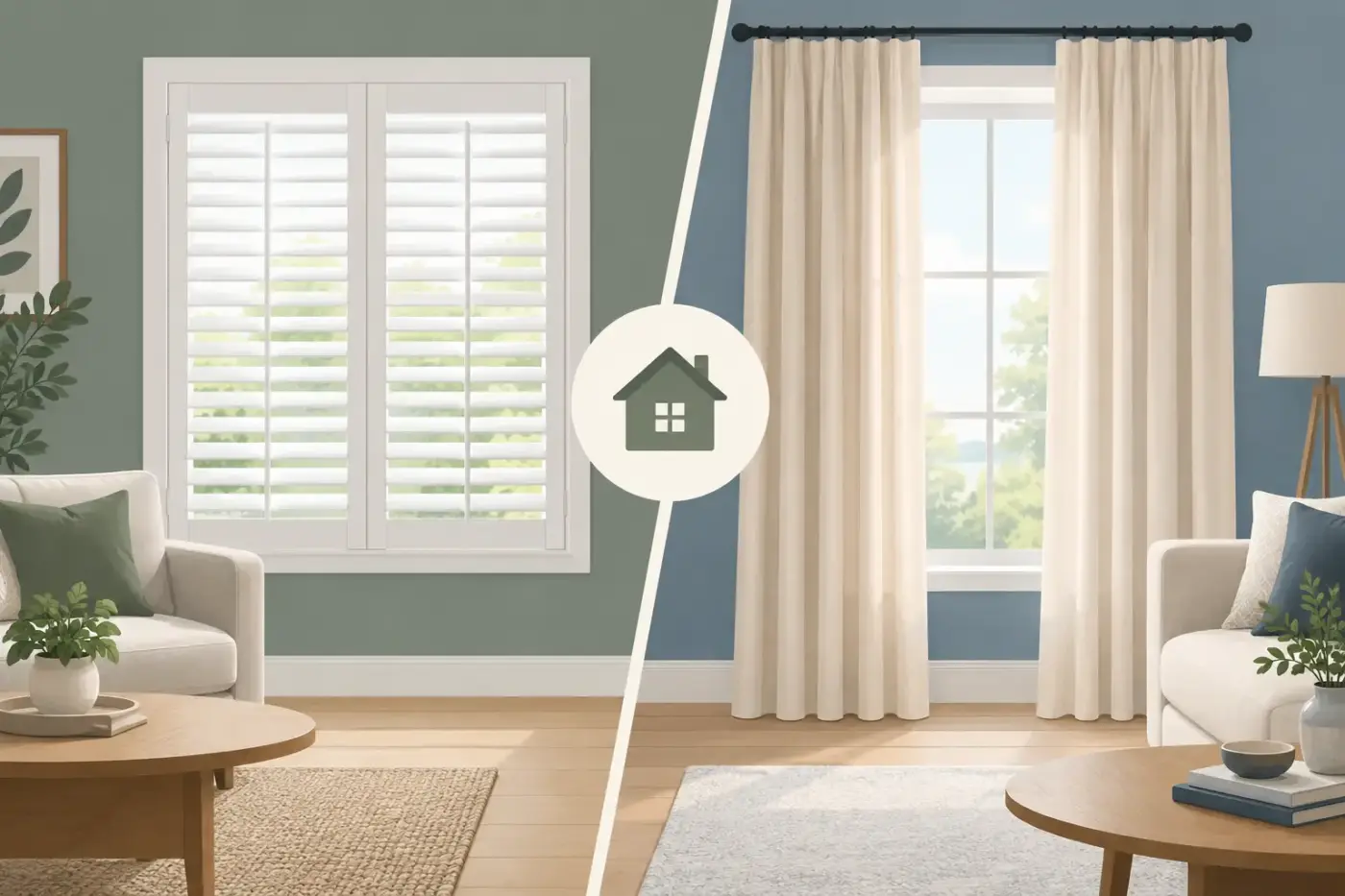
A west-facing great room can look completely different at 8 a.m., 2 p.m., and sunset. Add high-altitude sun, snow-reflected glare, and a view you do not want to hide, and the choice between shutters versus curtains becomes more than a decorating decision. It affects how comfortable the room feels throughout the year.
Both can make a home feel finished, private, and more intentional. The better fit depends on what matters most at each window: precise light control, warmth, softness, insulation, easy care, or a stronger design statement. For many Northwest Colorado homes, the answer is not one treatment throughout the house. It is a thoughtful mix based on how each space is used.
Shutters versus curtains: start with how you live
Plantation-style shutters are architectural window treatments. Their framed panels and adjustable louvers become part of the window itself, delivering a clean, tailored look and controlled light. Curtains, also called drapery when custom made and lined, bring fabric, color, texture, and movement into a room.
This distinction matters. Shutters tend to feel permanent and structured. Curtains can feel relaxed, formal, cozy, dramatic, or understated depending on the fabric and construction. A modern mountain home with expansive glass may benefit from the crisp lines of shutters in private rooms, while a living room may call for drapery that softens timber, stone, and hard surfaces.
Before choosing, consider the view, the direction the window faces, nearby neighbors, ceiling height, and how often the treatment will be adjusted. A beautiful treatment that is difficult to use is less likely to deliver the comfort you wanted.
Where shutters excel
Adjustable light and privacy
Shutters give you a high level of day-to-day control. By tilting the louvers, you can direct sunlight upward, reduce direct glare, and retain some daylight. In a bedroom or bathroom, that adjustability can provide privacy without making the room feel shut away.
They work especially well when the problem is low-angle sun or neighboring sightlines rather than a need for complete darkness. Closing shutter panels creates a more covered appearance, while open louvers preserve a connection to the outdoors. The exact result varies with louver size, window shape, and installation details, which is why accurate measurement matters.
A durable, built-in appearance
Quality shutters have a permanence that many homeowners appreciate. They are fitted to the window opening, so there is no fabric pooling on the floor or moving in a breeze. In kitchens, bathrooms, mudrooms, and sunny spaces, their easy-to-wipe surfaces can be a practical advantage.
They also suit homes where visual consistency matters. Repeating the same painted or stained shutter finish across several rooms can create a calm, cohesive backdrop, particularly when furnishings and artwork will provide most of the color.
Everyday maintenance
Shutters generally need light dusting and occasional wiping, rather than laundering or professional dry cleaning. That can make them a sensible option for second homes, rental properties, or households that want a polished look without frequent fabric care.
The trade-off is that shutters have more individual surfaces than a simple roller shade. Louvers need to be dusted, and a poorly chosen material or finish may not suit every moisture level or sun exposure. Product selection should reflect the room, not just the desired look.
Where curtains have the advantage
Softness, scale, and design flexibility
Curtains can change the character of a room in a way shutters rarely do. A linen-look fabric brings casual warmth. A tailored wool blend adds depth. A full, lined drapery panel can make standard windows appear taller and more substantial when mounted near the ceiling.
This is especially valuable in open living areas, bedrooms, and dining rooms, where sound absorption and visual softness make a space feel more comfortable. Drapery can also connect colors across a room, pulling together upholstery, rugs, wood tones, and accent pieces without overwhelming the architecture.
Stronger room-darkening potential
Well-designed drapery with an appropriate lining can block a significant amount of light. For a bedroom, media room, or nursery, blackout lining and careful coverage around the window can produce a darker result than louvers alone.
That does not mean every curtain is a blackout treatment. Unlined panels and lightweight sheers are primarily decorative and provide only limited privacy after dark. If sleep, screen viewing, or early morning sun is the concern, specify the fabric, lining, width, and hardware with the intended result in mind.
Layering options
Curtains are often most effective when paired with another treatment. A shade or blind can handle privacy and glare during the day, while stationary drapery panels frame the view and add warmth. In a bedroom, a room-darkening shade behind decorative drapery gives more flexible light control than either treatment used alone.
Layering also makes sense for large glass doors and tall windows. The functional treatment can be selected for operation and coverage, while fabric is chosen for the room’s style.
Comparing performance in a Colorado home
Insulation and seasonal comfort
Neither shutters nor curtains should be treated as a substitute for well-built windows, but both can improve comfort at the glass. Cellular shades are often the strongest choice when insulation is the primary goal, yet shutters and lined curtains can still reduce the sense of cold radiating from a window and help manage solar gain.
Curtains are most effective when they have fullness, a lining, and enough coverage around the sides and bottom of the opening. A thin panel hung well away from the window will offer a different result. Shutters create an additional layer over the window, but louver gaps and the fit around the frame affect performance.
For a sunny room, the key question may be cooling and glare rather than winter heat loss. For a north-facing bedroom, warmth and nighttime privacy may take priority. The same product will not solve every exposure equally well.
Views and daylight
When shutters are fully open, the window is visually clear. When louvers are tilted, they can filter light while maintaining partial views. Curtains can frame a view beautifully when panels stay to the sides, but fully drawn curtains cover more glass.
If a mountain view is the reason you bought the home, avoid treating every window as if it needs maximum coverage. A treatment should support the view at the times you enjoy it most, while still handling glare when the sun shifts.
Cost and long-term value
Custom shutters typically represent a larger upfront investment because they are built to the dimensions and shape of each opening and professionally installed. They can offer lasting visual value, particularly in rooms where their architectural presence is part of the appeal.
Curtain costs range widely. Ready-made panels can be budget-friendly, while custom drapery with quality fabric, lining, hardware, and professional installation can be a substantial investment. Comparing only the price of the fabric misses the full picture. The fit, fullness, lining, and installation all influence how drapery looks and performs.
Which choice fits each room?
Shutters are often a natural fit for bathrooms, kitchens, home offices, and bedrooms where adjustable privacy is the priority. They also work well in homes with clean-lined, transitional, or classic design, especially when a durable, consistent treatment is desired.
Curtains are often the better choice for formal or relaxed living rooms, primary bedrooms, dining rooms, and spaces that need softness or stronger room-darkening. They can also be a smart solution for unusually wide windows, tall ceilings, or rooms where acoustics feel sharp.
There are exceptions. A bedroom with harsh afternoon sun may benefit from shutters plus a room-darkening shade. A great room with large windows may use solar shades for daytime glare control and decorative drapery at the sides. The most successful projects are guided by the window’s function as much as the room’s style.
Make the decision in the actual room
Fabric color, shutter finish, privacy level, and glare control are hard to judge from a small sample or an online image. Seeing options against your flooring, wall color, trim, and natural light makes the decision much clearer. It also reveals practical details, such as whether a window cranks out, a door needs clearance, or a treatment must fit around trim.
At Ben’s Blinds, an in-home consultation brings those considerations together with professional measurement and installation. The goal is not to steer every window toward shutters or every room toward drapery. It is to select a custom treatment that looks appropriate, operates comfortably, and holds up to the way you use your home.
The right window treatment should feel easy once it is installed: light where you want it, privacy when you need it, and a finished look that still lets the best parts of your home shine.
Comments are closed