
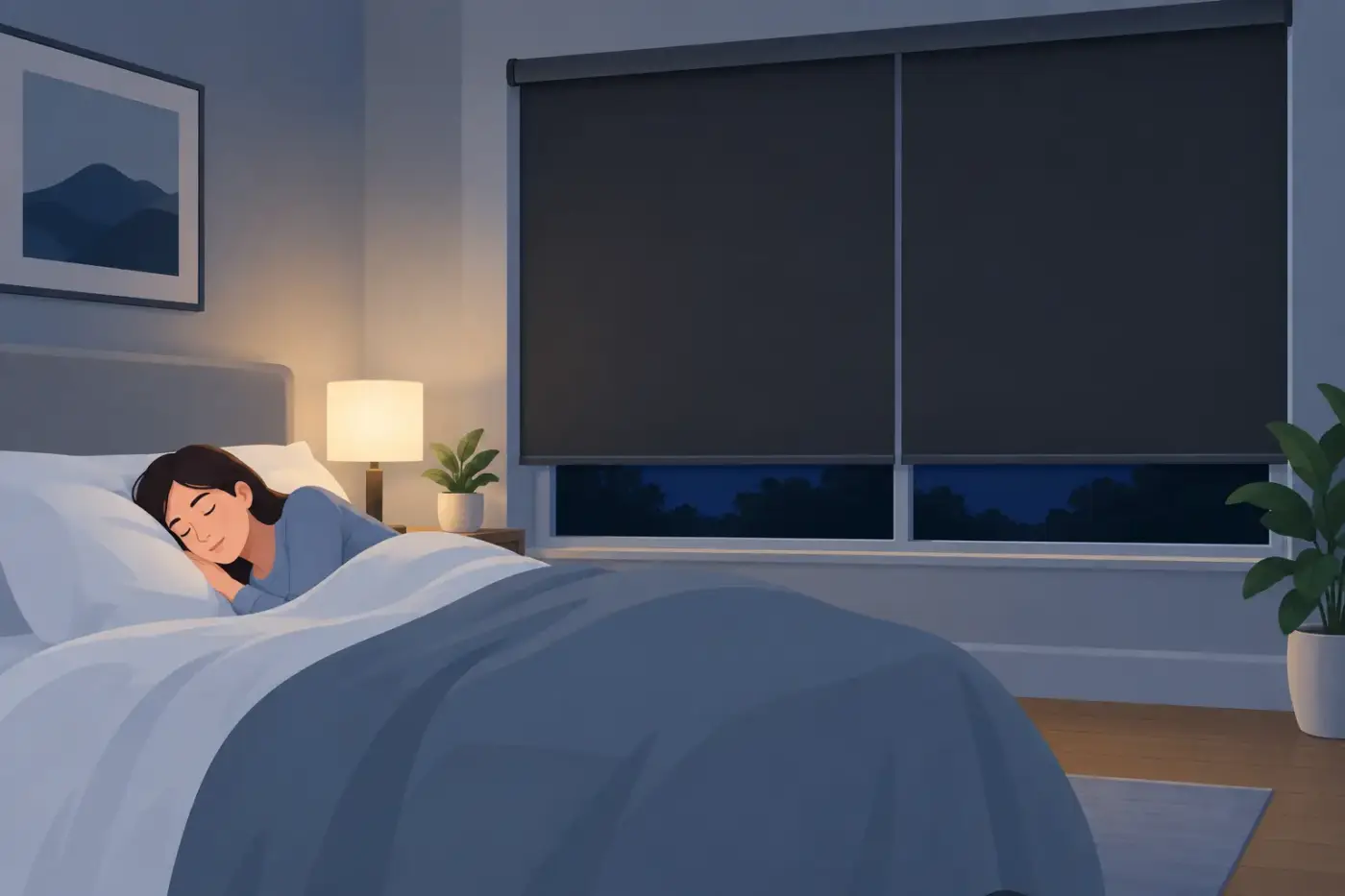
A bedroom that gets brilliant early sun can feel like a gift at breakfast and a problem at 5:30 a.m. Roller shades room darkening solutions give homeowners a clean-lined way to manage that contrast. With the right fabric, fit, and installation details, they can make bedrooms more restful, reduce glare in media spaces, and add meaningful privacy without weighing down the room.
For homes throughout Northwest Colorado, the choice is rarely as simple as picking the darkest fabric. Large windows, high elevations, reflected snow glare, and changing seasonal light all affect how a shade performs. The most satisfying result comes from considering the whole window, not just the shade material.
Room Darkening Is Not Always Total Blackout
Room-darkening roller shades substantially reduce incoming light, but they do not always make a room completely black. A fabric may block light through its surface while small amounts still enter around the sides, at the top, or below the bottom rail. That can be perfectly appropriate for a guest room, nursery, or living room where softer morning light is acceptable.
Blackout roller shades use an opaque fabric designed to prevent light from passing through the shade itself. Even then, a standard roller shade can have light gaps at the edges because it needs clearance to raise and lower smoothly. Homeowners seeking the darkest possible bedroom often benefit from a blackout fabric paired with a carefully selected mounting method, side treatments, or layered drapery.
The distinction matters because a room-darkening shade can be the better-looking, more flexible choice in a space that does not require complete darkness. The goal is not always to eliminate every trace of daylight. It is to create the level of comfort the room needs.
How Roller Shades Create Room-Darkening Results
The performance of a roller shade is shaped by several connected decisions: fabric opacity, color, mounting location, hardware, and window dimensions. Looking at those details together prevents the common disappointment of choosing a dark shade that still allows more light than expected.
Choose opacity for the room, not just the window
Opacity describes how much light passes through a shade fabric. Light-filtering materials soften daylight and preserve an airy feel, while room-darkening and blackout materials provide stronger control. For a primary bedroom with eastern exposure, blackout is often worth considering. For a home office, room-darkening fabric may be enough to reduce screen glare while keeping the space pleasant during the day.
A media room calls for a practical conversation about how the room is actually used. If daytime movies or game days are common, stronger opacity can improve the viewing experience. If the space also serves as a family room, a room-darkening shade may offer a more comfortable balance than a fully opaque treatment.
Account for edge gaps and mounting style
A shade mounted inside the window frame has a tailored, architectural appearance, but it naturally leaves small gaps at the sides. An outside-mounted shade overlaps the window opening, which can improve light blockage and visual coverage. The best option depends on the depth and condition of the window frame, trim details, and the look of the room.
For the darkest result, an outside mount with adequate overlap is often preferred. In some bedrooms, adding stationary side panels or functional drapery over roller shades further limits edge light and introduces softness, texture, and sound absorption. It is a strong option for homeowners who want both better sleep conditions and a more finished design.
Consider the top of the shade
Light can also enter above the roller, especially when the shade is mounted outside the frame. A fascia or cassette can create a more polished appearance by concealing the roller hardware. Depending on the product and installation, it may also help reduce the visible light line at the top. It should be viewed as part of the overall design and performance plan, rather than a guarantee of complete blackout on its own.
Where Room-Darkening Roller Shades Work Best
Bedrooms are the obvious choice, especially for shift workers, light-sensitive sleepers, young children, and guests adjusting to a new time zone. In a mountain home, summer daylight can arrive early and linger late, making dependable coverage especially valuable. A room-darkening roller shade can help a bedroom feel more consistent across seasons without closing it off from daylight when the shade is raised.
Nurseries and children’s rooms also benefit from reliable light control. Naptime does not always line up with the sun, and a shade that lowers smoothly and stays in place can make routines easier. Cordless and motorized operating options are especially useful where child safety and everyday convenience are priorities.
In media rooms, roller shades reduce glare on televisions and projection screens while maintaining a restrained profile. They are also a smart choice for home offices with large or west-facing windows. The aim may not be darkness, but fewer reflections, more comfortable video calls, and a workspace that remains usable in the afternoon.
Second homes and vacation properties present a slightly different set of needs. Owners may want privacy and sun protection when the property is unoccupied, then quick, simple operation when guests arrive. Durable custom shades and dependable motorization can make that transition easier, particularly for tall windows or hard-to-reach locations.
Fabric Color, Heat, and the View Outside
Darker does not automatically mean better at blocking light. The fabric’s construction and opacity determine room-darkening performance more than its visible color. A light-colored blackout fabric can effectively block incoming light, while a dark solar shade may still preserve a filtered view and admit daylight.
Color still has an important design role. A shade that coordinates with wall color, wood tones, or upholstery tends to feel intentional whether it is raised or lowered. In rooms with expansive views, the compact roll of a roller shade keeps the window visually quiet when open. That is one reason roller shades work so well in contemporary mountain homes as well as more traditional spaces.
Solar exposure also deserves attention. Strong direct sun can create heat and fade flooring, artwork, and furnishings over time. A room-darkening roller shade can reduce solar impact when lowered, though its exact effect varies with fabric, window orientation, glazing, and how the window is installed. For spaces where energy efficiency is a primary concern, cellular shades or a layered treatment may be worth comparing as well.
Make Everyday Operation Part of the Decision
A shade that performs beautifully but is inconvenient to use may spend most of its life in one position. Standard cordless operation suits many windows, while motorized roller shades are especially appealing for large, high, or multiple windows. With programmed schedules, shades can lower before strong afternoon sun or open gradually in the morning.
Motorization is not only about convenience. It can help a household use its light-control features more consistently, protect interiors during bright periods, and simplify operation for guests or older family members. Battery-powered, hardwired, and solar-charged options each have practical considerations, so the right choice depends on window access, renovation plans, and how often the shades will be used.
Why Professional Measurement Changes the Outcome
Room-darkening performance is closely tied to fit. Small differences in width, mounting height, roller placement, or trim clearance can affect how much light appears around the shade. Custom measurement also identifies challenges before ordering, such as shallow frames, uneven openings, protruding handles, or window cranks.
An in-home consultation makes it possible to assess the actual light in the room, review fabric samples against existing finishes, and determine whether a single shade or a layered approach will deliver the desired result. Ben’s Blinds helps homeowners evaluate those choices in the space where they matter, then manages measurement and installation so the finished treatment looks considered and operates properly.
If sleep, privacy, or screen glare is being compromised by a bright window, start by defining what “dark enough” means for that particular room. A carefully fitted roller shade can meet that need while still leaving the home feeling open, comfortable, and distinctly yours.
Comments are closed