
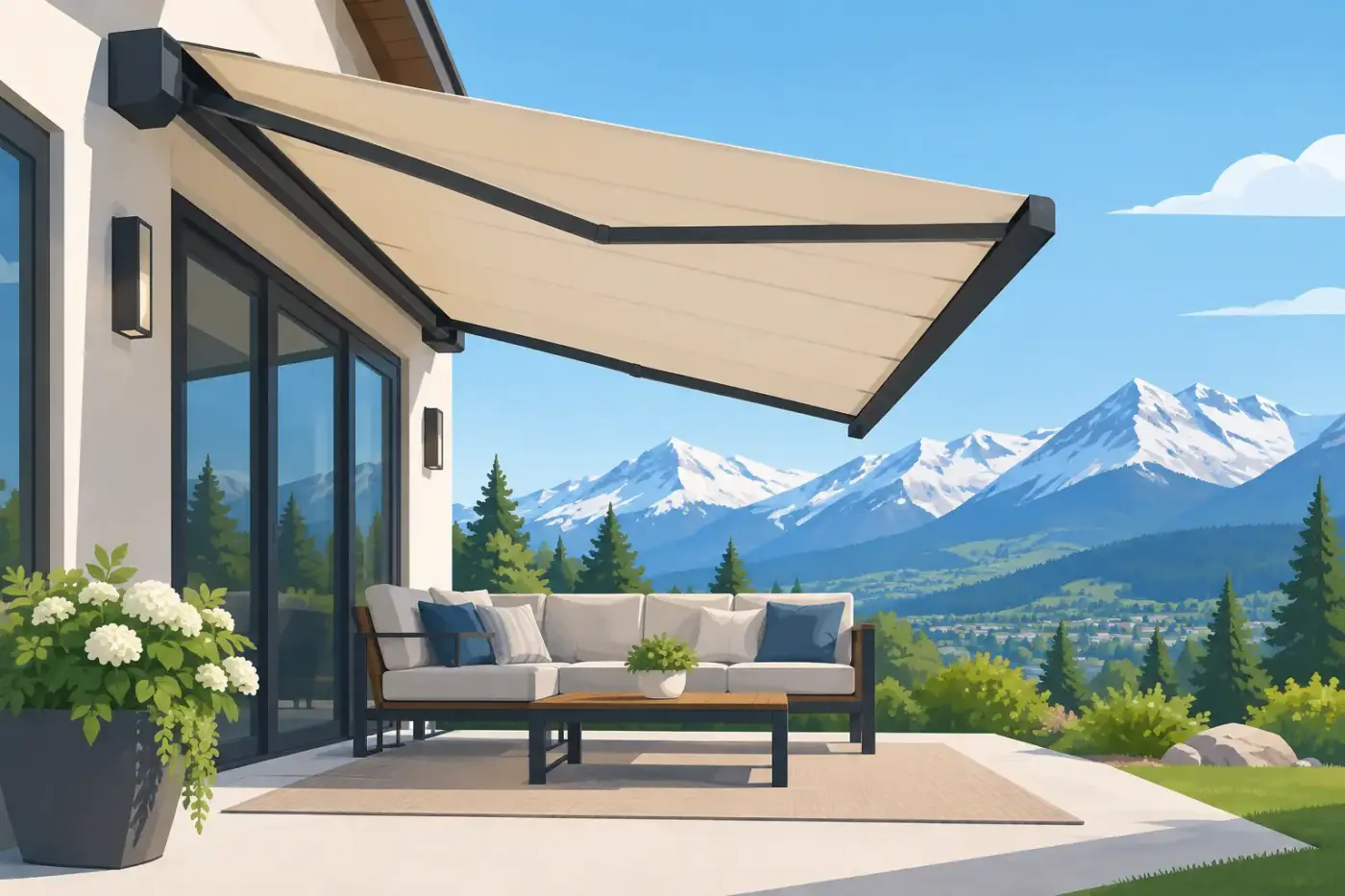
A patio can be beautifully furnished and still go unused by midafternoon. In a mountain home, intense sun, sudden showers, and quickly changing temperatures often make outdoor space feel less predictable than it should. This retractable awning review looks at where these systems perform especially well, where their limits are, and how to choose one that suits the way you actually use your deck or patio.
What a Retractable Awning Changes
A retractable awning extends from the exterior wall to create shade when you want it, then folds into a protective housing or against the home when you do not. Unlike a fixed roof structure, it preserves open-sky views and daylight indoors during cooler months. That flexibility is the central appeal.
For a south- or west-facing patio, the difference can be immediate. An awning reduces direct solar exposure over seating and dining areas, helping the space feel more comfortable during the hottest part of the day. It can also limit glare through nearby windows and reduce the sun fading finishes, rugs, and upholstery inside.
The best results are practical as well as visual. A well-proportioned awning gives a home a finished outdoor-room feel without making the façade look heavy. When retracted, it is far less visually prominent than a permanent cover.
Retractable Awning Review: The Real Advantages
The strongest case for a retractable awning is control. With a manual or motorized system, homeowners can adjust the patio for the weather rather than committing to permanent shade every day. On a crisp morning, retract the awning and enjoy the sun. When afternoon glare arrives, extend it in seconds.
Quality awnings also offer meaningful coverage. The right width and projection can shade a dining table, lounge seating, or a bank of glass doors. Because custom systems are sized for the wall and the outdoor area, they generally look and function more intentional than a freestanding canopy or a small retail awning.
Fabric selection deserves more attention than many people expect. Performance fabrics are designed to resist fading, mildew, and everyday weather exposure while filtering a substantial amount of sunlight. Light-colored fabrics reflect more heat and can make the space feel brighter; darker fabrics may offer a clearer outward view and stronger glare control. Stripes, textured solids, and tailored edge details can connect the awning to exterior paint, stone, trim, or existing furnishings.
Motorization is another major benefit, particularly for large awnings. A wall switch, handheld remote, or smart-home control makes it easy to extend the system before guests arrive or retract it at the first sign of changing weather. For many homeowners, the convenience means the awning gets used more often.
The Trade-Offs to Consider First
A retractable awning is not a substitute for a roof. It is designed for shade and light weather protection, not for snow loads, sustained high winds, or heavy pooled water. That distinction matters in Northwest Colorado, where a sunny afternoon can shift quickly and winter conditions are serious.
The awning should be retracted when wind picks up, during storms, and whenever snow or ice is possible. Wind sensors can provide added reassurance by automatically retracting the awning when conditions become unsafe, but they are a safeguard rather than a reason to ignore the forecast. If your patio regularly experiences strong gusts or wind funnels around the home, an on-site evaluation is essential.
Retractable awnings also do not provide complete side protection. Low-angle morning or evening sun can still reach under the front edge, depending on orientation. Optional drop valances or side screens may help in certain layouts, but a covered structure, exterior solar shades, or a pergola may be better if your priority is all-day enclosure or privacy.
There is also an investment difference. Custom sizing, premium fabric, a cassette housing, motorization, sensors, and professional installation add cost compared with a basic store-bought model. The payoff is better fit, more reliable operation, stronger long-term appearance, and installation that accounts for the home’s construction.
Why Installation Matters as Much as the Awning
An awning places considerable leverage on the wall where it is mounted. The brackets must be fastened into appropriate structural framing or masonry using the correct hardware. Mounting only into surface material can lead to movement, water intrusion, or failure over time.
This is one reason a professional site visit is valuable. The installer can inspect the mounting surface, measure the usable width, identify doors, lights, gutters, rooflines, and exterior features, and determine the projection that makes sense for the patio. They can also evaluate the awning’s pitch, which is necessary for rain runoff.
A custom plan helps avoid a common mistake: selecting an awning based only on the size of the seating area. The awning must fit the architecture and mounting conditions first, then provide practical shade over the area below. On a narrow deck, for example, too much projection may not add usable comfort. On a deep patio, too little projection can leave the table in full sun by late afternoon.
Choosing Fabric, Frame, and Controls
Start with the sun pattern, not the color book. Notice when the patio receives direct sun, where people sit, and whether the goal is heat reduction, glare control, protection for interior furnishings, or all three. A consultation at the home makes these questions much easier to answer accurately.
For the frame, neutral finishes often blend with trim and siding, while darker frames can create a more architectural look. A full cassette enclosure is worth considering for homes where appearance and fabric protection are priorities. It encloses the awning fabric and arms when retracted, helping keep the system cleaner between uses.
Manual operation can be perfectly suitable for smaller, easily reached awnings and budget-conscious projects. Motorization is usually the better choice for larger systems, second homes, or spaces used frequently for entertaining. If you want automation, ask how controls, wind sensors, and power access will work together before finalizing the order.
Care That Protects the Investment
Retractable awnings are relatively low maintenance, but they are not maintenance-free. Brush away loose debris, rinse the fabric periodically according to the manufacturer’s care guidance, and allow it to dry fully before long-term retraction when possible. Avoid harsh cleaners that can damage the protective finish.
Before winter, inspect the fabric, arms, mounting points, and housing for visible wear or debris. In snowy climates, the awning should remain retracted for the season unless the manufacturer specifically recommends otherwise. If the unit is motorized, occasional operation and a check of the controls can help identify issues before patio season begins.
Is a Retractable Awning Right for Your Home?
A retractable awning is an excellent fit for homeowners who want adjustable shade, cleaner sightlines, and a more inviting outdoor living area without building a permanent roof. It is especially effective over patios near large windows or doors that receive strong afternoon sun.
It may be less suitable for a highly exposed location, a space that needs reliable protection in every type of weather, or a patio where privacy and side coverage are the main concern. In those cases, a different outdoor shading approach may serve the home better.
The most successful projects begin with a close look at the wall, sun exposure, wind, and how the space is used from one season to the next. Ben’s Blinds can help homeowners compare those details in person, then select a custom outdoor shade solution that feels considered, useful, and at home with the property.
A well-chosen awning should not simply cover a patio. It should make the hours you already want to spend outside feel more comfortable, more flexible, and easier to enjoy.
Comments are closed