
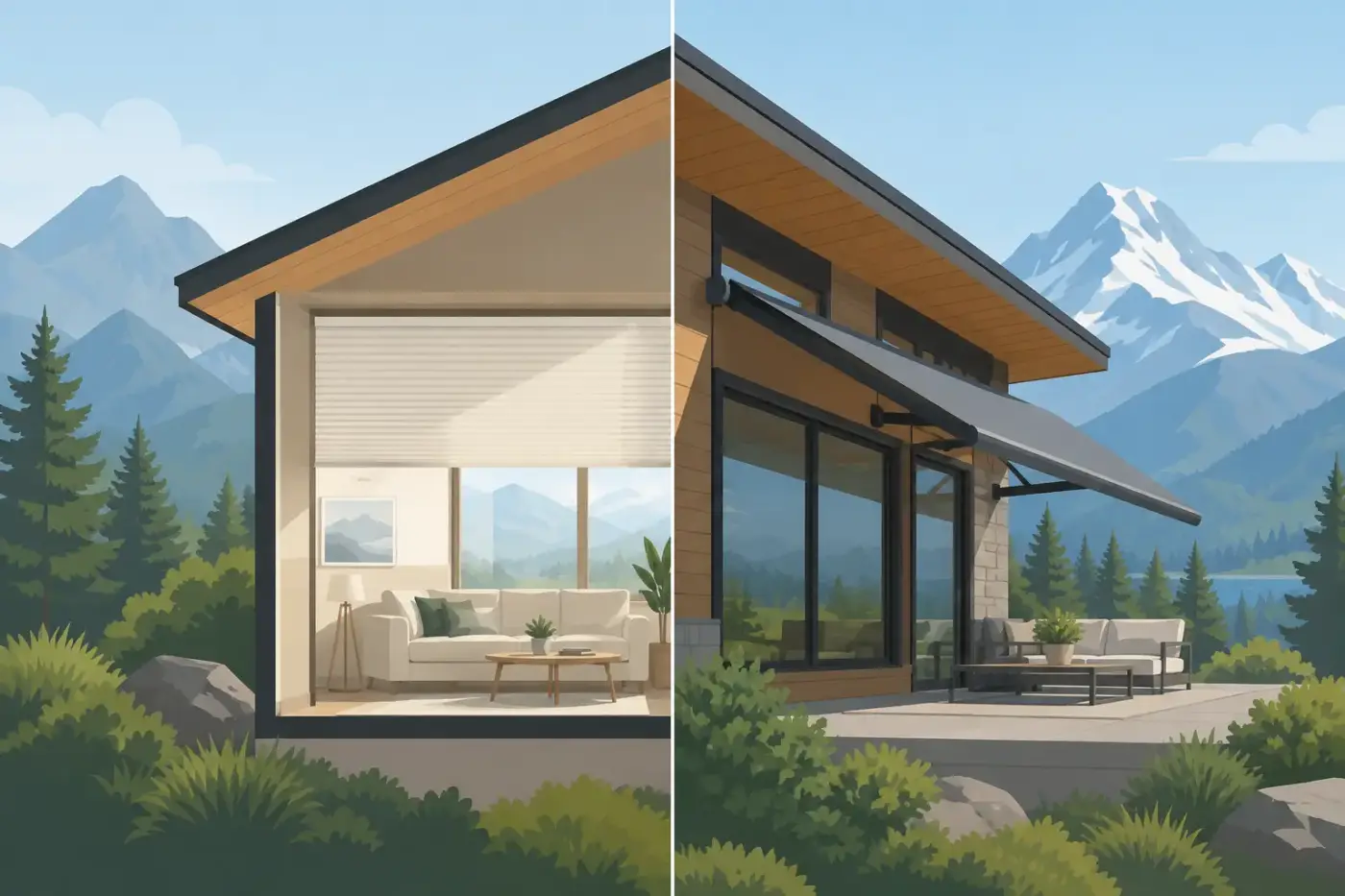
A west-facing great room can feel completely different at 4 p.m. in July than it does on a bright February morning. That is why interior versus exterior shading is more than a style decision for Colorado homeowners. The right approach can reduce glare on snow days, protect finishes from intense sun, improve comfort near large windows, and make a room look finished from both inside and out.
The best choice depends on what the sun is doing, how the window is used, and whether you need protection from heat, privacy, weather, or all three. Many homes benefit from a thoughtful combination rather than treating interior and exterior shading as an either-or decision.
Interior Versus Exterior Shading: The Core Difference
Interior shading is installed inside the home. Blinds, cellular shades, Roman shades, solar shades, shutters, and drapery all give you direct control over light, privacy, and the appearance of a room. Because they are protected from wind, moisture, and temperature swings, interior treatments offer broad design flexibility and are generally suitable for nearly every window.
Exterior shading sits outside the glass, stopping or filtering sunlight before it reaches the window. Retractable screens, exterior roller shades, awnings, pergola shades, and other outdoor systems are especially useful where solar heat gain is the main concern. They can make patios, covered decks, and sun-exposed rooms more usable during warm, bright weather.
The practical distinction is simple: exterior shading blocks more solar energy before it enters the glass, while interior shading gives more precise control over the light and privacy you experience inside the room. Both can contribute to comfort. They simply do it in different ways.
When Interior Shading Is the Better Fit
Interior treatments are often the most versatile answer for full-time homes, second homes, and commercial spaces. A well-chosen shade or blind can address several needs at once without changing the exterior appearance of the building.
For bedrooms, bathrooms, and street-facing rooms, privacy is usually the priority. Room-darkening or blackout shades can create a more restful sleep environment, while top-down/bottom-up cellular shades allow daylight to enter from above while maintaining privacy at eye level. Adjustable blinds and shutters provide another level of control, letting you tilt slats to redirect light rather than closing the view completely.
Glare control is another common reason to choose interior shades. In mountain homes with expansive views, the goal is rarely to cover the glass all day. Solar shades can soften harsh glare and help protect floors, furnishings, artwork, and wood finishes while preserving a degree of outward visibility. The openness factor matters here: a lower openness fabric offers more glare reduction and daytime privacy, while a higher openness fabric preserves a clearer view but allows more light through.
Interior treatments also tend to be the better choice when insulation matters throughout the year. Cellular shades create air pockets at the window, helping reduce the feeling of cold glass in winter and limiting unwanted warmth in summer. They are particularly valuable in bedrooms, lofts, and rooms with older or unusually large windows. They will not replace efficient glazing or solve a major draft, but they can noticeably improve comfort at the perimeter of a room.
Design is part of the decision, too. Woven shades add natural texture, Roman shades bring softness and tailored color, shutters offer architectural definition, and custom drapery can frame tall windows or soften the acoustics of an open living area. Exterior products are highly functional, but interior treatments do more to shape the character of the space.
When Exterior Shading Has the Advantage
If direct afternoon sun is heating a room beyond what the HVAC system can comfortably manage, exterior shading deserves serious consideration. Once sunlight passes through glass, much of that heat is already inside. Blocking it before it reaches the window is generally the more effective way to reduce solar heat gain.
This is especially relevant for south- and west-facing glass, large sliding doors, window walls, and rooms with high ceilings. A retractable exterior screen can reduce the intensity of the sun while preserving airflow and outward views. On a deck or patio, exterior shades can also reduce glare, add privacy from neighboring properties, and make outdoor dining more pleasant when the sun is low.
Exterior systems are not limited to summer. In exposed locations, they can help create a more comfortable shoulder-season outdoor area by reducing wind and late-day glare. However, they are not a one-size-fits-all winter solution. Snow load, wind exposure, mounting conditions, and the ability to retract or secure the system all need to be considered carefully.
That last point matters in Northwest Colorado. A product that works beautifully on a sheltered patio may not be appropriate for a high-wind deck or an elevation with frequent heavy snow. Exterior shading must be specified for the actual site, not selected from a photo. Durable materials, proper mounting, and professional installation are central to performance and longevity.
Heat Control Is Only One Part of the Decision
It is tempting to frame the choice around temperature alone, but homeowners live with window treatments every day. A solution that lowers heat gain but is inconvenient to operate, limits an important view, or does not provide evening privacy may not feel like the right solution in practice.
Consider a living room with broad west-facing windows. Exterior screens may be the strongest option for reducing late-day heat, especially if the room opens to a deck. But an interior solar shade may still be needed for daytime glare control when the exterior screen is raised, while drapery panels can add softness and nighttime privacy. Each layer has a distinct job.
Likewise, a bedroom may need insulating cellular shades for winter comfort and blackout control, not exterior shading. A home office might benefit from solar shades that reduce monitor glare without making the space feel closed in. In a restaurant or office with a glass storefront, exterior shading can improve occupant comfort, but interior shades may still be necessary for privacy after dark.
Views, Privacy, and Operation Matter Every Day
For many Colorado homes, the view is the feature that makes the room. The goal is often to manage the sun without sacrificing the landscape. Screen fabrics, sheer shades, and adjustable blinds can all support that balance, but they produce different results depending on the direction of the window and the time of day.
Privacy requires equally careful planning. Solar shades can provide useful daytime privacy when it is brighter outside than inside, but they do not offer the same privacy at night with interior lights on. Bedrooms and close-proximity windows usually need a more opaque treatment, a secondary layer, or a different product altogether.
Operation should fit the way the household uses the space. Motorization can be especially helpful for hard-to-reach windows, tall glass, and homes that receive strong changing sun throughout the day. Scheduled operation can lower shades before glare becomes disruptive and raise them when warmth and daylight are welcome. For second-home owners, motorized treatments can also add convenience when the property is unoccupied.
Why a Layered Plan Often Works Best
The most comfortable homes often use interior and exterior shading together, with each product assigned a clear role. Exterior screens or awnings can address intense solar exposure and improve outdoor living areas. Interior shades, blinds, shutters, or drapery then handle privacy, insulation, finer light control, and the visual finish of the room.
Layering does not mean adding treatments everywhere. It means identifying the windows that create the biggest comfort problems and choosing products that solve those specific problems. A north-facing guest room may only need privacy and insulation. A west-facing great room with floor-to-ceiling glass may need exterior heat control plus interior glare management. The right plan is rarely identical from room to room.
Start With the Actual Window, Not the Product Name
Photos and samples are useful, but sunlight changes with orientation, elevation, roof overhangs, nearby trees, and the season. What looks like a heat problem in August may be a glare problem in March, while a treatment that feels perfect at noon may be too dark at sunset.
A professional in-home consultation makes those trade-offs easier to see. Measurements, mounting surfaces, window depth, fabric openness, insulation needs, and the view from both seated and standing positions can all be evaluated in the space where the treatment will be used. Ben’s Blinds helps homeowners narrow those choices without turning a practical decision into a complicated project.
The most satisfying shading solution is the one you barely have to think about: it keeps the room comfortable, protects what you value, preserves the parts of the view you love, and looks right every time you walk in.
Comments are closed