
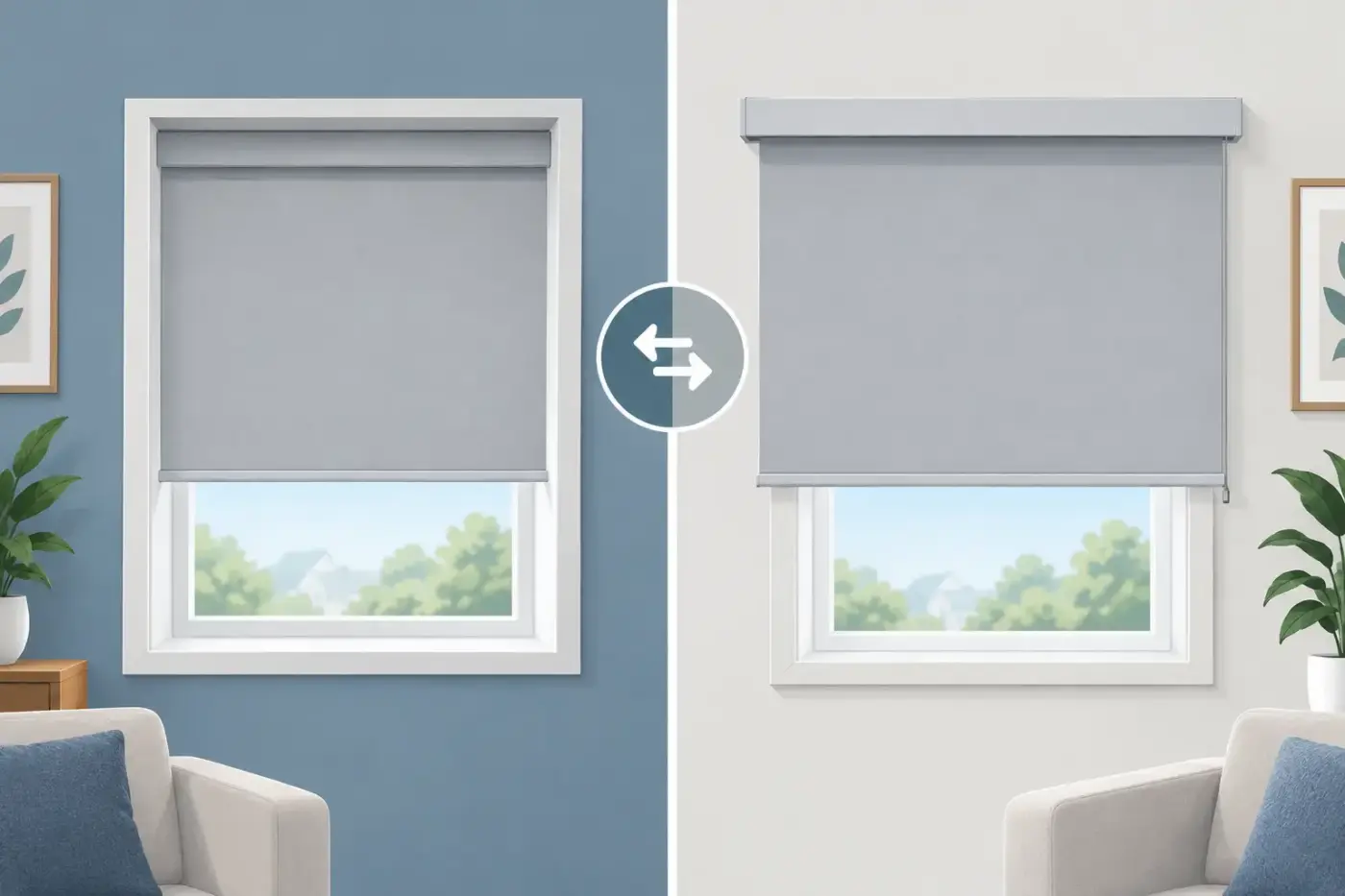
A window treatment can look beautifully chosen and still feel wrong if it is mounted in the wrong place. That is why the inside mount versus outside mount decision deserves attention before fabric, color, or operating style enters the picture. The mounting approach affects how much light comes through, how private the room feels, whether the window trim remains visible, and how the finished treatment relates to the architecture of your home.
For mountain homes in particular, where bright sun, wide views, deep trim, and changing seasonal temperatures often share the same room, placement is more than a cosmetic detail. It helps determine how a shade, blind, shutter, or drapery will perform every day.
Inside Mount Versus Outside Mount: The Basic Difference
An inside-mounted treatment is installed within the window opening. The shade, blind, or shutter sits inside the frame, leaving the surrounding trim visible. This option creates a tidy, built-in appearance and is a natural fit for windows with attractive casings, substantial wood trim, or clean modern lines.
An outside-mounted treatment is installed on the wall, molding, or trim surrounding the window opening. It extends beyond the glass area, covering some or all of the frame. Outside mounting can make a window appear larger, improve coverage, and solve common fit challenges when the window opening is too shallow or uneven.
Neither approach is automatically better. The right choice depends on the window itself, the treatment you choose, and what matters most in the room: view, privacy, darkness, insulation, or visual impact.
When an Inside Mount Is the Right Choice
Inside mounts are often chosen for their tailored, unobtrusive look. Because the treatment sits within the opening, it does not compete with decorative trim or take up wall space. This can be especially appealing in homes with stained wood casings, distinctive millwork, or windows grouped closely together.
They also work well when you want the window treatment to feel visually quiet. Cellular shades, roller shades, woven wood shades, and many horizontal blinds can look crisp and intentional when recessed into a properly sized frame. If the view is a priority, an inside-mounted shade typically stacks within the opening and leaves more of the surrounding wall and trim untouched when raised.
There are practical limitations, though. The window needs enough mounting depth for the product and its brackets. Some shades need only a modest amount of depth for an inside mount, while plantation shutters, certain wood blinds, and layered shades require more room to sit flush or operate comfortably. Handles, cranks, locks, protruding trim, and alarm sensors can also interfere with the fit.
Light leakage is another consideration. Because an inside-mounted shade must have small clearance gaps at the sides for proper operation, some light will enter around the edges. In a living room, that may be barely noticeable. In a bedroom, media room, or guest room where darkness matters, those gaps can be a deciding factor.
Best uses for inside mounting
Inside mounting is often a strong option for windows with square, deep openings; rooms where you want to showcase trim; and spaces where a clean, architectural appearance matters more than total blackout coverage. It can also be ideal for windows behind furniture, provided the treatment can be raised and lowered without obstruction.
When an Outside Mount Makes More Sense
Outside mounting offers more flexibility than many homeowners expect. Since it is installed beyond the window opening, it can cover an opening that is shallow, out of square, or interrupted by hardware. It is frequently the best solution for older homes, unusual windows, and windows where an inside mount would leave too little room for the product to operate correctly.
Coverage is its biggest advantage. A shade mounted outside the frame can extend past the glass on every side, reducing side gaps and blocking more incoming light. This makes it a smart choice for bedrooms, nurseries, media rooms, and west-facing rooms that receive intense afternoon sun. Pairing an outside-mounted room-darkening or blackout shade with properly sized coverage can make a meaningful difference in both sleep quality and glare control.
Outside mounts can also improve privacy. On a window close to a neighboring property or facing a street, wider coverage limits the sightlines that can remain at the sides of an inside-mounted shade. For bathrooms and bedrooms, that extra coverage is often worth the more prominent profile.
From a design perspective, outside mounting can make undersized windows feel more substantial. Mounting a shade several inches above the frame and extending it beyond the sides creates the impression of a taller, wider window. This is particularly effective with drapery panels, Roman shades, roller shades, and woven shades. The treatment becomes part of the room’s composition rather than simply an accessory inside a window opening.
The trade-off is that outside-mounted treatments cover trim and require open wall or molding space around the window. If windows are tightly grouped, positioned near a corner, or meet cabinets or built-ins, there may not be enough room to extend the treatment as far as you would like.
Light Control and Privacy: Small Gaps, Big Difference
The question often comes down to how much light and visibility you are willing to accept. An inside mount leaves small operational gaps. Even with an opaque shade, sunlight can create a bright outline around the treatment. That can be perfectly appropriate in a kitchen, office, or living room where soft daylight is welcome.
An outside mount provides a stronger perimeter seal, especially when the shade overlaps the opening generously. It will not make every product completely blackout on its own, but it is usually the more effective foundation for a darkened room. Side channels, blackout liners, and layered treatments can further improve performance when darkness is a priority.
Privacy follows a similar pattern. A carefully measured inside mount offers dependable coverage across the glass, but an outside mount generally gives you more control at the edges. The appropriate choice depends on the window’s exposure, the height of the room, and how the space is used after sunset.
Energy Efficiency and Colorado Conditions
Window treatments do not replace well-built windows, but the right fit can help improve comfort near the glass. Cellular shades are particularly valued for their insulating structure, and their performance benefits from thoughtful mounting. An inside mount can provide a close, neat fit within a deep opening, while an outside mount can cover more of the opening and reduce the path for air movement around the shade’s edges.
For sunny Colorado elevations, solar shades can control glare and soften heat gain while preserving a connection to the view. They are often inside mounted for a minimal appearance, although outside mounting may be preferable when greater coverage is needed. In bedrooms and rooms with large temperature swings, a layered approach, such as an insulating shade paired with drapery, can add comfort as well as visual warmth.
The product matters as much as the mounting method. A professional recommendation should account for the direction the window faces, the glass size, the room’s use, and whether you are trying to manage winter chill, summer glare, or both.
How Style Changes With the Mounting Choice
Inside mounts tend to look disciplined and tailored. They suit contemporary interiors, mountain-modern homes, and rooms where natural wood trim deserves to remain visible. They can also make a collection of different-sized windows feel less busy because each treatment stays contained within its own opening.
Outside mounts are more expressive. A Roman shade mounted above the frame adds softness and height. Drapery panels installed beyond the window can frame a view, balance a large wall, or bring color and texture into a room. Exterior-mounted shades and certain vertical treatments can also be practical solutions for expansive glass doors and wide openings where inside mounting is not feasible.
Shutters deserve special consideration. An inside-mounted shutter can look beautifully integrated when the opening is square and deep enough. Outside-mounted shutter frames can accommodate less cooperative openings and create a more substantial, finished border. The best answer is often visible only after precise measurement.
Why Measurement Should Come Before the Final Decision
Window openings are rarely as straightforward as they appear. A frame may taper slightly, walls may not be perfectly level, and trim can conceal obstacles that affect the installation. Even a fraction of an inch can influence whether a treatment hangs straight, clears a handle, or provides the desired light control.
Before committing to an inside or outside mount, measure the opening at the top, middle, and bottom, along with the depth at several points. Note any obstructions, including window cranks, recessed trim, tile, molding, and nearby doors. More importantly, evaluate the result in the actual room. A fabric that looks right in a sample book may need a different mount or opacity once you see the sun angle and surrounding finishes.
At Ben’s Blinds, an in-home consultation allows those details to be considered together, from the practical depth of the frame to the way a shade will complement the room’s materials and view. Professional measuring and installation remove much of the guesswork from a decision that is difficult to reverse after custom products are ordered.
The best mount is the one that supports the way you want the room to feel at seven in the morning, in bright afternoon sun, and after dark. Start with the window’s constraints, then let comfort, coverage, and design guide the final placement.
Comments are closed