
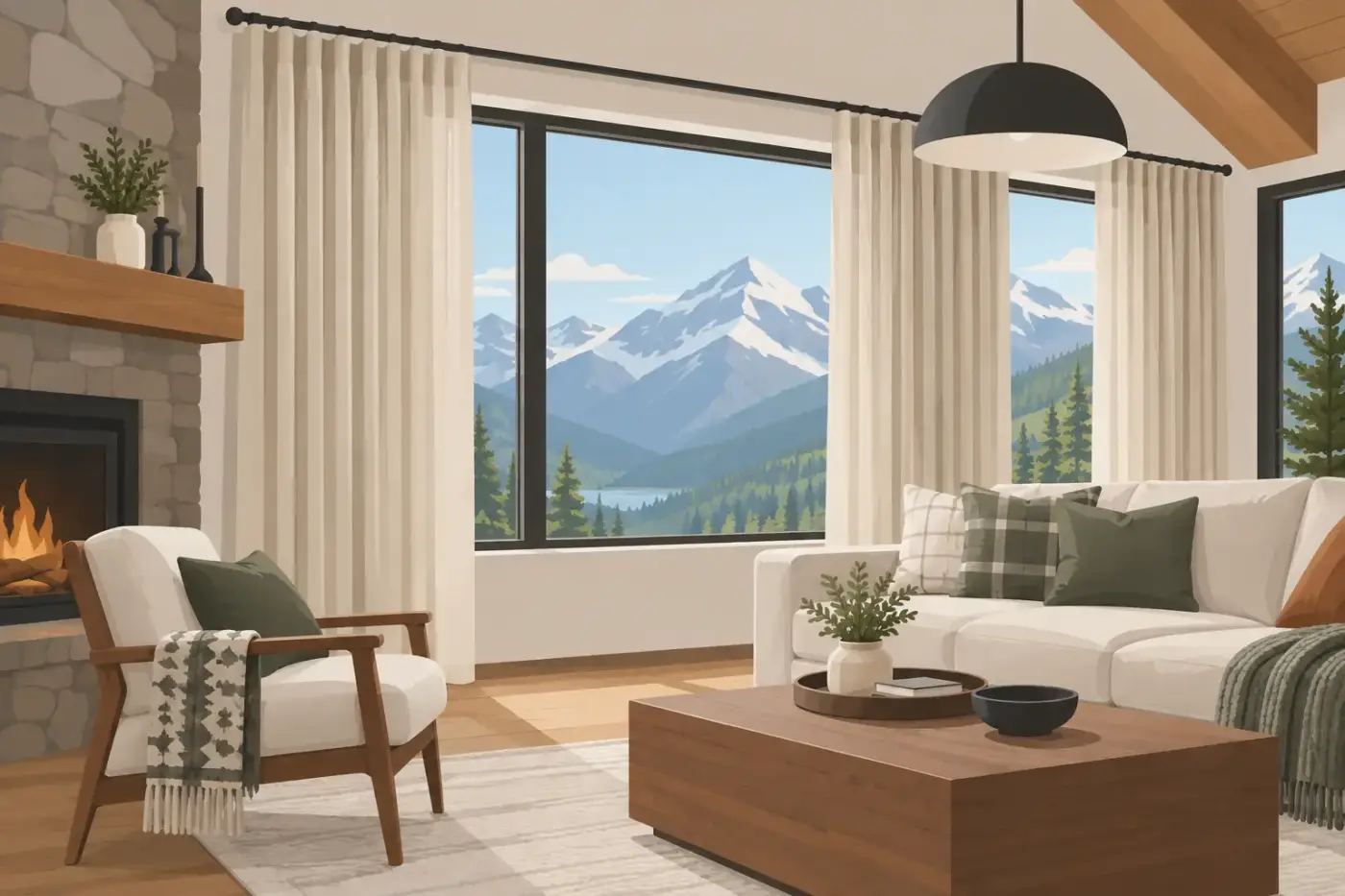
A wall of windows can be the best feature in a Colorado home until late-afternoon glare takes over the living room, winter nights feel exposed, or a beautiful view begins to compete with a television screen. The most useful drapery trends answer those everyday concerns without hiding the architecture that made the room special in the first place.
For mountain homes, drapery is moving beyond the idea of a purely decorative finishing touch. Today’s custom panels are often part of a complete window-treatment plan, working with shades or blinds to manage strong sun, improve privacy, soften acoustics, and bring visual warmth to open spaces. The best choice is rarely about following a trend exactly. It is about choosing a look that supports how a room is used through every season.
Drapery Trends That Balance Texture and Performance
Softer neutrals with visible texture
Plain white panels still have a place, especially in clean, contemporary interiors, but layered neutral fabrics are taking the lead. Think warm ivory, flax, oatmeal, soft taupe, mushroom, and muted mineral tones. These colors feel calm without reading flat, and they work naturally with the wood, stone, leather, and painted millwork common in Northwest Colorado homes.
Texture matters as much as color. Linen blends, wool-look weaves, cotton textures, and subtly slubbed fabrics add depth when sunlight moves across them. A textured fabric can make a large room feel more settled while maintaining a quiet, tailored appearance.
There is a practical consideration, though. Pure linen has an appealing relaxed character, but it can wrinkle and may not be the best fit for every high-sun window or heavily used vacation rental. A quality linen blend can provide a similar look with greater stability and easier upkeep.
Fullness and custom proportions
One of the clearest drapery trends is a return to generous, properly proportioned panels. Sparse panels that barely cover the glass can make a room feel unfinished. Full custom drapery creates a more intentional frame around a view, even when the panels remain open most of the day.
For a polished result, the rod placement, stack-back space, panel width, and hem length should be considered together. Mounting hardware higher and wider than the window can make ceilings appear taller and preserve more of the glass when panels are open. In rooms with panoramic views, this detail is especially valuable.
Floor-length drapery remains the standard for formal living areas, primary bedrooms, and great rooms. A clean break at the floor offers a crisp look, while a very slight puddle can feel softer in a traditional or rustic setting. The right choice depends on the home’s architecture, cleaning preferences, and whether the panels will be opened and closed frequently.
Layered treatments for real-life light control
Layering is one of the most functional drapery trends because it allows a room to adapt rather than forcing one treatment to do every job. Drapery panels can add softness, insulation, and nighttime privacy, while an inside-mounted shade handles daytime glare and sun protection.
A woven shade with side panels, for example, brings natural texture while filtering harsh light. A roller or solar shade behind decorative drapery may be a better fit for a media room, office, or west-facing great room where glare control is a priority. In bedrooms, room-darkening shades paired with lined drapery can create a more restful environment without sacrificing the finished look of fabric panels.
This approach also gives homeowners more flexibility. Sheer or light-filtering materials can keep a room bright during the day, while a second layer provides privacy after dark. It is a particularly smart solution for homes with large windows close to neighboring properties or visible from a road.
Color Is Becoming More Grounded
Soft neutrals continue to be popular, but color is returning in restrained, livable ways. Deep olive, dusty blue, tobacco, clay, muted rust, charcoal, and warm espresso can give drapery presence without overwhelming a room. These shades tend to feel especially at home beside natural wood finishes and mountain views.
Pattern is also being used more selectively. Rather than covering every window in a bold print, many homeowners are using a small-scale botanical, understated stripe, or tonal geometric pattern on a focal window, in a dining room, or within a primary bedroom. Solid panels elsewhere keep the overall design balanced.
A fabric sample can look very different at noon than it does in the evening. Strong altitude sun can pull out undertones that are not obvious in a showroom or on a screen. Evaluating samples in the actual room, next to flooring, wall color, and upholstery, helps prevent a costly mismatch.
Tailored hardware that supports the room
Drapery hardware is becoming more refined and less ornamental. Slim metal rods in matte black, bronze, antique brass, and soft nickel are common choices, along with simple rings or discreet traversing systems. The goal is not necessarily to make the hardware disappear. It is to choose a finish that relates to the room’s lighting, plumbing, cabinet, or furniture details.
For contemporary interiors, ripplefold drapery is a strong option. The fabric forms consistent, gentle waves that look clean when open and closed, making it well suited to wide expanses of glass. Pinch pleats offer more traditional structure, while grommet panels generally create a more casual look. Each heading style changes how the fabric hangs, so it should be chosen for both appearance and daily operation.
Practical Details Behind Beautiful Drapery
Beautiful fabric alone does not guarantee a treatment will perform well. Lining is often the difference between panels that simply decorate a window and panels that contribute to comfort. A quality lining can help protect the face fabric from fading, improve drape, add privacy, and provide modest insulation.
For bedrooms and media spaces, blackout lining may be worth considering. It is effective for blocking light, but it can make panels heavier and less translucent when closed. In a sunny living room where the goal is softened daylight rather than darkness, a standard privacy lining or unlined decorative panel paired with a shade may be the better choice.
Motorization is another option gaining ground, particularly for tall, wide, or hard-to-reach windows. Motorized drapery tracks can make large panels easy to use and encourage homeowners to adjust their treatments as the sun changes. It is not necessary for every window, but it can be especially helpful in great rooms, second homes, and commercial settings where convenience matters.
Choosing drapery for a second home or rental
Second-home owners and property investors often need a slightly different balance. The fabric should still look elevated, but durability, cleanability, and reliable operation become more important. Tightly woven materials, sturdy hardware, and uncomplicated treatment combinations generally hold up better than delicate fabrics or overly elaborate designs.
For vacation properties, consider how often guests will need to operate the panels. Decorative side panels with a separate shade can be easier to maintain than heavy drapery intended for daily opening and closing. A professional recommendation can account for the window’s exposure, guest privacy, local climate, and the room’s role in the property.
Start With the Window, Not the Fabric
The most successful drapery plan starts with the conditions around each window: its size, direction, view, privacy needs, wall space, and nearby furniture. From there, fabric and style choices become much easier. A west-facing window may need more solar control than an east-facing one. A dramatic picture window may benefit from stationary panels, while a bedroom slider needs treatments that operate smoothly every day.
Custom measurement is equally important. Uneven walls, deep trim, angled ceilings, wide spans, and furniture placement can all affect how drapery should be mounted and how it will function. These details are where a professional in-home consultation brings real value, turning a design idea into a treatment that fits the room correctly.
If you are considering new drapery, bring a few inspiration images but stay open to what the room needs. Ben’s Blinds can help you compare fabrics, linings, shades, and operating options at home, where the light and view make the decision clearer.
Comments are closed