
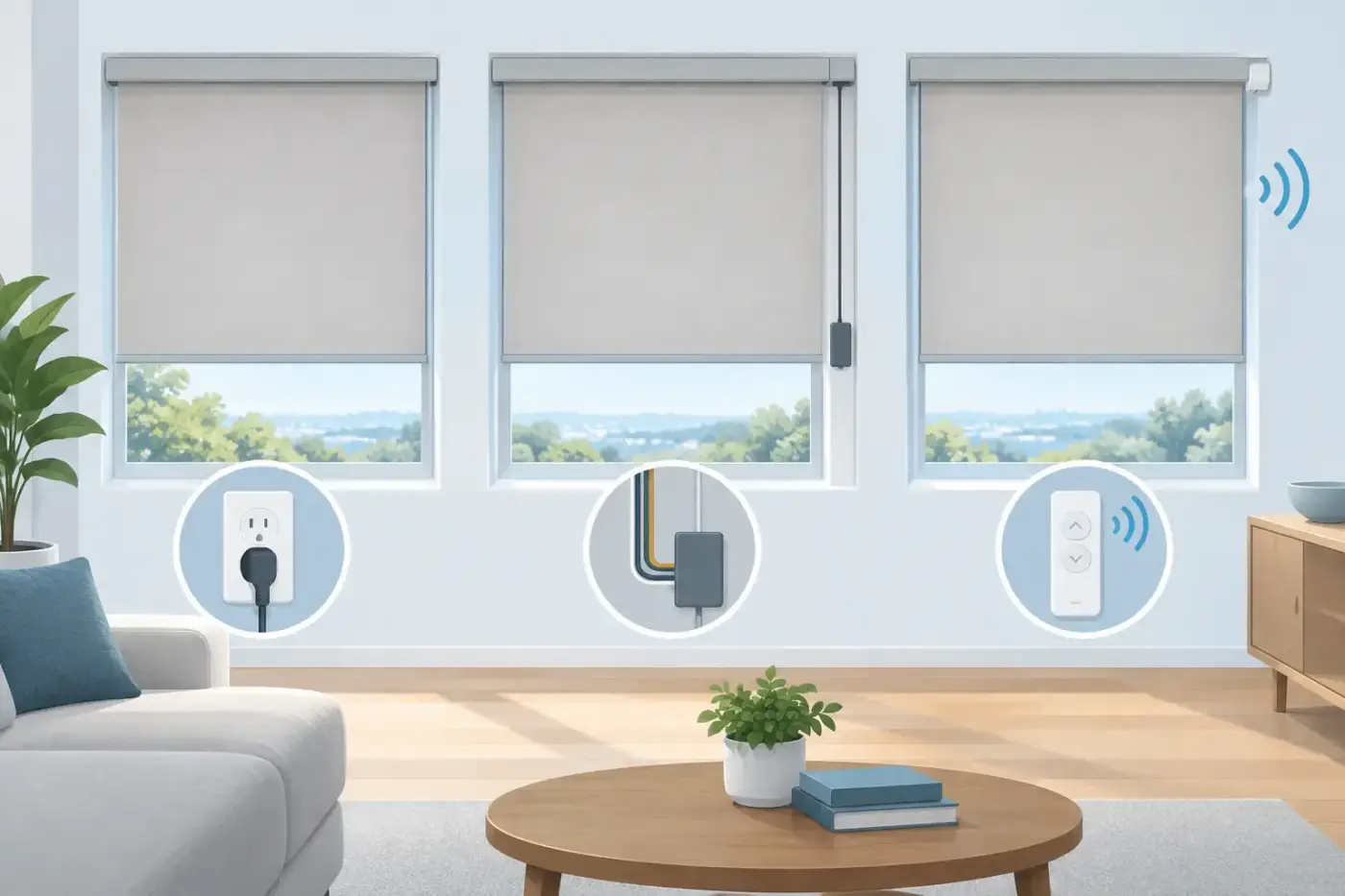
A wall of west-facing windows can be beautiful at sunset – and frustrating when glare heats up the room, fades furnishings, and makes it hard to relax. Motorized shades make those windows far easier to manage, but homeowners often ask one practical question first: do motorized shades need wiring?
Not always. Motorized shades can run on replaceable batteries, rechargeable battery packs, plug-in power, low-voltage hardwiring, or in some cases solar charging. The best choice depends on the window, how often the shade will operate, whether the home is being built or remodeled, and how much you value a completely hidden power source.
For many existing homes, battery-powered shades provide the clean, convenient answer without opening walls. For new construction and major renovations, hardwiring can be a smart long-term investment. The right decision is less about choosing the most technical option and more about choosing an operation system that fits the home and the way you live in it.
Do Motorized Shades Need Wiring for Every Window?
No. A motor needs power, but that power does not have to come through wiring in the wall. Battery-powered motors are widely used in custom shades, including roller, Roman, cellular, woven wood, and sheer shades. They are especially useful for finished rooms where running new electrical wiring would mean extra drywall, paint, and labor.
Hardwired motorization uses low-voltage wiring concealed within the wall or window opening. The wiring connects each shade to a centralized power supply or electrical source, depending on the system. It is a polished option because the motor receives constant power and there are no batteries to replace or recharge.
Plug-in shades fall between those two choices. A small power cable runs from the shade motor to a nearby outlet. This can be a practical solution when an outlet is conveniently located and the cord can be routed discreetly, though it is not the first choice for every room.
Solar-powered rechargeable systems are another option for windows with reliable daylight. A slim solar panel charges the battery pack, reducing hands-on charging. They can work well in sunny locations, but the panel and its appearance should be considered carefully, particularly with decorative fabrics or highly visible windows.
The Main Power Options for Motorized Shades
Battery-powered shades
Battery power is the most popular choice for retrofitting motorized shades into an existing home. The motor and battery tube or rechargeable pack are typically concealed inside the headrail, cassette, or shade hardware. Once installed, the treatment looks much like a conventional custom shade, only it responds to a remote, wall control, app, or programmed schedule.
Battery life varies by product, shade size, fabric weight, frequency of use, and local conditions. A shade opened and closed twice a day will use more power than one adjusted only occasionally. Rechargeable systems are convenient, but they still require planning for periodic charging. Depending on the product, that may involve connecting a charging cable at the shade or removing a battery wand.
For most bedrooms, living spaces, and hard-to-reach windows, battery power offers an excellent balance of appearance, function, and installation flexibility. It is also a strong choice when you want to motorize one or two shades now without committing to electrical work throughout the home.
Hardwired motorized shades
Hardwired shades are often the preferred option for a new home, a whole-home renovation, or a project with many motorized treatments. Low-voltage wiring is installed before drywall is finished, allowing it to disappear completely. This is particularly valuable for large groups of windows, high clerestory windows, and shades that will operate on schedules every day.
The main advantage is dependable, continuous power. You will not need to recharge batteries, and the installation can look exceptionally clean. Hardwiring also makes sense when motorized shades are part of a larger home-control plan involving lighting, security, climate, or smart-home automation.
The trade-off is timing and cost. Adding wiring after walls are closed can be more involved than expected, especially in a home with vaulted ceilings, log or stone details, finished woodwork, or difficult access above the window. If you are building or remodeling, it is wise to discuss window-treatment power early, before electrical and drywall decisions are finalized.
Plug-in and solar-powered options
Plug-in power can be effective in a room where outlets sit close to the window and a cord will not interrupt the design. It can also suit commercial settings where dependable daily operation matters but opening walls is not practical. A professional installer can help determine whether the cord placement will look intentional rather than improvised.
Solar charging can reduce battery maintenance for sun-exposed windows. In Northwest Colorado, bright mountain sun may make it appealing for certain applications. Still, solar panels need adequate light, and not every shade style or window placement is a good candidate. Deep overhangs, shaded exposures, and heavy tree cover can limit charging performance.
When Hardwiring Is Worth It
Hardwiring is not automatically better, but it is often worth considering in a few specific situations. A large home with dozens of automated shades can make battery maintenance tedious over time. A room with very tall windows may make recharging difficult. And a primary residence with daily routines – morning bedroom opening, afternoon glare control, evening privacy – benefits from the reliability of permanent power.
It is also a design decision. In a carefully finished great room, owners may prefer to avoid any visible charging access or power cords. Hardwiring keeps the focus on the fabric, the view, and the architectural lines of the room.
For a second home, the decision can go either way. Hardwiring offers set-it-and-forget-it convenience when the home is unoccupied for periods of time. Battery systems, however, may be the simpler and more economical fit when the project involves only a few windows or the house is already complete.
What Wiring Looks Like in New Construction
The best time to plan hardwired shades is during the design or framing stage. Your window-treatment professional can coordinate with the builder, electrician, and smart-home provider on where power should be located and what type of motor system will be used.
Generally, the wiring is placed near the top of each window, where the shade hardware will cover it. Exact placement matters. A wire located too low, too far to one side, or outside the future headrail can complicate installation and may remain visible. This is why shade specifications should be considered before rough electrical work is complete, not after trim and paint are finished.
The plan should also account for paired shades, corner windows, doors, skylights, and unusually wide openings. A professional measure confirms the mounting position, stack height, fabric roll direction, and clearances that affect both appearance and operation.
Controls Do Not Always Require New Wiring
A common point of confusion is the difference between powering the shade and controlling it. Many motorized shades use wireless remotes, wireless wall-mounted controls, phone apps, or voice-enabled smart-home systems. Those controls generally do not require a new switch wire to each window.
That means a battery-powered shade can still be grouped with other shades, assigned to a room, programmed to open at sunrise, or closed for privacy at night. Hardwired shades can use the same types of control. The power method and control method are related, but they are not the same decision.
For homes with inconsistent internet service or owners who prefer a straightforward approach, a handheld remote or wireless wall control can be all that is needed. For larger homes, automated schedules and room scenes can add real everyday value, especially for managing sun exposure across changing seasons.
Choosing the Right Option for Your Home
The best motorized shade system begins with the windows themselves. Consider how high they are, how frequently they will be used, whether access is easy, and how much direct sun the room receives. Then consider the construction reality: Is the home finished, under renovation, or still on the drawing board?
Battery power is often the sensible choice for completed homes and smaller projects. Hardwiring is especially compelling for new construction, large installations, and windows where maintenance would be inconvenient. Plug-in and solar options can solve specific challenges when outlet placement or sunlight supports them.
A consultation in the home helps put those choices in context. At Ben’s Blinds, measurements, fabric selections, mounting details, and power options can be evaluated together, so the finished shades feel considered rather than added on. The goal is not simply to automate a window covering, but to make daily light control, privacy, and comfort easier for years to come.
Comments are closed