
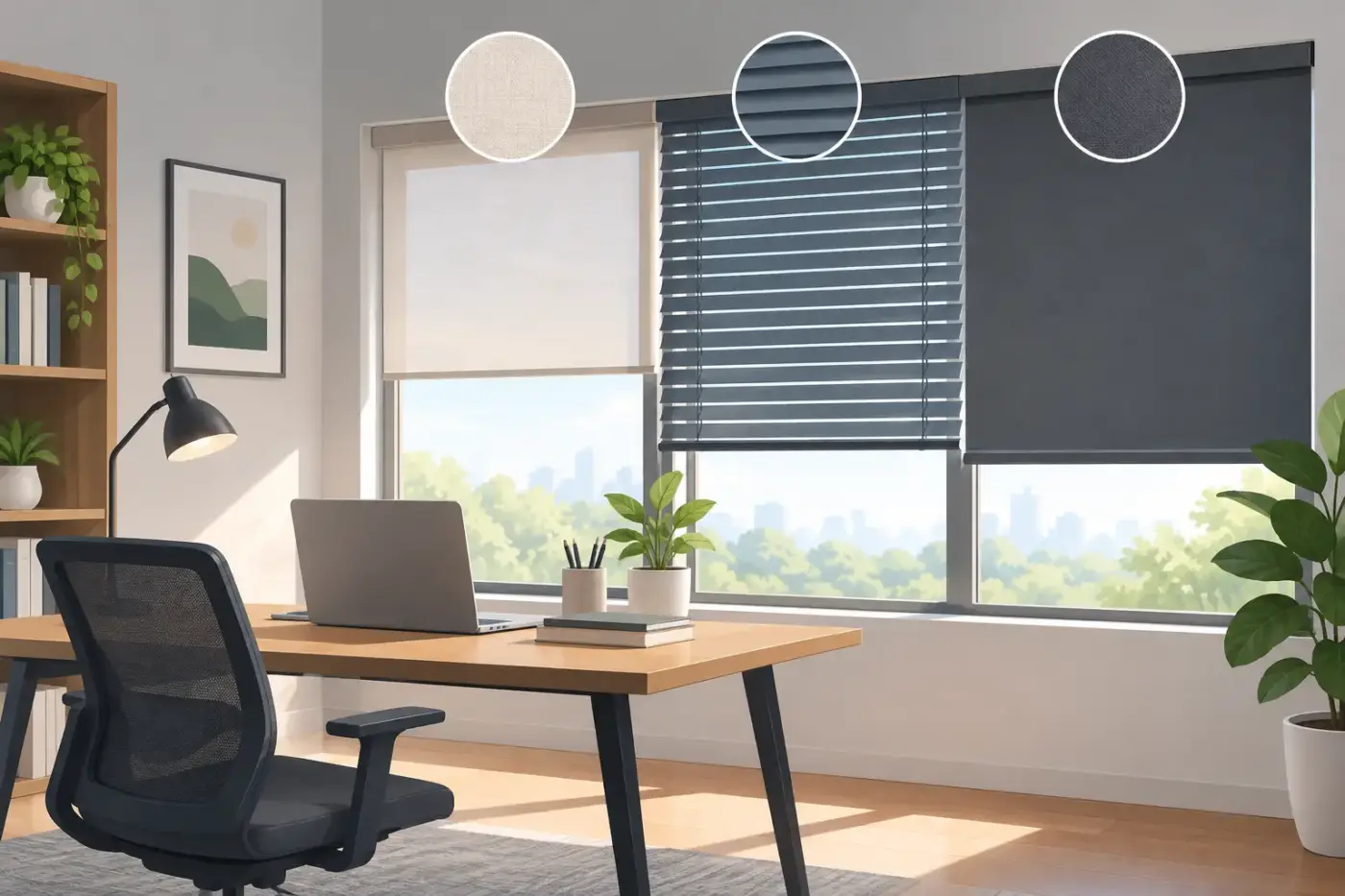
A home office can look beautifully finished and still be difficult to work in at 2:30 p.m. when sunlight lands directly on the monitor. The best shades for home offices do more than decorate a window. They manage glare, protect privacy, soften a room’s temperature swings, and help the space feel focused rather than closed in.
That balance matters in Northwest Colorado, where expansive views, changing weather, and strong high-altitude sun are often part of the appeal of a home. The right treatment depends on how you use the room, which direction the windows face, and whether you need a clear view, complete privacy, or both at different times of day.
What Home Office Shades Need to Do
A productive office needs controlled daylight, not necessarily darkness. Natural light can make a room more comfortable and inviting, but direct sun can cause eye strain, screen glare, fading on wood furniture, and unwanted heat. A shade should let you adjust that light without making the workspace feel cut off from the rest of the home.
Privacy is another practical consideration. A street-facing office or a room visible from a neighboring property may need a more opaque treatment than an office overlooking open land. If you take video calls, the shade also affects what clients and colleagues see behind you – and whether the camera struggles with a bright window in the background.
Finally, think about seasonal comfort. Large windows can contribute to heat gain in summer and heat loss in winter. A well-selected custom shade can add a useful layer of insulation while giving the room a more complete, intentional appearance.
The Best Shades for Home Offices by Priority
There is no single right answer for every office. The best option comes down to the job the shade needs to perform most often.
Solar shades for glare control and views
Solar shades are often an excellent choice for offices with a view worth preserving. Their specialized fabrics filter sunlight and reduce glare while allowing a degree of visibility to the outdoors during the day. They are especially helpful on south- and west-facing windows, where low afternoon sun can make a computer screen nearly impossible to use.
The openness factor of the fabric makes a real difference. A more open weave maintains a clearer view and brings in more daylight, while a tighter weave provides stronger glare reduction and privacy. That trade-off is worth reviewing in the actual room, since the same fabric can feel very different in a bright mountain-facing office than it does in a shaded space.
Solar shades do not provide complete nighttime privacy on their own. If the office is visible after dark, consider pairing them with drapery panels or selecting a different shade type with greater opacity.
Cellular shades for insulation and flexible light control
Cellular shades are a strong fit for homeowners who want comfort as well as clean design. Their honeycomb-shaped construction traps air at the window, helping reduce heat transfer. In an office with large glass areas or older windows, that extra insulation can make the room feel noticeably more comfortable through Colorado’s colder months.
They are available in light-filtering and room-darkening fabrics, so you can choose the amount of light appropriate for the space. Light-filtering cellular shades create a soft, even glow that works well for reading, paperwork, and general computer use. Room-darkening options are better for an office that also serves as a guest room or media space.
Top-down/bottom-up operation is particularly useful in a home office. It allows daylight to enter through the upper portion of the window while keeping the lower section covered for privacy. The result is a brighter room without putting your desk on display.
Roller shades for a clean, tailored look
Roller shades have a simple profile that works well in contemporary homes, mountain-modern interiors, and offices where the window treatment should not compete with the furnishings. With a wide selection of fabrics, they can be chosen for gentle light filtering, privacy, room darkening, or solar control.
Their straightforward operation is a benefit in a room used every day. When raised, roller shades stack neatly at the top of the window, keeping trim and views visually open. When lowered, they provide a clean plane of color or texture that can tie the office to adjacent rooms.
For a workspace with several windows, matching roller shades can create a calm, organized backdrop. Consider a neutral fabric for a timeless look, or choose a subtle woven texture when the room needs more warmth.
Roman shades for softness and design presence
A home office does not have to feel corporate. Roman shades bring fabric, texture, and a more furnished appearance to a workspace, making them a natural choice for offices that are visible from living areas or serve multiple purposes.
Because Roman shades are available in an extensive range of fabrics, they offer more decorative flexibility than many streamlined shade styles. A tailored flat Roman can feel crisp and refined, while a relaxed fabric selection can make an office feel more comfortable and personal.
The trade-off is that Roman shades typically offer less precise light control than solar or cellular shades. They work best when soft filtered light and style are the priorities, or when paired with a liner that improves privacy and light blocking.
Woven wood shades for warmth and texture
Woven wood shades add natural character that suits cabins, second homes, and spaces with wood beams, stone, or layered mountain finishes. Their organic materials create visual interest without requiring a bold color or pattern.
They filter daylight beautifully, but they are not the best standalone choice for an office needing consistent privacy or strong glare reduction. Adding a privacy liner can make woven shades far more practical, especially for evening use or street-facing windows. The liner changes the feel of the shade, however, so it is helpful to see samples against the window before deciding.
Consider Motorized Shades for Hard-to-Reach Windows
Motorization is less about novelty and more about making light control easy enough to use. If your office has tall windows, multiple shades, or windows behind a desk, motorized operation can make a meaningful difference. Rather than reaching across furniture or adjusting each shade individually, you can lower shades before a video call or raise them when the direct sun has moved.
Scheduled operation can also support everyday comfort. Shades can close during the strongest afternoon exposure and open again later, helping protect floors and furnishings from prolonged sun. For second-home owners, automated shades can be especially convenient when the property is not occupied year-round.
Battery-powered motorization is often a practical solution for existing windows, while hardwired options may make sense during construction or a larger renovation. The best choice depends on access to power, the number of windows, and how you want to control the shades.
Details That Make the Difference
Even the right shade style can underperform if it is not properly specified. Inside-mounted shades offer a built-in appearance, but they require enough window depth and reasonably square openings. Outside-mounted treatments can cover more of the window and reduce side light gaps, which may be helpful where glare is persistent.
Color also affects performance. Lighter fabrics tend to reflect more sunlight and maintain an airy appearance, while darker solar fabrics can offer a clearer outward view in daylight. For video calls, avoid placing a desk directly in front of an uncovered window when possible. A side-facing window with an adjustable shade usually creates more flattering, usable light.
Custom measurement matters most on unusually sized windows, angled openings, or rooms with trim details that deserve to remain visible. It also helps ensure shades operate smoothly and align consistently across a group of windows.
A thoughtful in-home consultation makes these choices easier because fabric samples, opacity levels, and operating options can be evaluated in the actual light of your office. Ben’s Blinds can help you compare solutions in the room where they will work every day, then manage the measuring and professional installation. The goal is not simply a better-looking window, but an office you can settle into comfortably when the workday begins.
Comments are closed